
Biodiversity webinars open to all Blue Flag members
As part of the Foundational for Environmental Education (FEE) GAIA 20:30 strategy for the next decade, a series of webinars focused on Biodiversity will be organised by the Blue Flag and Green Key teams in April and May.

Launched by FEE in 2021, the GAIA 20:30 strategy represents the organisation’s commitment to contribute to a more sustainable world. As part of this strategy, FEE will be focusing its resources for the next decade on three critical environmental increasing threats to our planet – climate change, biodiversity loss and environmental pollution.
In 2022, the GAIA 20:30 will protect global biodiversity through different actions: promoting sustainable management of the coastal zone, combating pollinator and insect loss, preserving existing and creating new natural areas, and finally raising awareness of efforts to remove invasive alien species.
Several initiatives will be held within the year dedicated to Biodiversity, including a Biodiversity Competition, a course, and four webinars, conducted in April and May. The webinars, developed in partnership between Green Key International and Blue Flag International teams, will focus on different aspects of biodiversity. The first webinar will be held on April 5th and the last one, conducted in May (date to be confirmed), can be particularly relevant for the Blue Flag national operators and members since they will explore the importance of biodiversity for coastal areas.
Focused on the Importance of Biodiversity to the Tourism Industry, the first webinar hosted on April 5th will raise questions as such:
What is biodiversity?
Why is it important for tourism?
What are the negative impacts of tourism on biodiversity?
More information will be shared in the upcoming weeks on the Blue Flag page and social media on how to sign up for the Biodiversity webinars.
Blue Flag and Pick a Pier partner to launch exclusive Popeye® Sail Club
With the increasing demand for berth space, industry leaders are finding new ways to sustain our marinas while continuing to adamantly protect the ocean. Blue Flag’s digital partner, Pick a Pier, is at the forefront of this mission and has just introduced an exciting new initiative — the Popeye® Sail Club.

Pick a Pier is a leading online platform that connects boaters and marinas, streamlining the berth reservation process and simplifying communication. Now it’s becoming even stronger with the launch of Popeye® Sail Club.
Popeye® the Sailor Man, the tough, loveable seafarer from the comics is now more helpful, more intelligent, and even stronger with technology — the perfect mascot to champion an international sustainability initiative.
“We’re excited by the incredible opportunity to engage directly with boaters to promote sustainable boating practices,” said International Blue Flag Director Johann Durand. “With Popeye at the helm, we can make the message of responsible sailing far more memorable.”
Here’s how it works
For every sail, boaters earn points, which can be redeemed at participating marinas as credit towards reservation fees. By reserving berth space in advance on Pick a Pier’s platform, boaters can now sail with ease while maintaining the flexibility to change their reservation up until the day of arrival.
Knowing with certainty exactly where to dock in two weeks is reward enough. But with a Popeye® Sail Club membership, boaters will be further rewarded for those advance reservations. Boaters can book a berth with priority access at some of the most sustainable marina destinations and get points for every USD/Euro spent. They’ll also get points for reporting that their own berthing space will be vacant when they sail away from their home marina. The programme encourages boaters to plan ahead by giving up to 3 times the points on early reservations.
Points can then be redeemed for discounted reservations and other marina services. On top of that, Pick a Pier will have special offers and promotions just for members that make points even more worthwhile.
Popeye® Sail Club is launching by invitation only and boaters at participating marinas will be the first to get their exclusive membership. Other boaters can be added to the waitlist at www.popeyesailclub.com
“We are extremely proud of this one-of-a-kind programme. Popeye® Sail Club is taking the Pick a Pier experience one step further. The club is designed for the most passionate boaters, empowering them to easily sail in a more sustainable way — and rewarding them along the way,” explains Idan Cohen, CEO of Pick a Pier.
Promoting better sustainability practices
Popeye® Sail Club is built around sharing economy principles that promote better use of existing resources and sustainability.
Pick a Pier is already helping Blue Flag marinas optimise their resources without compromising the environment or creating more work for their staff. Allowing marinas to do more with what they have reduces the need for marina construction or expansion.
But working with marinas and incentivizing boaters to plan ahead to increase sustainability is just one piece of the puzzle. In partnership with Blue Flag, Pick a Pier will ask that new boaters take the Sustainable Boating Pledge and adhere to eco-friendly practices at sea and on-shore.
The five basic principles are simple and incredibly effective in raising awareness among boaters and promoting a healthy ecosystem.
Protect the Waters
Refuel with care and never dump waste into the oceanSafeguard Marine Life
Anchor and fish only in permitted areasMinimise Waste
Avoid single-use plastics and use eco-friendly cleaning products when possible.Be More Considerate
Be mindful of other boaters in your vicinity. Dump sewage only where permitted.Stay Watchful
Report violations and inform authorities about hazards.
Blue Flag is committed to ensuring a resilient ocean, and Popeye® Sail Club will help us reach more boaters, showing everyone that ease of use, profitability and sustainability go hand in hand.
Blue Flag has begun using a new material for their flags created by recycled PET bottles
Blue Flag has made alterations to their fabric being used for the Flag, in partnership with Semaphore, the flag is now created utilising 100% recycled PET bottles.

Blue Flag works alongside Semaphore who produce the Flags which are used on certified beaches. Figures from 2020 production included orders that were dispatched toward forty-eight countries covering four continents. In 2021 the partnership with Semaphore was renewed with new material being used for the flags, offering the same products and sizes as before however with a new material: PET Flag.
This recycled material is made from used PET bottles that are collected in supermarkets and other collection points in western Europe. After collection, the bottles are chopped up in little flakes and then melted into polyester yarn. This yarn is then used to create the new flag fabric on which the Blue Flag is screen printed in The Netherlands.
The new PET Flag material was rolled out during the 2021 season on Blue Flag beaches all over the world with very positive results.
Team Semaphore is very happy with the new contract and we look forward to continuing working with the Blue Flag organisation! -Team Semaphore
Tobago Boat Operator achieves the International Blue Flag award
The International Blue Flag Jury has granted the prestigious Blue Flag award to the Tobago tourism boat operator Top Catch Charters. Top Catch Charters has now entered an elite class of Blue Flag awarded boat operators and is currently the only Blue Flag awarded boat in the English speaking Caribbean.

The achievement of this renowned environmental award has meant that Top Catch Charters operations has complied with standards pertaining to environmental management, environmental education and information, safety and services, social responsibility and responsible operation around wildlife. The staff of Top Catch Charters has demonstrated their ongoing commitment to adhering to international best practices as it relates to providing quality service and safety standards to their guests whilst celebrating and protecting the natural environment. Ms Shivonne Peters, Manager of Top Catch Charters explains what it means for the business to achieve this award.
“The Blue Flag award for us represents the fulfillment of our goal to provide eco-friendly tours to our customers and transform Tobago’s tourism product. For us at Top Catch Charters, we began our journey with the concept of a sustainable business model; one that ensured we minimized our environmental impact. By developing simple strategies such as saying no to single use plastics and providing alternatives through locally sourced materials such as calabash and bamboo, we truly believed we could encourage our clients to practice sustainable habits, well beyond the duration of our tours. We certainly hope that this is the start of a movement in the tour industry, not only in Tobago but in Trinidad and Tobago. Ultimately, it proves for us and says to the world that sustainable tourism is possible in Tobago as we can successfully balance economic activities with environmental conservation”.
Top Catch Charters was one of four tourism boat operators that were recipients of grant funding by the UNDP Global Environmental Facility Small Grants Programme (GEF SPG) Green Innovator Challenge in Trinidad and Tobago. As a beneficiary of the grant Top Catch Charters received the necessary assistance and services to apply for the Blue Flag programme and ultimately accede to the necessary criteria to achieve the prestigious environmental award. Dr. Sharda Mahabir, National Coordinator GEF SGP UNDP, also extended her congratulations and expectations,
“GEF SGP is pleased to support Green T&T in their efforts to strengthen tourism by certifying boat operators under Blue Flag. This certification will put our beautiful sister isle on the map in terms of initiatives in support of the Blue Economy. We look forward to positive outcomes and benefits coming out of this project and more GEF SGP projects on the sister isle.”
The National Operator for the Blue Flag programme Green T&T worked alongside Top Catch Charters and three other tourism boat operators as part of the project proposal 'Reducing environmental footprint and improving eco-friendly Blue Economy by supporting Blue Flag certification for four small tour boat operators in Tobago.' Top Catch Charters was the first to submit their application to the Blue Flag National Jury, which was indicative of their steady commitment to preserving their natural environment and reducing their operations environmental footprint, inspite of the challenges posed by the COVID 19 pandemic. Joanna Moses-Wothke, CEO of Green T&T further elaborates what this achievement means for Top Catch and local tourism in general.
“This is a very significant accomplishment and there is a lot to celebrate. This is the first and only Blue Flag certified Boat Operator in the English-speaking Caribbean, the only Blue Flag certified site in Trinidad and Tobago and the first and only Blue Flag certified site for Tobago. Top Catch Charters is trailblazing when it comes to environmental performance for tour boat operators, especially on the heels of theTravel Industry Club (TIC) Destination Awards in which Tobago was given 2nd place. We at Green T&T are very proud to be a part of the ground-breaking achievements and we look forward to our continued work with Top Catch Charters and other tour boat operators and beaches on the island.”
The Blue Flag programme is owned and managed by the international, non-governmental, non-profit organisation FEE (the Foundation for Environmental Education) based in Denmark. The program has been operating in Europe since 1987 and has become a highly respected and recognised award, working to bring together the tourism and environmental sectors at local, regional and national levels to ensure sustainable tourism. Currently, the Blue Flag is flying at over 4,600 sites in 47 countries and has over 80 blue flag awarded boat operators worldwide. Mr Narendra Ramgulam, Director of Product Development & Destination Management, Tobago Tourism Agency Limited describes the significance of this achievement to the destination of Tobago.
“This Blue Flag award for Top Catch showcases the strong environmental work that has gone into setting Tobago apart from its regional competitors. Last year, destination Tobago achieved pilot status for 3 Blue Flag beaches, earlier this year we followed up with aligning our accommodation sector to the Green Key certification, and now our tourism boat operators like Top Catch are on board to fulfill the destination's strategic sustainable advantage.
This is the first private-public partnership of its kind on the island, and its success will act as a catalyst for other tourism operators to come on board so we can transform Tobago together. There is still a long road ahead in achieving our sustainability goals for Tobago, our residents and our visitors, and we will continue to foster the stakeholder partnerships necessary to ensure continuity, rejuvenation, revitalization and success as we move the destination forward together.
While we enjoy the success of our first official Blue Flag designation for Tobago, we at the Tobago Tourism Agency Limited are proud of Top Catch for leading the way and fulfilling the criteria set out by the Foundation for Environmental Education to make this possible. We are also grateful to our partners at Green T&T for their support which made this a reality.
As a foundational principle of FEE for the roll-out of the Blue Flag programme in Trinidad and Tobago, a National Jury comprised of local stakeholders, discerns on all Blue Flag applications. Upon approval by the National Jury the application is forwarded to the International Jury for final vetting and approval. In Trinidad and Tobago the National Jury comprises of representatives from the Ministry of Tourism, Division of Tourism, Culture and Transportation- Tobago House of Assembly, Tobago representative of the Trinidad and Tobago Life Saving Society, Community Development Enterprise Development and Labour, Solid Waste Management Company Limited, Department of Modern Studies, Signal Hill Secondary School, Environmental Management Authority, Division of Health Wellness and Family Development- Tobago House of Assembly, Yacht Services Association of Trinidad and Tobago and Tobago Tourism Agency Ltd.
Adapting a Blue Flag environmental education activity to COVID-19 restrictions
Blue Flag environmental education activities around the world have been presented with challenges due to restrictions related to the COVID-19 pandemic. Consequently, many marine and coastal environmental educators have been looking at innovative ways to adapt traditional learning options.
Blue Flag environmental education activities around the world have been presented with challenges due to restrictions related to the COVID-19 pandemic. Consequently, many marine and coastal environmental educators have been looking at innovative ways to adapt traditional learning options.

Photo: © Marine Dimensions
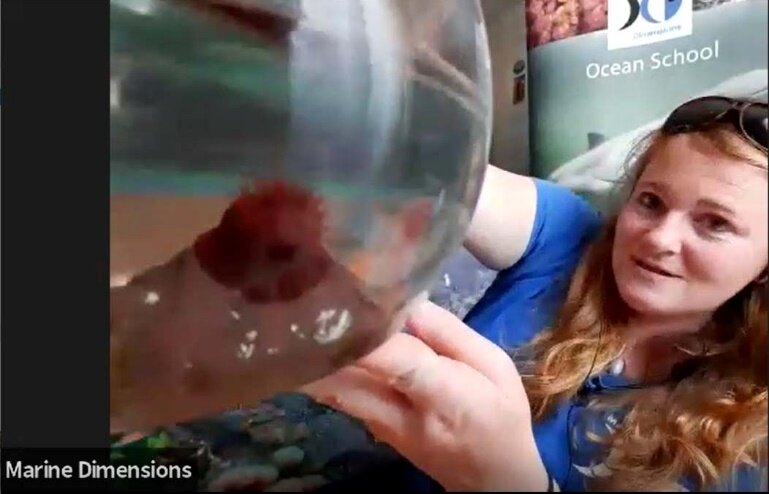
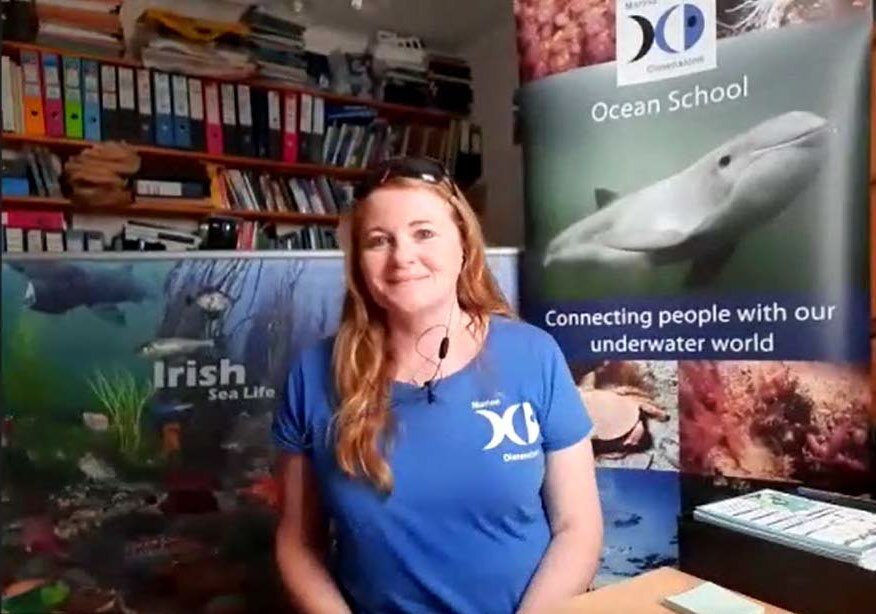
One of these educators is Marine Biologist Dr. Sarah Varian, who runs a small community-oriented enterprise in Ireland. Her business Marine Dimensions is dedicated to raising awareness about the marine and coastal environment. As a result of the COVID-19 restrictions, Sarah and her team have been working on adapting one of their most popular workshops, The Marine Experience, to run online.
The workshop, which is designed to introduce all age groups to the wonders of our marine world, has traditionally been very hands-on and practical. This included an interactive display of live animals and authentic marine regalia, ranging from lobster claws and whalebones to starfish and shark egg cases. Therefore, when the Marine Dimensions team got the confirmation from the Wicklow County Council to trial some online events for the County’s Blue Flag Environmental Education Activities, they weren’t sure how effective a ‘hands-off’ option might be.
However, the educators found that they were able to maintain the high engagement rate of the workshop by keeping other core components of the outreach. For example, small group sizes, a knowledgeable tutor and interesting bio-facts all improved the quality of the learning experience.
Indeed, reviews provided by workshop attendees were very positive, and several benefits were noted in relation to running the event online, including the potential for:
Maximising social distancing requirements concerning COVID-19 restrictions
Added convenience for families working from home
Engaging from a wide variety of locations, e.g. some families even watched the event en-route in the back seat of their car
Flexibility in terms of interaction - families could turn off their video and audio to allow privacy if so desired
Lower carbon emissions because of reduced travel associated with the event
With such encouraging results, the Marine Dimensions team is now looking forward to adapting the workshop to connect with schools and other programmes, thereby reaching out at the community level.
The trial online Marine Experience events were kindly facilitated by Wicklow Libraries, with funding from Wicklow County Council and the Department of Communications, Climate Action and Environment through the Community Environment Action Fund (Local Agenda 21) in Ireland.
To read more about their programme, visit www.marinedimensions.ie
Blue Flag Pilot Status for Three Tobago Beaches
On Monday, the 12th of October 2020, the Tobago Tourism Agency Limited (TTAL) received the Blue Flag Pilot status from the Blue Flag International Jury for three beaches in Tobago. The beaches of King’s Bay, Bloody Bay and Mt Irvine Bay received a formal endorsement to fully engage in meeting the Blue Flag criteria and to submit their applications for the Blue Flag award as early as 2021.
On Monday, the 12th of October 2020, the Tobago Tourism Agency Limited (TTAL) received the Blue Flag Pilot status from the Blue Flag International Jury for three beaches in Tobago. The beaches of King’s Bay, Bloody Bay and Mt Irvine Bay received a formal endorsement to fully engage in meeting the Blue Flag criteria and to submit their applications for the Blue Flag award as early as 2021. This makes Tobago the only island in the Lesser Antilles working officially towards the full implementation of the Blue Flag, which benefits its visitors and residents alike. Blue Flag is one of the programmes implemented in Trinidad and Tobago by the NGO Green T&T.

Photo: King’s Bay, © Jacob Bock
The Blue Flag Pilot status has been announced by the Blue Flag National Coordinator, Joanna Moses-Wothke, who also provided the details leading up to the announcement as well as information about subsequent steps towards the Blue Flag certification.
Tobago was always poised as an ideal Blue Flag destination. With its pristine beaches, an intact montane tropical rainforest and small communities, it was more a matter of time, when the island would also be certified as one. Any beach that applies for the Blue Flag award must first undergo a gap analysis against the Blue Flag standards and must submit measures towards compliance. Once the pilot beaches are in full compliance, TTAL can submit the beach applications to the National and International Blue Flag Juries for the official Blue Flag award as early as 2021,
Joanna Moses-Wothke explained.
Besides the Blue Flag requirements, the three beaches share unique ecosystems such as coral reefs and rivers with rich biodiversity. Additionally, King’s Bay and Bloody Bay are situated in the planned North East Tobago UNESCO Man-and the-Biosphere site, another credence of international significance that promotes blue and green economies and sustainable management of natural resources.
Narendra Ramgulam, Director Tourism Product Development & Destination Management at the Tobago Tourism Agency Limited, stated:
Blue Flag is one of the most reputable and recognized awards for beaches worldwide. Having been granted pilot status for three beaches means that we are taking steps in the right direction. This will not only help to boost our environmental sustainability as a destination, but through this process, we are also leveraging and building confidence in our eco-conscious travellers. Trends from leading tourism journals and studies indicate that travellers post COVID-19 are going to be demanding safe destinations and destinations that are perceived to be clean/green. In this regard, Blue Flag gives the destination Tobago an edge over our competitors, as no other beaches in the English-Speaking Caribbean arein the Blue Flag pilot phase. This definitely makes us first movers in this aspect, and we hope to continue building on this thrust as we move forward as a destination with the image of being untouched and unspoilt.
More information on the Blue Flag programme in Tobago can be found at http://green-tt.org/blue-flag-tt/

Photo: King’s Bay, © Tobago Tourism Agency

School children in Brazil raise awareness about ocean littering issues
One year ago, participants of the “Onda Sustentável” (Sustainable Wave) project created a video with the public school students of Ubatuba in São Paulo, Brazil to raise awareness about the immense problem of ocean littering.
One year ago, participants of the “Onda Sustentável” (Sustainable Wave) project created a video with the public school students of Ubatuba in São Paulo, Brazil to raise awareness about the immense problem of ocean littering.
The “Onda Sustentáve” (Sustainable Wave) project is an environmental education project designed by Marina Kauai's Blue Flag Management Committee, together with Ilha Anchieta State Park Board, Coco e Cia Co-op, the Litoral Norte Marine Protected Area and the Commercial Association of Ubatuba, and was carried out as part of the Environmental Education activities required for marinas by the Blue Flag programme. Marina Kauai has been a Blue Flag marina since 2017 and is located in the city of Ubatuba in São Paulo, Brazil.
The main goal of the “Onda Sustentável” project is to raise environmental awareness in order to preserve the local biota and provide a connection between the local community, the natural environment and protected areas.
For this purpose, the kids of the Ubatuba public school have been learning about ocean littering topics in a playful and investigative way, including how to avoid buying material that can cause damage to the environment and the environmental effects of humans throwing trash on the street or in the sea.
The video that has been created as part of the project, therefore, addresses themes of “marine debris”, "waste disposal" and "conscious consumption" from the viewpoint of the public school students of Ubatuba. The idea was that the video would become a manifesto made by children, leaving them free to express their perceptions and desires based on what they have experienced and learned.
“In 2050, there will be more plastic than fish in the sea!”, “Did you know that when we throw cotton buds in the toilet, it can go to the sewage, from there to the rivers, and then to the sea?” and “If someone litters the beach sand, when the tide rises, this litter can navigate to the sea and to other beaches”, are some of the issues that the kids discuss in the video.
Finally, the children state their personal strong opinions about this urgent issue, while emphasizing that everyone can rethink their own habits. In addition, they express their wishes for the future: a clean ocean for people to swim in, and clean beaches for them to play on!
Thanks to the the voluntary work of André and Isabela Kerber, this video has now been equipped with subtitles, enabling it to be distributed globally.
News from our partner Pick a Pier: promoting a culture of sustainability as a sailor, boat builder, marina or marina support services.
Most of us have heard this sentence at some point in our lives: change starts from within. Travel, just like anything else now, is mostly local, and maybe, instead of being a restriction, it is actually a sign for the right opportunity for a conscious and positive change.
Most of us have heard this sentence at some point in our lives: change starts from within. Travel, just like anything else now, is mostly local, and maybe, instead of being a restriction, it is actually a sign for the right opportunity for a conscious and positive change.

Diving in Puerto Rico; Photocredit: OPAS-BFPR
It has been a year already since Greta Thunberg, a teenager from Sweden, has sailed across the Atlantic with her protest act to call for a fast reaction for climate change. Back then, we had no clue that a world-wide pandemic is approaching us to the point of strict regulations on our freedom to travel, whether it is flying, sailing or just going out to the city centre.
The urgency of the situation forced us to shift our perspectives from a world-wide global mindset to a local mindset. In other words, we found ourselves constantly thinking about what we can do right here, right now, that would create the most positive impact and the least negative effects, on ourselves and those around us.
Most of us have heard this sentence at some point in our lives: change starts from within. Travel, just like anything else now, is mostly local, and maybe, instead of being a restriction, it is actually a sign for the right opportunity for a conscious and positive change. We are given the perfect moment, as people, but also as marinas, businesses and sailors alike, to adopt sustainable practices and reduce the environmental impact of sailing. It is heartening to see the steps already taken and planned, as outlined in World Sailing's Sustainability Agenda 2030.
We need to promote a culture of sustainability, where every one of us does our part to combat climate change, contribute to the health of the ecosystem and to preserve clean waters and biodiversity for future generations. Boatbuilding has taken on the challenge to reduce the environmental impact of materials and products, reducing the carbon footprint of production and making products largely recyclable. Sailors are committing to using cleaning products that don't negatively impact the environment, to proper waste disposal and thoughtful fishing and anchorage.
Marinas and marina support services also need to play a part. Berth shortages have been felt in several countries for years. As boat size grows and new boats enter the market, pressure will grow to boost the availability of berths. We need to find solutions that will curtail the demand for construction to meet this need. Aside from the substantial financial costs, constructing new berths poses risks to coastal ecosystems and increases emissions. The sharing economy offers an opportunity to maximise the potential of each berth by making sure that tourist traffic is directed towards already vacant berths and by incentivising the sharing of information that will enable optimisation of resources.
Thunberg's decision to sail from Europe to New York in order to attend the Climate Convention has also highlighted the opportunity that this movement offers. Sailing is a sustainable tourism industry, reducing or even eliminating travel's carbon footprint. Sailing promotes sustainability by encouraging tourism dispersal, moving away from overcrowded city centres to a wealth of locations along coastlines and rivers that are otherwise overlooked by many tourists.
Aging of marina's clientele has been a hot topic over the past decade. A sustainable tourism agenda offers an opportunity to target a younger generation of travellers, looking for new and sustainable experiences, who have yet to commit to sailing in the same way as their parents. In order to attract these customers, it is not enough to offer a great travel experience, we also have to meet service expectations, including the expectation of online bookings and member discounts.
As sailors, we understand the need to control the rise in extreme weather and the importance of clean waters more than most. Let us join together to ensure that our children and grandchildren and great-grandchildren are also able to enjoy all that this great planet offers.
Idan Cohen
The author is the Chairman of the Marine Innovation Association and a full member at ICOMIA, as well as the CEO of Pick a Pier, an innovative technology company that is creating the global standard for service-oriented and sustainable recreational maritime travel. Pick a Pier’s advanced technological solutions are designed to standardise, automate, and optimise maritime travel, in line with international travel tech standards. Pick a Pier facilitates marinas' digital transformation by optimising supply management and enabling boaters to extend their horizons and get anywhere-easier.
Blue Flag awarded to 27 beaches on the Belgian coast
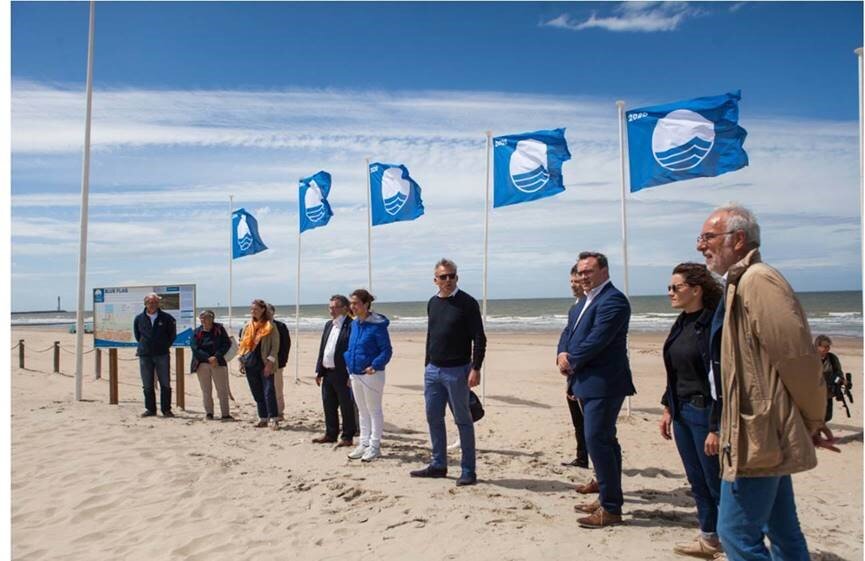
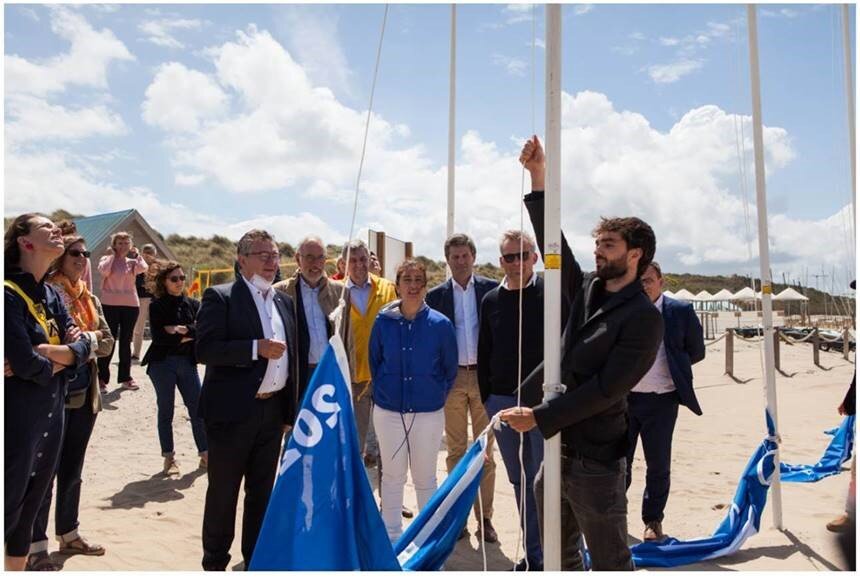
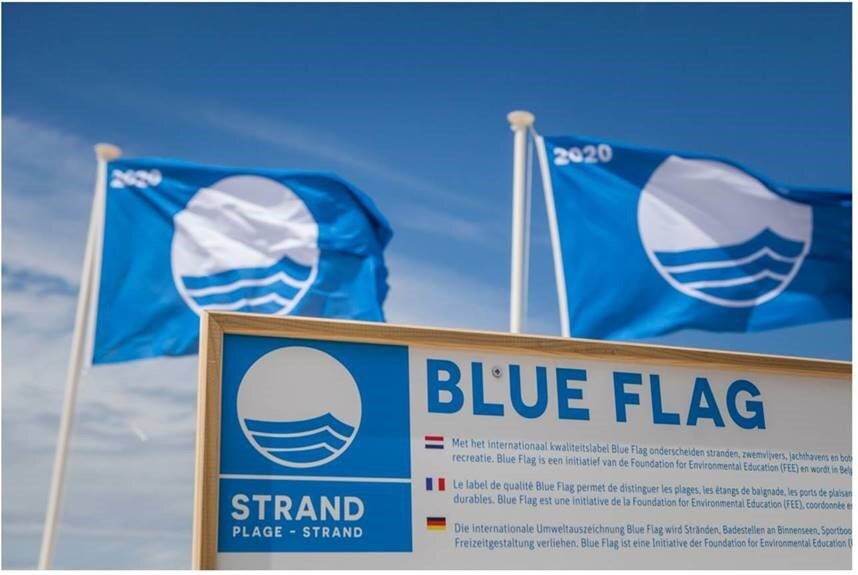
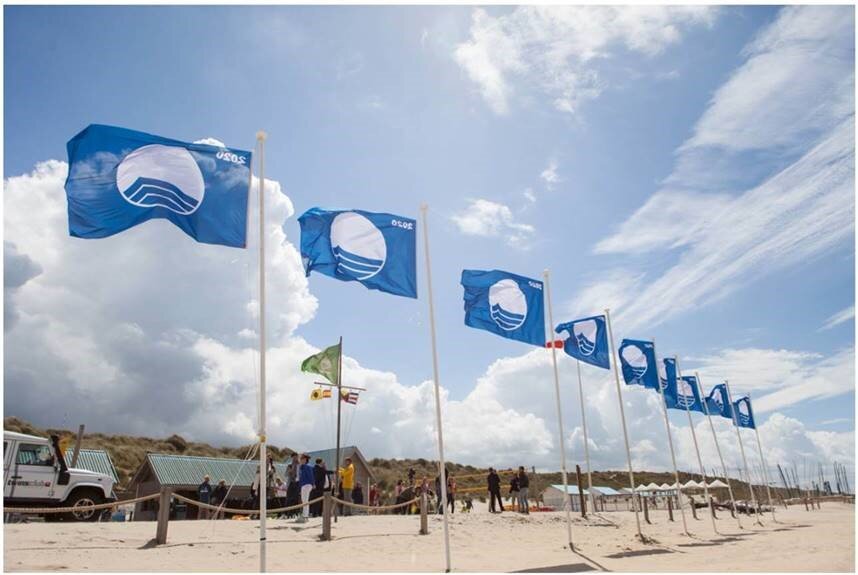
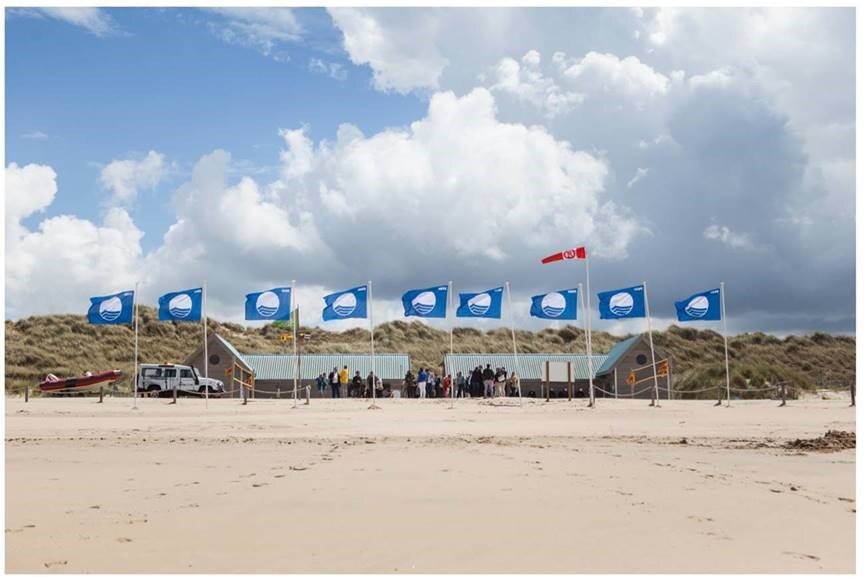
Good news for all seaside visitors! On the 2nd of July, the Blue Flag was raised on 27 coastal beaches in Belgium. The Blue Flag is an international award for beaches, tourism boats and marinas that excel in quality and sustainability.
Good news for all seaside visitors! On the 2nd of July, the Blue Flag was raised on 27 coastal beaches in Belgium. The Blue Flag is an international award for beaches, tourism boats and marinas that excel in quality and sustainability.

Copyright: Blue Flag Belgium
Until the day of the award ceremony, Belgium was almost the only European country without Blue Flag beaches on the coast. Thanks to the necessary interventions at the estuaries of the port channels of the water-treatment company Aquafin, as well as the efforts of the municipalities, the water quality has improved to such an extent that any coastal municipality is now eligible.
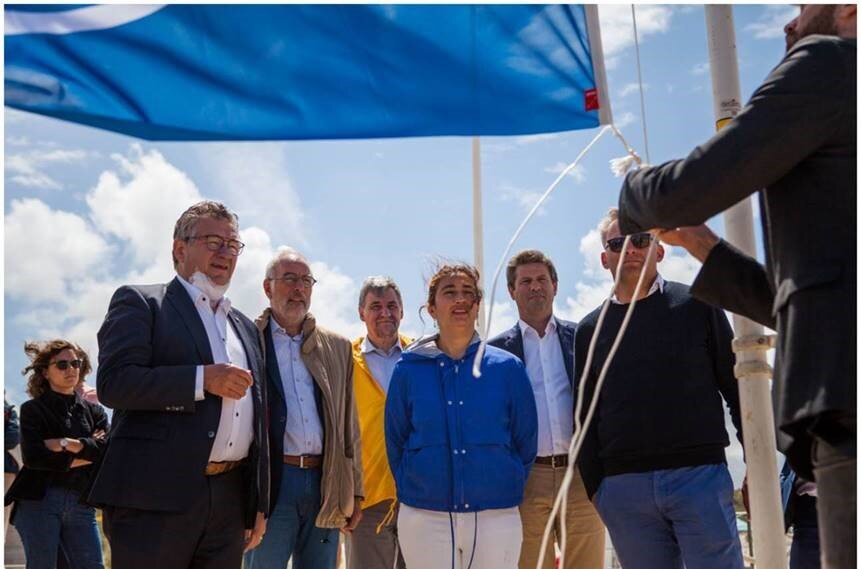
At the beginning of July, GoodPlanet Belgium, Tourism Flanders and Aquafin therefore officially raised the first Blue Flag at the Twins Club in Bredene, in the presence of the Mayors and the Minister.
I am convinced that this award will strengthen the positive image and reputation of the tourist destination Flanders nationally and internationally, and make Flanders even better known as a high quality and sustainable travel destination
says Flemish Minister of Tourism, Zuhal Demir.
Worldwide, there are 4.664 Blue Flag sites in 46 countries. However, a beach or marina does not get the Blue Flag award effortlessly. Locations that apply for the award are assessed by an external controller, an independent Belgian jury and an independent international jury.
Fun in the water is the highlight of a day at the beach. Water purifier Aquafin is happy to support the Blue Flag award because a clean sea makes it clear why all those sewerage works are necessary for Flanders. Because in the end, all the water flows in the sea. The operators, who keep the water purification plants on the coast running, ensure that you can enjoy yourself as a family without having to worry about water quality,
says Valerie Lievens, communications manager at Aquafin.
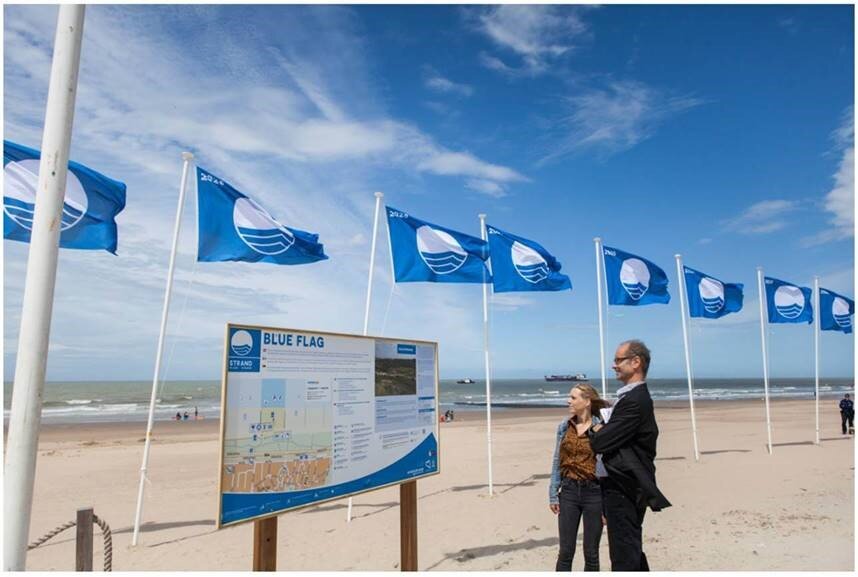
However, the guidelines of the Blue Flag award include much more than regulations concerning clean swimming water. Each location also complies with strict standards concerning safety, general services and accessibility (for example, the presence of lifeguards, first aid equipment and the availability of drinking water, amongst others), environmental and sustainability management (such as a clean beach with possibilities to sort waste, clean toilets etc.) information about water quality, local nature reserves as well as an information board with a general map.
Currently, there are twelve beaches and seven marinas in Belgium that already received the Blue Flag award in recent years and will continue to follow the regulations of the award in 2020.
Contact
Jorine Vermeer, Project Manager Blue Flag
+32 473 13 45 76 | blueflag@goodplanet.be
Valerie Lievens, Manager of Communication Aquafin
+32 476 96 79 45 |valerie.lievens@aquafin.be
Stef Gits, Spokesperson Tourism Flanders
+32 486 22 67 95 | stef.gits@toerismevlaanderen.be
Andy Pieters, Spokesperson & Deputy Head of Cabinet Flemish Minister Zuhal Demir
+32 499 17 35 84 | andy.pieters@vlaanderen.be

A Blue Flag beach in the large tourist city of Odessa, Ukraine, democratically won the "Best Beach of Odessa" award
Last December 2019 was the launch of the first edition of the "Best Beach of Odessa" award in Ukraine and the Blue Flag awarded Caleton Beach was declared the winner by the public’s vote.
Odessa is the third most populous city of Ukraine, and a major tourism center, seaport and transport hub located on the northwestern shore of the Black Sea. The award ceremony called "National Recognition/ People’s Vote - Odessa of the Year" is held every year to award regional leaders in the south-western part of Ukraine for their work in a broad range of categories from glamour and culture to politics and business. The project, which was founded in 2001, is carried out by the South Ukrainian Media Holding (UMH) and is one of the most ambitious and socially significant in the south of Ukraine.
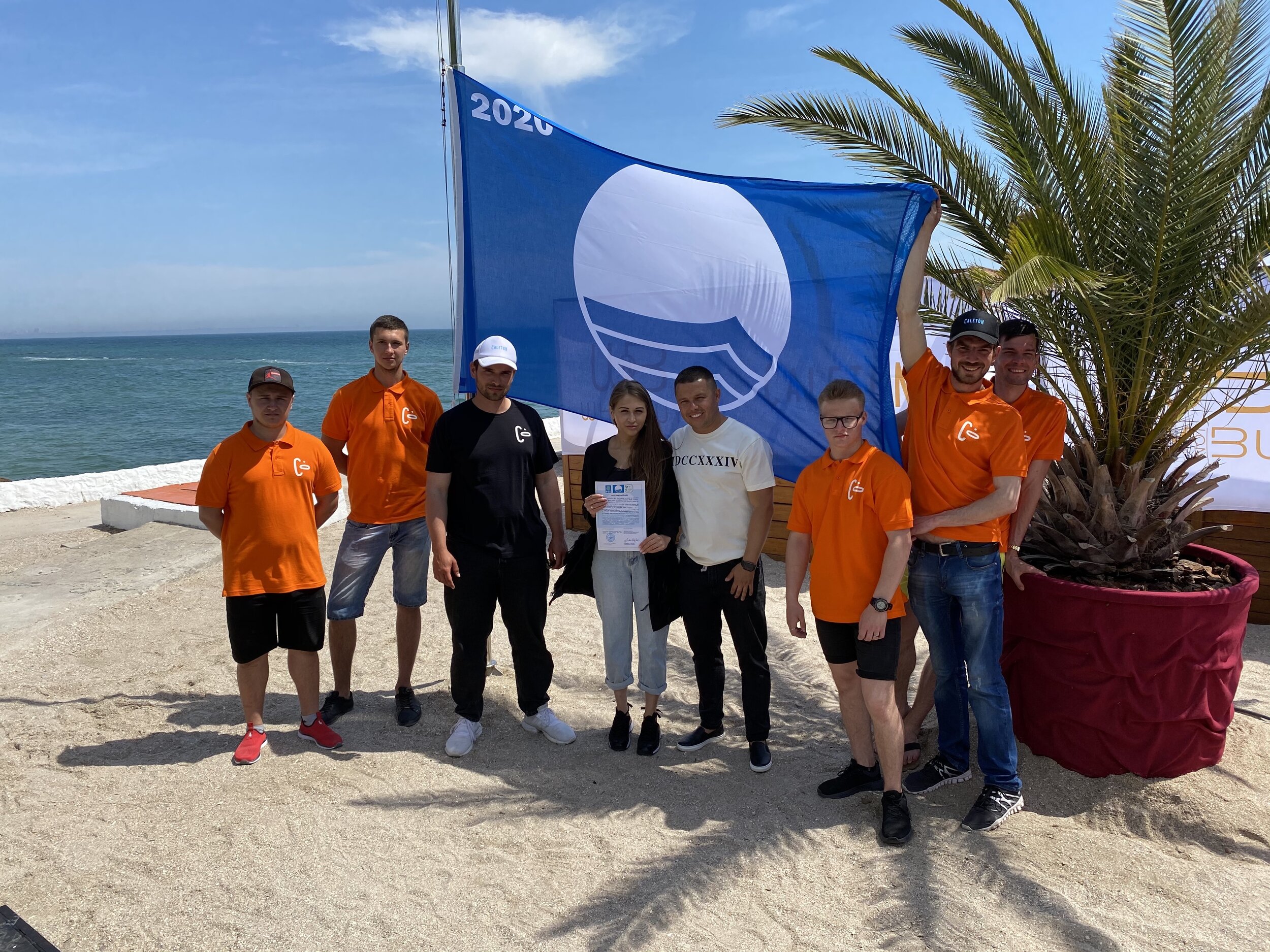
Last December 2019 was the launch of the first edition of the "Best Beach of Odessa" award and the Blue Flag awarded Caleton Beach was declared the winner by the public’s vote. Its owner, Yuri Degas, went on stage to receive the award consisting of an honorary diploma and a cup that were handed to him by Tatyana Markova, Director of the Department of Culture and Tourism of Odessa City Council.



Pictures copyright: www.048.ua
Keeping the momentum of the 2020 UN Ocean Conference
The 2020 UN Ocean conference has been postponed due to the COVID-19 pandemic, but Blue Flag International would like to keep the momentum going and share our contributions to the protection of the ocean and marine resources and to the achievement of the Sustainable Development Goals (SDGs).

The overarching theme of the 2020 UN Ocean Conference this year is "Scaling up Ocean Action based on science and innovation for the implementation of Goal 14: stocktaking, partnerships and solutions", calling for science-based innovative solutions to amplify global ocean action. The conference was supposed to take place in Lisbon, Portugal from the 2nd to 6th of June, and Blue Flag International had planned to attend. Unfortunately, it has been postponed due to the COVID-19 pandemic, and the new dates will be announced at a later time. Despite the postponement, we would like to keep the momentum going and share Blue Flag’s contributions to the protection of the ocean and marine resources and to the achievement of the Sustainable Development Goals (SDGs).
The ocean covers 70 percent of the Earth’s surface, is the planet's largest biosphere, and is home to up to 80 percent of all life on Earth. It generates oxygen, absorbs carbon dioxide emissions, is a vital buffer against the impacts of climate change, nurtures biodiversity and is essential to human well-being and livelihoods. This is why the ocean’s protection against unsustainable human activities is essential to limit the depletion of marine resources and pass on a more sustainable world to future generations.
The 2030 Agenda for Sustainable Development adopted by the United Nations in 2015 set 17 transformative goals to be reached by 2030. Goal number 14 “Life Below Water” stresses the need to conserve and sustainably use the world’s oceans, seas and marine resources. Blue Flag International is strongly committed to supporting the UN SDGs by promoting sustainability in the tourism sector, and contributes to their achievement through environmental education, environmental protection and other sustainable development practices.
Blue Flag’s influence is growing every year, with currently more than 4,500 Blue Flag awarded beaches, marinas and tourism boats in 47 countries around the world. Blue Flag also campaigns against disparity, inequality, unemployment, health threats, depletion of natural resources, environmental threats, pollution and general environmental degradation. One of the latest examples of Blue Flag’s contribution to the SDGs was the inauguration of the first Blue Flag Best Practice competition in 2020 on the theme of pollution. The competition was created to highlight the best examples of environmental protection practices implemented by Blue Flag sites around the world.
You can access all of the Best Practices implemented by Blue Flag sites here: https://www.blueflag.global/best-practices
To read more about how Blue Flag engages with and contributes to the Sustainable Development Goals : https://www.blueflag.global/sdgs-blueflag
To get more information about the UN Ocean Conference: https://www.un.org/en/conferences/ocean2020
Blue Flag first for Åland Islands marinas!
On Tuesday the 21st of April, the Blue Flag International Jury met online to evaluate more than 4,500 beaches, marinas and tourism boats in the Northern Hemisphere that have applied for a Blue Flag for the 2020 season.
On Tuesday the 21st of April, the Blue Flag International Jury met online to evaluate more than 4,500 beaches, marinas and tourism boats in the Northern Hemisphere that have applied for a Blue Flag for the 2020 season.
Images Copyright : Visit Åland
All Blue Flag sites are reviewed annually and awarded the Blue Flag for the duration of an operating season, which can last up to a full year. The International Jury reviews the applicants twice a year, in April for Northern Hemisphere countries and in September for Southern Hemisphere countries. This year, due to the COVID-19 crisis, the Blue Flag International Jury met online on Tuesday the 21st of April to evaluate the 2020 Northern Hemisphere candidates. Extensive preparation by the Blue Flag International team ensured that the online format did not interfere with the meeting’s quality and outcomes.
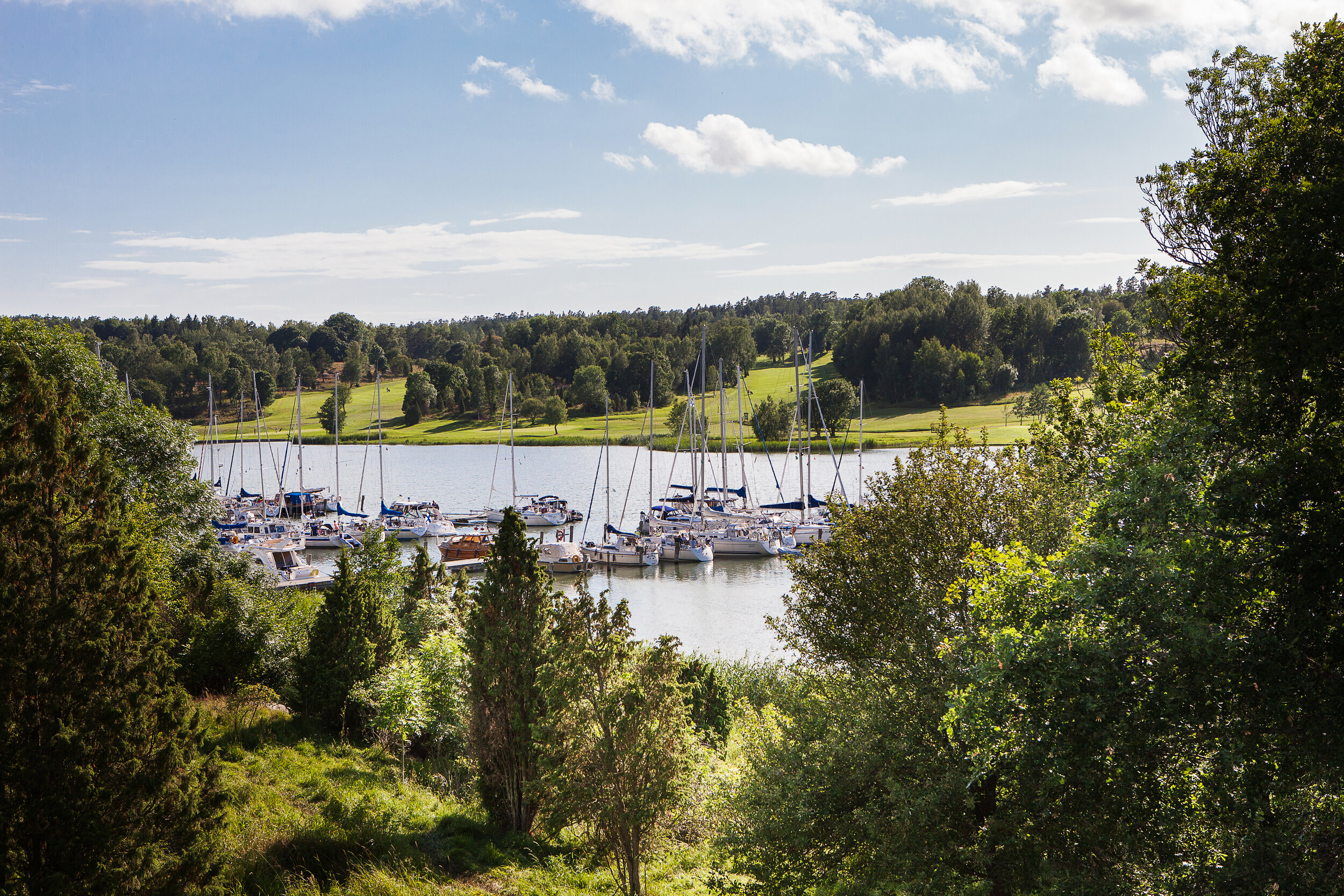
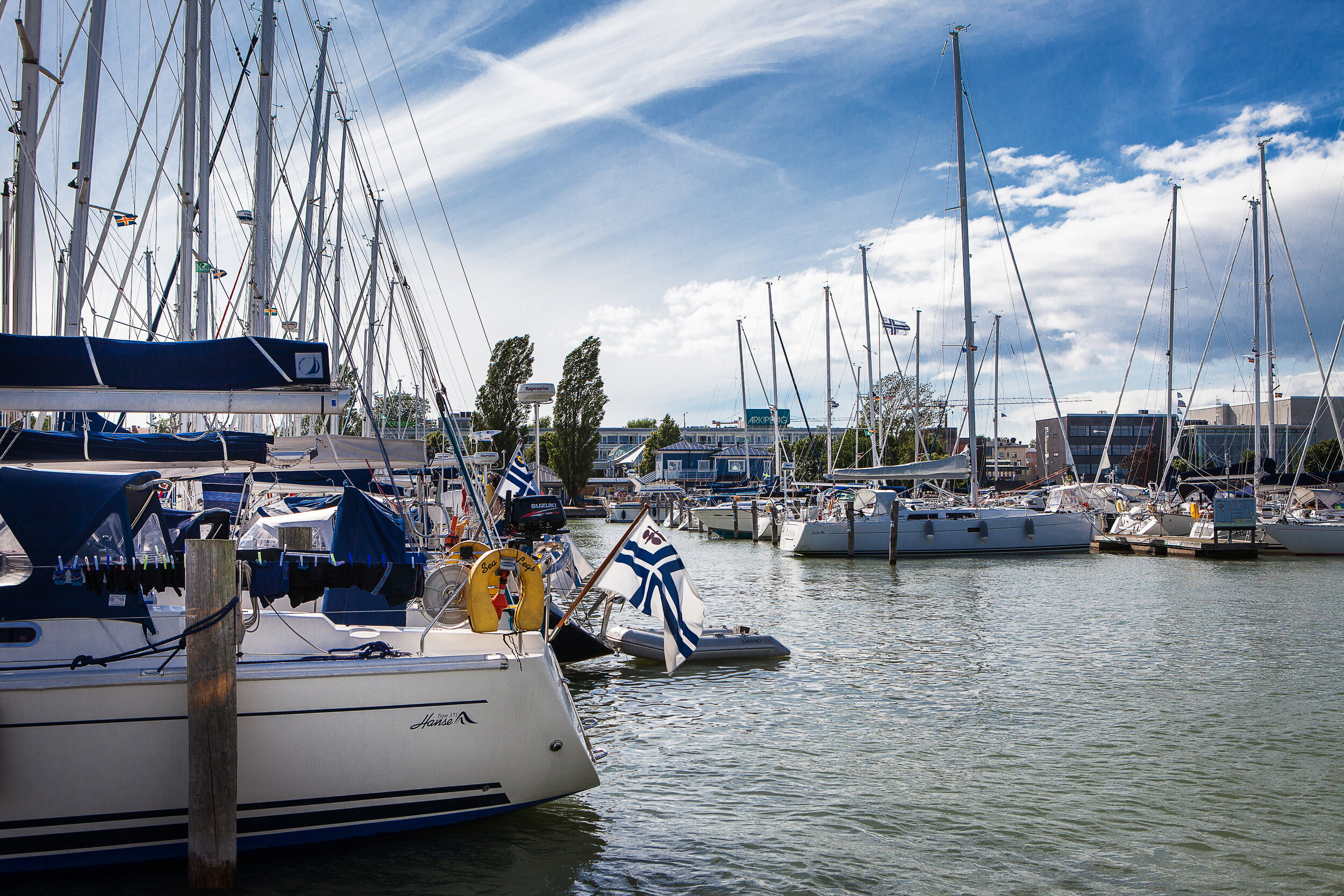
A highlight of the International Jury meeting was the decision to award the first Blue Flags in the Åland Islands to five marinas that meet Blue Flag’s standards of excellence in sustainability and environmental management. The Åland Islands is an archipelago of over 6,500 islands and skerries off the southwest coast of Finland that draws tourists with its wealth of history, natural beauty and outdoor activities.
The 2020 Blue Flag International Jury was composed of Peter Kristensen representing the European Environment Agency, David R. Green for the Coastal & Marine Union (EUCC), Birguy Lamizana representing the United Nations Environment Programme (UNEP), Sophie Lewis for the World Cetacean Alliance, Bernard Combes for UNESCO, Jean-Michel Gaigné representing the International Council of Marine Industry Associations (ICOMIA), Erik Bech for the International Life Saving (ILS) Federation, Dirk Glaesser for the World Tourism Organization (UNWTO), Ivor Ambrose and Katerina Papamichail representing the European
Network for Accessible Tourism and Lourdes Diaz representing the FEE Board of Directors.

This year’s meeting demonstrated once again each Jury member’s strong commitment to the Blue Flag programme. Blue Flag International would like to reiterate its appreciation for their continued dedication, which ensures that all of the awarded sites worldwide represent the same level of excellence. The quality of applications and high level of standards continue to improve every year. As a result, there are more and more sites around the world that meet the rigorous criteria necessary to qualify for the Blue Flag award.
In addition to evaluating the Northern Hemisphere sites, the International Jury reviewed presentations from new countries that have been working to implement the Blue Flag programme in the near future. These candidates that are expected to join the Blue Flag network soon include Argentina, Chile, India and mainland Finland.
The list of 2020 Blue Flag awarded sites will be announced on the 10th of June. Before this date, Blue Flag International will announce the three winners of the inaugural Best Practices Competition. The theme of the 2020 competition is pollution, and the winners were chosen by the International Jury after evaluating the rest of the Northern Hemisphere applications.
The International Jury acknowledges that the worldwide COVID-19 crisis is going to impact the upcoming Blue Flag season in the Northern Hemisphere, and asks that all Blue Flag sites place local and national health guidelines above all other considerations. In these uncertain times, we must remember the important role that the Blue Flag plays in helping local communities and tourists identify safe and sustainable destinations. Thanks to the recognized excellence of the Blue Flag award, the public can be assured that it is safe to visit the sites when the Blue Flag is flying.