
Blue Flag first for Sint Maarten and the US Virgin Islands
On the 28 September 2011, the Blue Flag International Jury has awarded the Blue Flag to a beach and a marina in Sint Maarten as well as 4 beaches in the US Virgin Islands for the first time.
On the 28 September 2011, the Blue Flag International Jury has awarded the Blue Flag to a beach and a marina in Sint Maarten as well as 4 beaches in the US Virgin Islands for the first time. Sint Maarten and the US Virgin Islands have therefore now completed their pilot phase and have achieved full implementation of the Blue Flag programme.
The International Jury decided to award the Blue Flag to 81 beaches and 13 marinas in the Bahamas, Brazil, Dominican Republic, French Departments and Territories, Jamaica, New Zealand, Puerto Rico, Sint Maarten, South Africa, Turks and Caicos Islands, US Virgin Islands and the United Arab Emirates. Detailed information about the 2011-2012 awards for the Southern Hemisphere and the Caribbean will be published on the Blue Flag websitewww.blueflag.org from 1 November 2011.
Malcolm Powell, Chair of the International Blue Flag Jury and member of the FEE Executive Board, said: “Blue Flag is proud to count so many qualitative sites in the world, and to see the interest for the programme increase as more countries join us.”

Originally a French idea, the Blue Flag programme became an international award in 1987 and has since spread across the world, expanding from one to 41 countries and reaching New Zealand, South Africa, Canada and Brazil. In 2011, the Blue Flag sites around the world are in total 3650.
Each year, national Blue Flag juries assess all Blue Flag candidates to ensure they meet all of the criteria for beaches and marinas at the national and international level. Those that do are then forwarded to the International Jury, who focuses on set criteria that varies from year to year, before giving a final verdict.
The International Jury is composed of representatives from the United Nations Environment Programme (UNEP), the United Nations World Tourism Organization (UNWTO), International Lifesaving Federation (ILS), the World Conservation Union (IUCN), an international environmental education expert, the International Council of Marine Industry Associations (ICOMIA) and the Foundation for Environmental Education (FEE).
The Blue Flag International Jury would like to congratulate all sites awarded this year for their commitment to the programme and the high standards achieved for the public and our environment.
The Blue Flag also greatly appreciates the support of its sponsors: Corona Extra, Shipmate and BeachTech.
Spirit of New Zealand flying the Blue Flag
The 'Spirit of New Zealand' the (tall) flag ship of the Spirit of Adventure Trust was officially welcomed as a member of the global Blue Flag programme at a ceremony on Friday at Westhaven Marina Auckland.
The 'Spirit of New Zealand' the (tall) flag ship of the Spirit of Adventure Trust was officially welcomed as a member of the global Blue Flag programme at a ceremony on Friday at Westhaven Marina Auckland.
The programme to be known as the ‘Sail Training International Blue Flag Scheme’ is as a result of The Foundation for Environmental Education (FEE) and Sail Training International joining forces to promote FEE’s Blue Flag programme to help protect the world’s marine environment. The programme is open to sail training vessels that belong to Sail Training International’s member national organisations in 26 countries and others that participate in sail training at Tall Ships events.

The Chairman of the Spirit of Adventure Trust Mr Stephen Fisher spoke of the importance of the sailing youth as the future guardians of the seas and is delighted to be flying the Blue Flag as an example for all boaties to follow. Trust has signed a Code of Conduct that will apply to everyone on board to minimise their impact on the marine environment both at sea and in port. The Trust received its Blue Flag Membership Certificate earlier this year, and remain fully committed to their ongoing contribution to protect New Zealand’s unique marine environment.
“Our marine environment is deteriorating in New Zealand as it is almost everywhere around the world and protecting the marine environment is the responsibility of all especially those that go to sea and those that use the seaside for their playground ,” says Robert Acton, Chairman of FEE-NZ. “We applaud the Spirit of Adventure Trust in adopting the Blue Flag volunteer programme and look forward to working with and supporting in assisting young trainee crew members to really ‘make a difference’.”

The chairman of the "Auckland Waterfront" Bob Harvey after requesting a two minute silence period in respect for the recent Christchurch earthquake spoke on the power of nature and the vulnerability of Auckland to potential tsunamis, as well as the importance of safety and preparation for possible natural disastrous events. He commended the Blue Flag taking a lead in education towards protecting the oceans for future generations.
Nikki Kaye - Minister of Parliament for Auckland spoke specifically of the importance of protecting the waters and sensitive areas around New Zealand and talked on the initiatives taking place around some of the islands of the Hauraki Gulf that will see these natural habitats, flora and fauna restored. Nikki raised a symbolic Blue Flag to post celebrate the Spirit of New Zealand flying the Blue Flag and also for the new marina "The Landing" and Westhaven Marina having successfully qualified to receive the Blue Flag for the 2010/2011 year.
Blue Flag in a Caribbean Nature Reserve
Puerto Rico gives the first Blue Flag to a beach located at a Nature Reserve in the Caribbean. During the 2010-2011 Ceremony, OPAS handed the blue flag to the first nature reserve to obtain this eco-label in the Caribbean.
Puerto Rico gives the first Blue Flag to a beach located at a Nature Reserve in the Caribbean
During the 2010-2011 Ceremony, the Organization for Sustainable Environment (OPAS, for its acronym in Spanish) handed the blue flag to the first nature reserve to obtain this eco-label in the Caribbean.
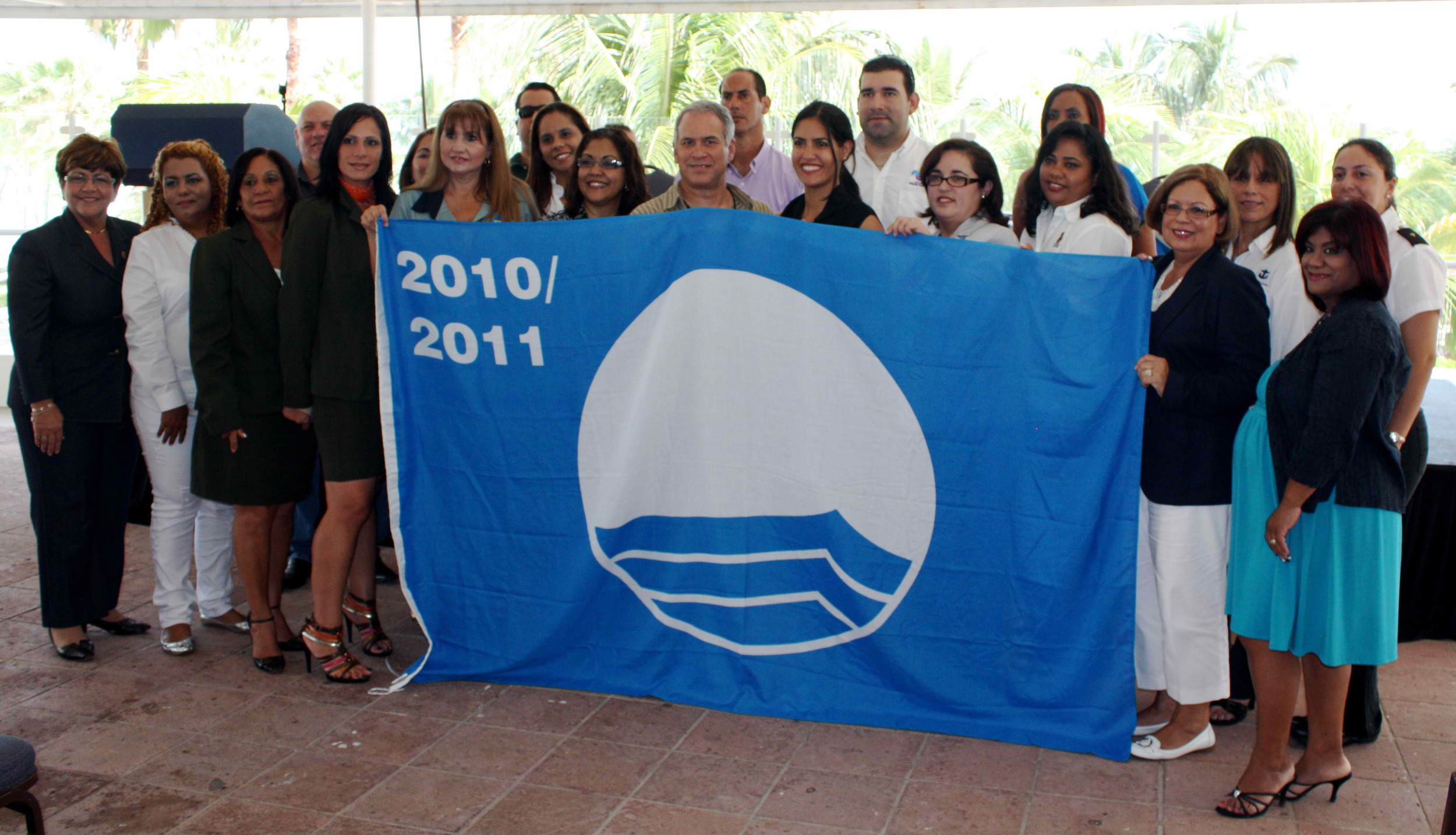
The awarded beach is Pelícano Beach which is managed by the Department of Natural and Environmental Resources (DNER). The Island is located in the south region of Puerto Rico with access through sea, primarily from the city of Ponce, through the Guancha ferry pier. The municipality of Ponce collaborated with the DNER in order for the beach to win the award.

Caja de Muertos (Coffin Island) is named for it's coffin-like shape. The island was designated as a nature reserve in 1980 turning the island into a protected wilderness area. The island has remained a protected area ever since. Pelícano beach is part of this important Natural Reserve and is distinguished for its peaceful and pristine waters and great views at its highest point where the lighthouse is located.
We invite all the Blue Flag countries to visit this spectacular and paradises’ beach. See you in Puerto Rico !
Blue Flag 10 year anniversary in South Africa
For the 10th anniversary year of Blue Flag in South Africa, twenty-seven South African beaches have been awarded international Blue Flag status for 2010/11.
For the 10th anniversary year of Blue Flag in South Africa, twenty-seven South African beaches have been awarded international Blue Flag status for 2010/11.
Blue Flag gives local and foreign visitors the knowledge that their beaches are clean, environmentally sound and adhere to international safety and other tourist standards. In the last 10 years, the Blue Flag programme has helped raise the standards on South African Blue Flag beaches in a significant way.
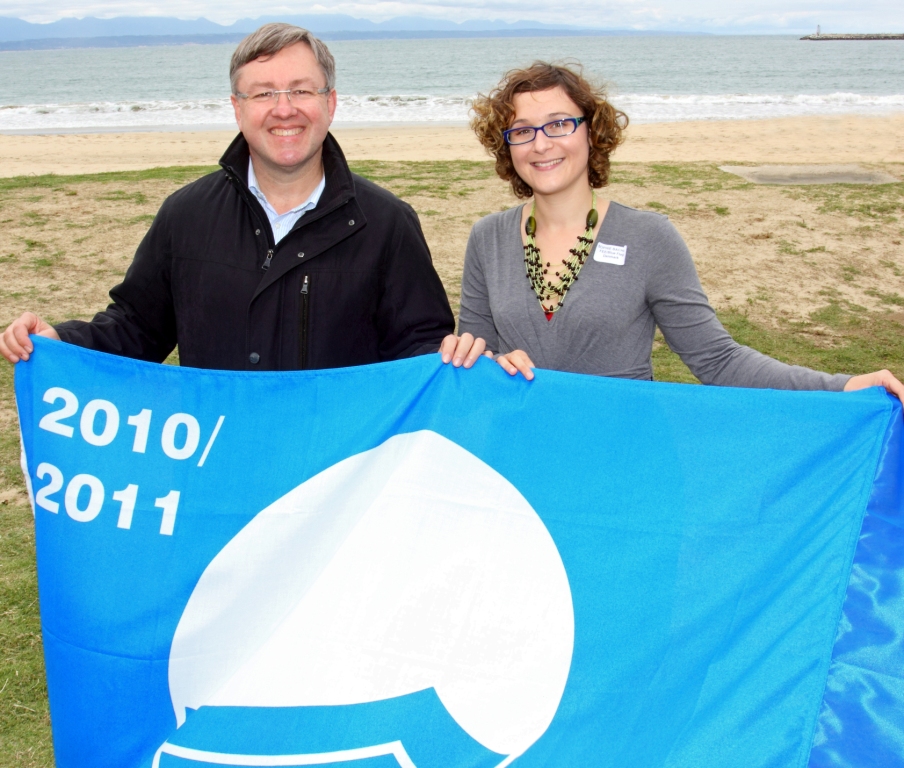
The Minister of Tourism, Mr Marthinus van Schalkwyk attended the Blue Flag celebration
When South Africa joined the campaign in 2001 as the first country outside Europe to participate, Blue Flag began to grow into a truly international campaign, and the "Foundation for Environmental Education in Europe" changed its statutes and name to become the "Foundation for Environmental Education".
By joining FEE, South Africa opened the door for numerous countries outside Europe to join FEE in the last 10 years. This is also why the international Blue Flag coordination was pleased to join the South African Minister of Tourism, Mr. Marthinus van Schalkwk to celebrate the 10 year anniversary of Blue Flag in South Africa. The International Blue Flag Coordinator also visited some beaches whilst in South Africa, all showing compliance with the Blue Flag criteria.
Local authorities report a number of spin-offs from being awarded Blue Flag status, including an increase in visitors, improved behaviour on the part of beach-goers, property prices rising for homes near Blue Flag beaches – and visitors enjoying a well cared-for and managed beach.

The proud team of Hibiscus Coast/Ugu municipality receive their Blue Flag
Blue Flag to Fly on Sail Training ships!
The Foundation for Environmental Education (FEE) and Sail Training International have joined forces to promote FEE’s Blue Flag programme to help protect the world’s marine environment.
The Foundation for Environmental Education (FEE) and Sail Training International have joined forces to promote FEE’s Blue Flag programme to help protect the world’s marine environment. The programme, to be known as the ‘Sail Training International Blue Flag Scheme’, is open to sail training vessels that belong to Sail Training International’s member national organisations in 26 countries and others that participate in sail training Tall Ships events.

SAGRES Ship in the Parade of Sail during The Tall Ships Races 2006 in Lisbon
Participating vessel operators will sign a Code of Conduct that will apply to everyone on board to minimise their impact on the marine environment both at sea and in port.
“The marine environment is deteriorating almost everywhere around the world and people who go to sea have an important role in its protection,” says Finn Bolding Thomsen, Director of FEE. “We are delighted to have Sail Training International’s support and look forward to working through them with vessel operators and the young trainee crew members to really ‘make a difference’.”
“The Blue Flag programme began 23 years ago mainly to help clean up beaches and harbours. More recently it has been extended for ship and boat owners,” says Nigel Rowe, President and Chairman of Sail Training International. “The sail training world, both owners and trainee crew members, will want to do all they can to minimise pollution at sea. We plan to give this our full support.”

The Dar Mlodziezy Ship in Szczecin in 2007
Sail Training International and the Foundation for Environmental Education will work directly with vessel operators, and through the 26 national sail training organisations around the world as well as Sail Training International’s International Youth Forum. The scheme will be launched at the Sail Training International Annual Conference in November (Stavanger, Norway, to be attended by more than 400 sail trainers and host port representatives) for implementation to begin in 2011.
For more information on Sail Training Ship International click here.