
Tobago Boat Operators Miss Ayana and Top Catch Charters are once more awarded the Blue Flag
Once again Tobago boat operators Miss Ayana and Top Catch Charters have been awarded the Blue Flag award. Top Catch Charters has maintained this award for three consecutive years, while Miss Ayana has achieved it for the second time. These two operators have consistently showcased their commitment to environmental responsibility and sustainable operations.
The recent certifications were distributed on November 22nd, during which the boat operators received Blue Flag certificates, plaques, and flags to display their dedication to sustainable practices proudly. This accomplishment is a significant milestone for Tobago tourism as it prioritises eco-friendly initiatives that benefit visitors and the local environment.
The Tobago Tourism Agency Limited (TTAL) was present for the awarding ceremony and stated the following:
“This award signals the continued ability of the two boat operators to maintain the standards set out by Blue Flag. They act as a draw to the destination for travellers seeking to reduce their carbon footprint while resident, and as an example to other boat operators locally and within the region. The Tobago Tourism Agency Limited will continue to promote the Blue Flag programme among boat operators and pursue full Blue Flag status for the pilot beaches at Mt. Irvine, Bloody Bay and Kings Bay.”
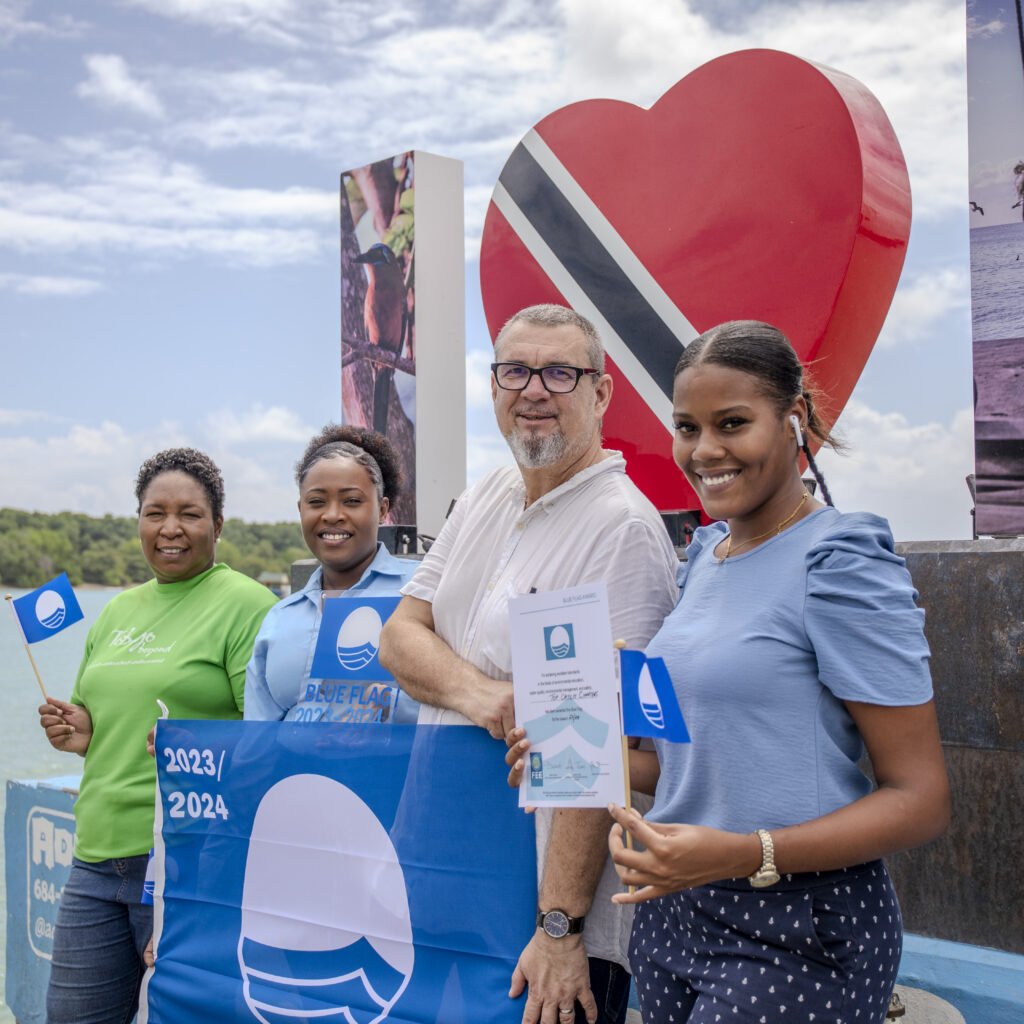
Jenna Reid of Top Catch Charters receives the 2023-2024 Blue Flag award with members from the Tobago Tourism Agency and Green T&T
Top Catch Charters boat operator Shivonne Peters and her team have been in the programme since 2021 and shared the following about their continued involvement and benefits derived,
“We have seen sustained and continued benefits from the Blue Flag programme in terms of the efficiency of our operations, our safety practices and in promoting sustainable practices for our guests and in our community. Our customer base continues to widen as more visitors seek sustainable tourism activities. Through the programme, we have been able to conduct environmental projects and collaborate with stakeholders to conserve Tobago’s marine environment”.

Boat Owner Dexter Black receives his Blue Flag plaque for the 2023-2024 season
Dexter Black, operating the second-time awarded Miss Ayana Glass Bottom Boat, added:
“The management and crew of Miss Ayana are delighted to have our Blue Flag award renewed for the year 2023/2024. We are excited and willing to operate in a sustainable and eco-friendly environment. The blue economy is vital for us as an island and nation, and we must preserve it for generations to come.”
Green T&T, as the National Operator for the programme in Trinidad and Tobago, actively seeks to collaborate with beach management, boat operators, and marinas across both islands. Their united goal is to enhance sustainable practices in marine environments by promoting participation in the esteemed Blue Flag programme. Working together, Green T&T strives to elevate the industry’s commitment to environmental stewardship and responsible tourism.
For more information about the Blue Flag programme in Trinidad and Tobago, please email Green T&T at blueflag@green-tt.org or visit their website, www.green-tt.org.
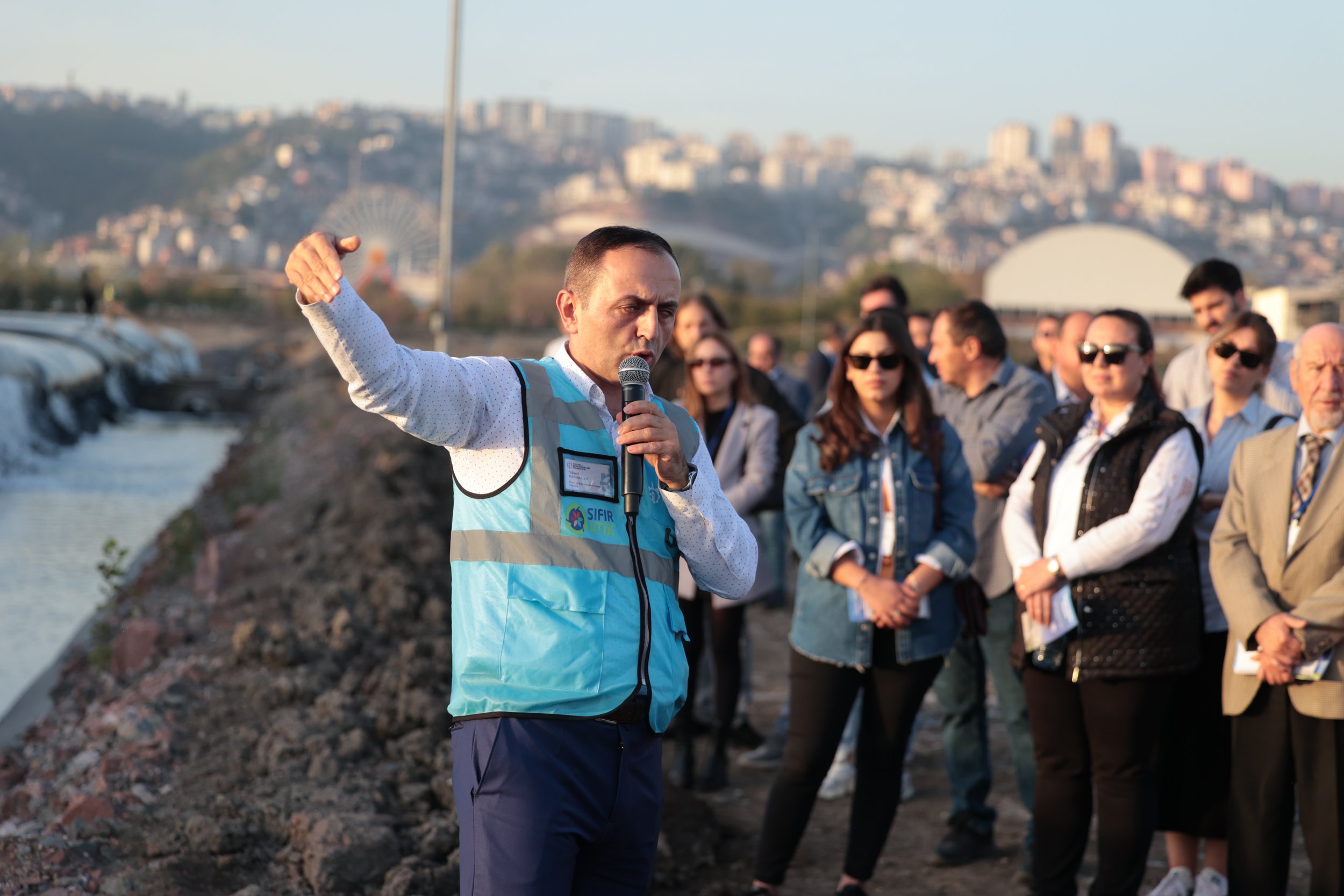
Blue Flag’s 30th Anniversary in Kocaeli Municipality, Türkiye - Mud Removal Project - Best Practice Field Trip

During the event, attendees visited one of the initiatives known as "Cleaning, Dewatering, and Disposal Service of Izmit Gulf's East Basin Bottom Sludge" project. This initiative, backed by the Presidency's Strategy and Budget Department, aims to protect the Gulf of Izmit's environment. Led by the Ministry of Environment, Urbanization, and Climate Change and the Kocaeli Metropolitan Municipality, it targets clearing bottom mud in the Gulf's eastern basin to improve the area's environment. Additionally, Kocaeli Municipality, in partnership with TÜBITAK, MAM, and Istanbul University, is conducting thorough studies on the accumulated bottom mud, studying currents, surface water, and human activities in the region.
The research findings highlight the significant role of accumulated bottom mud in generating unpleasant odors and increased turbidity, especially during meteorological occurrences like southwesterly winds. This sediment obstructs water circulation, triggering detrimental effects such as algal blooms and a reduction in dissolved oxygen levels, creating an inhospitable environment for the marine ecosystem. Notably, the study establishes a direct correlation between the bottom mud and the formation of mucilage in the Marmara Sea, adversely impacting the overall ecosystem.
The launch of a specialized project marks a crucial milestone in the restoration efforts for the Izmit Gulf, with far-reaching implications for the entire Marmara region, a vital Mediterranean corridor. This ambitious two-stage initiative aims to cleanse around 720 million tons of bottom mud across an extensive 8.5-hectare area. Upon the successful completion of the second phase, Izmit Bay will be ready for regeneration, planned to resemble a "giant aquarium," reflecting its pristine state from earlier times.
The implementation of the project involves the meticulous removal of sludge from the seabed through specialized pipes, facilitating its transportation to a designated "dewatering facility" situated behind the Izmit Athletics Track. The comprehensive endeavor is slated for completion over a five-year timeline, underscoring a dedicated commitment to environmental restoration and sustainable marine practices.

TÜRÇEV's and Blue Flag’s 30th Anniversary in Türkiye

Between 7th and 10th November 2023, one of our leading member organisation TÜRÇEV held a national event in honor of the 30th anniversary of the organisation and Blue Flag in Türkiye in Kocaeli, Turkiye with the support of the Kocaeli Metropolitan Municipality which is having nine Blue Flag beaches within the area of a metropolitan city.

During the Blue Flag 30th-year event, an International Panel discussion featured speakers from FEE Global (Johann Durand), FEE Spain-ADEAC (Virginia Yuste Abad), FEE Greece-HSPN (Dareia-Nefeli Vourdoumpa), and FEE Turkiye-TURCEV (Almila Kindan Cebbari). Following this, significant addresses were delivered by key representatives from the Ministry of Culture and Tourism, the Ministry of Health, and the Ministry of Environment, Urbanization, and Climate Change.

The schedule included presentations showcasing best practices from coastal municipalities and local associations relating to Blue Flag criteria and the responsibilities of local supervisors. The attendees were representatives from 50 diverse coastal municipalities, including beach managers.

Among these presentations, two notable best practices were highlighted from Kocaeli Metropolitan Municipality. These included the monumental Izmit Bay Mud Removal Project area and the Ormanya Biodiversity Reserve and Educational Natural Life Park, representing significant environmental renovation and conservation efforts within the Turkish Republic.
The event included a field trip to a Mud Removal Project taking place in Kocaeli Municipality, read more here:
International announcement of Blue Flag Awarded sites - Southern Hemisphere 2023/2024 season

The second Blue Flag International Jury meeting of 2023 took place this past September, and we’re proud to announce that 193 sites from 11 countries have received the Blue Flag award for the upcoming season in the Southern Hemisphere.
These sites join the previously awarded beaches, marinas, and tourism boats awarded by the International Jury in the Northern Hemisphere round that took place in April, for a total of 5038 sites awarded in 2023 (4205 beaches, 711 marinas, and 122 tourism boats).
We would like to also congratulate the winners of the Best Practice competition for the Southern Hemisphere 2023/2024 International Evaluation. The final ranking is published below.
For the category “Accessibility / Access for all”, the ranking is as follows:


The Paradisus brand, managing awarded Blue Flag beaches “El Cortecito” and “Bávaro”, implemented am inclusion program, which gives work opportunities to people with hearing, visual or motor disabilities as well as elderly disabled people. The program seeks to incorporate people with disabilities in all areas of the brands operations. Paradisus also conducts sensitisation dynamics with the staff to create an environment conducive to their integration, such as sign language formations.
© Bávaro Paradisus Palma Real (Dominican Republic)
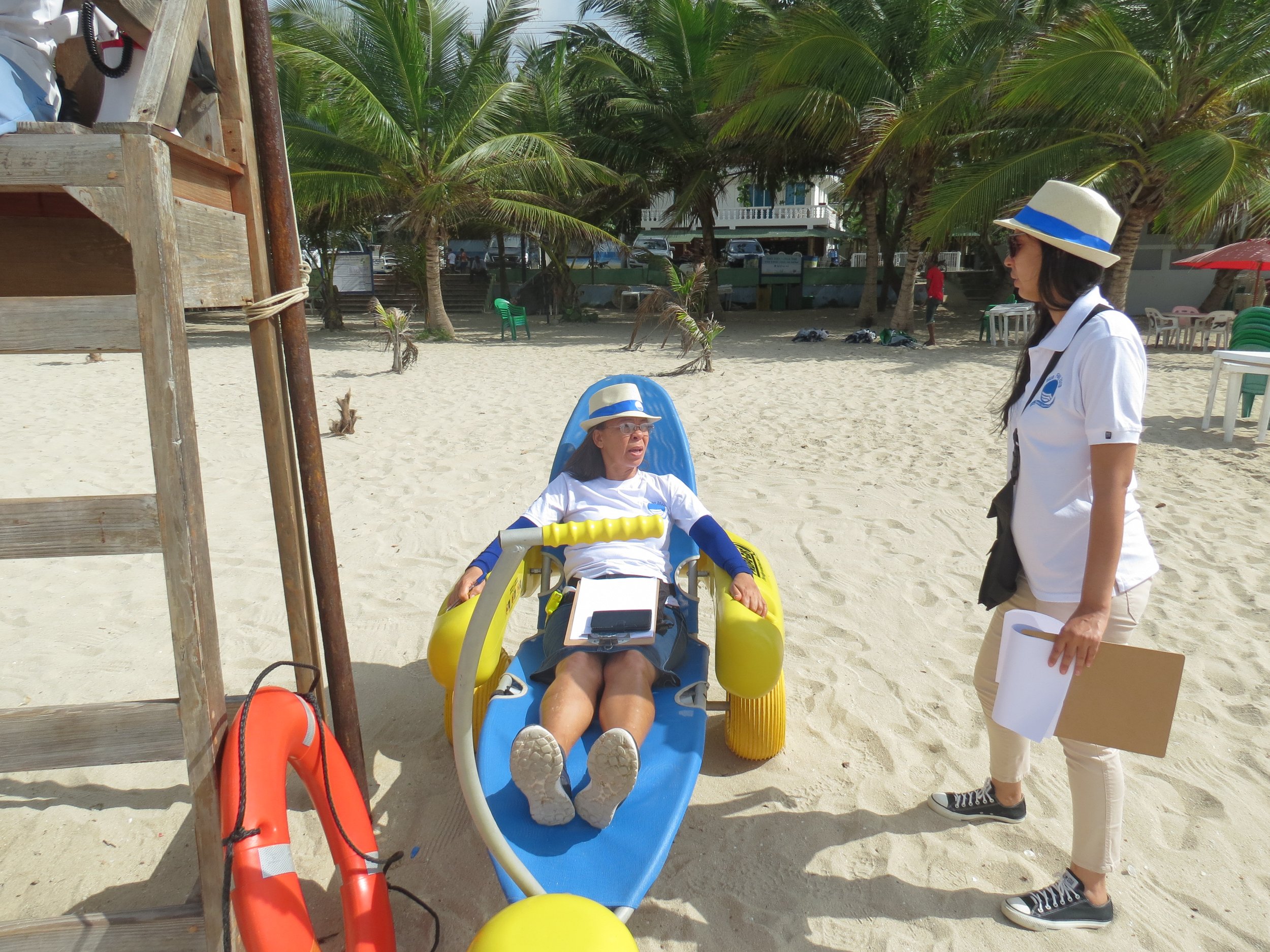

As part of a campaign of the presidency of the Dominican Republic on accessible tourism in the country, a series of informative videos were recorded. These highlight the importance of Blue Flag Beaches for the establishment of accessible tourism destinations. A recording team accompanied the Blue Flag National Jury, in order to illustrate that tourism destinations in the Dominican Republic are increasingly friendly for the transfer, movement, and enjoyment of people with disabilities.
© IDARD


In Praia Grande de Caravelas (Brazil), the site managers wish to give the possibility for people with impairments or disabilities to enjoy their experience at the beach with the adequate equipment, from the parking to the water. Amphibious wheelchairs and a bamboo ramp are available and allow a safe and accessible sea bath. The lifeguards offer their help to the beach users wishing to access the water. The municipality also provides special parking spots close to the beach facilities, as well as accessible toilets and showers.
© Praia Grande de Caravelas (Brazil)
These efforts collectively demonstrate a commitment to fostering accessibility and ensuring that everyone can enjoy beach destinations.
Blue Flag in Italy - Technical kick off meeting for the 2024 season
The preparations for the Blue Flag application, evaluation, and implementation procedures for year 2024 have officially commenced in Italy.
A technical meeting organised by FEE Italia, implementing “Bandiera Blu” is held every year at the end of October to mark the beginning of the new Blue Flag year.
The event sees the participation of both municipalities that have already obtained the Blue Flag award, and of those that are in the process of adopting sustainability measures according to the continuous improvement framework of the Blue Flag programme.

Representatives of FEE Italia presenting key information about the programme´s implementation in Italy for the 2024 Blue Flag season.
The technical meeting was hosted in the premises of the Lazio regional authority, with the attendance of over 300 representatives from various municipal administrations.
The agenda of the meeting covered a variety of aspects related to the implementaiton of the Blue Flag programme in Italy, and introduced updates for the year 2024.
This year's primary focus was centered on the theme of accessibility in tourism, with valuable input from ENAT (European Network for Accessible Tourism), one of the Institutional Partners of the Blue Flag programme, whose representatives sit in the International Jury.

An overview of the participants in the meeting, consisting mainly of representatives from awarded municipalities and site managers in charge of the local implementation of the Blue Flag programme in Italy.
Furthermore, the Blue Flag Application Form developed by FEE Italia for the upcoming season now includes a new guideline criterion aimed at promoting local efforts for the establishment and improvement of renewable energy communities. This is an important environmental development addressing carbon emissions via the implementation of climate mitigation measures.
Sandbanks Restoration Education at Peró Beach, Brazil
The Peró coastal region, situated along the pristine Atlantic coast of Brazil, has long captivated the hearts of tourists. With its breathtaking vistas and pristine stretches of golden sand, it has become an attractive tourist destination. However, over the years, the influx of tourists has spurred the construction of more accommodations, residential complexes, and infrastructure, progressively encroaching upon the fragile coastal ecosystem. The sandbank vegetation areas, a vital component of this coastal landscape, have suffered the most from human pressures, further exacerbated by the speculative surge in real estate ventures and the expansion of livestock farming.
In response to these challenges, the Peró Residents Association, and the Veiga de Almeida University initiated a sandbank restoration project at Peró Beach with the support of the Blue Flag Peró site managers. The Blue Flag Programme and the Instituto Ambientes em Rede (IAR) have always encouraged Blue Flag-awarded sites to work in cooperation with local institutions to promote the preservation of areas surrounding awarded sites. This story from Peró Beach highlights the opportunities to engage local communities with environmental conservation and education by bringing together undergraduate students, professors, biologists, and technicians from Veiga de Almeida University (UVA) as well as public authorities.


Students surveying the study area.
The project began with a comprehensive survey of the study area guided by a biologist. Soil samples were collected and analysed for moisture content, organic matter content, FE³+ ion content, pH, and potassium and phosphate levels. Based on the findings, the team divided the study area into three distinct quadrants:
· Quadrant 1 received a combination of sewage plant sludge (solid material remaining after the wastewater treatment process, typically consisting of organic and inorganic matter), landfill, and plant litter;
· Quadrant 2 was treated with silt from a sewage plant, cake, and plant litter;
· Quadrant 3 served as the control group and received only a single layer of landfill.
The landfill and plant litter (e.g., dry leaves) used in the experiment were sourced from the surrounding area.

Division of the study area into three quadrants.

Dry leaves to retain soil moisture.
In the initial phase of the study, legumes such as Phaseolus vulgaris (black beans) and Cajanus cajan (pigeon pea) were sown to facilitate nitrogen fixation. In the subsequent phase, native fruit-bearing plants like Myrciaria guaquiea (Guaquica) and Eugenia uniflora (pitanga) were planted to attract arthropods and birds, thereby enhancing the local food chain. Native plants were chosen for their symbiotic relationships with local fauna, as they produce fruits and seeds that are highly attractive to wildlife.
Regular monitoring was conducted, with the students measuring bean sprout monthly growth and weekly visits to the study area to document plant development through photographic records. Despite meticulous planning and execution, unforeseen challenges emerged during the project. An anthill encroached upon Quadrant 2, but the students successfully mitigated it using coffee grounds. However, the final setback was posed by domestic cattle, which, due to the inability to build a protective fence, freely entered the quadrants. These cattle consumed the newly developed leaves of the sprouts and trampled the ground, ultimately forcing the research to conclude in November 2021.


Soil samples laboratory analyses from the three distinct quadrants.
Overall, the project showcased the possibility of restoring degraded areas by stimulating biogeochemical processes without relying on chemical fertilizers. The addition of silt and sludge improved soil quality, particularly in Quadrants 1 and 2, where potassium and phosphate levels increased. The presence of arthropods attracted birds, further enhancing ecosystem processes. Additionally, the presence of dry leaves helped retain soil moisture and shield it from intense sunlight.
Despite its challenges, this project not only offers insights into a cost-effective approach to sludge management but also holds the promise of a method for restoring degraded sandbank vegetation areas. Moreover, involving students, provides an educational opportunity for the next generation of nature restorers, fostering students’ scientific and environmental observation skills.
Instituto Ambientes em Rede (IAR), acts as a FEE Member Organisation in Brazilfor the implementation of the Blue Flag programme, and of other FEE programmes, such as Green Key, Eco-Schools, Learning About Forests, and Young Reporters for the Environment.
To explore IAR's extensive work with conserving natural ecosystems and promoting socio-cultural development through environmental citizenship visit its site here.
For more information about the UN Decade on Ecosystem Restoration and opportunities for involvement, please visit the following link.
This article is part of our UN Decade on Ecosystem Restoration series, which highlights the projects and activities of FEE members that contribute to the UN Decade.

15th National, 1st International Blue Flag Local Representatives Turkish Seminar
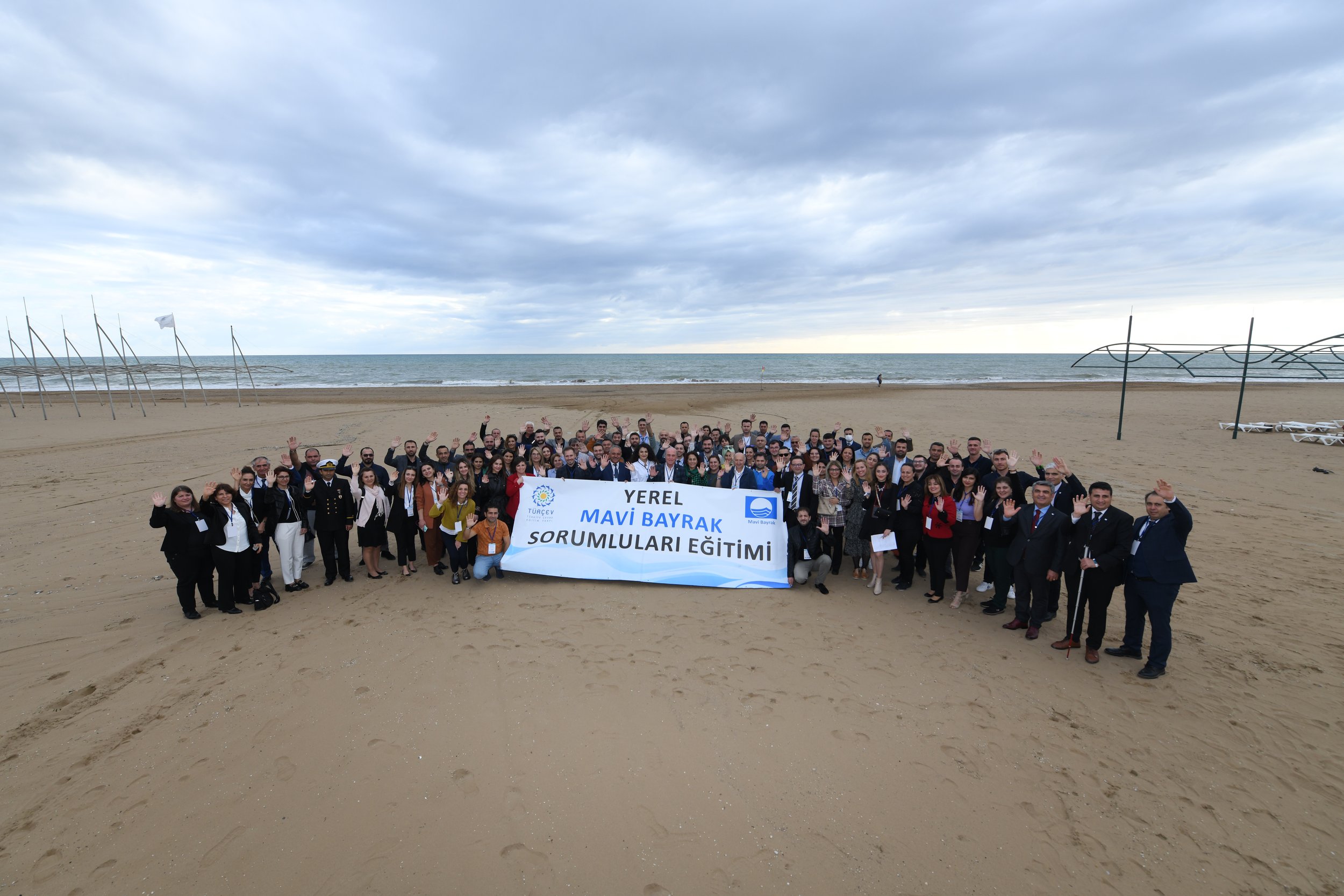
During the event, there will be Blue Flag 30th year International Panel with the speakers from FEE Global (Johann Durand), FEE Spain-ADEAC (Virginia Yuste Abad), FEE Greece-HSPN (Almila Kindan Cebbari), FEE Turkiye-TURCEV.
The event will be followed by speeches from nationally important actors of the Ministry of Culture and Tourism, the Ministry of Health, the Ministry of Environment, Urbanization and Climate Change. There will be two different best practice site visits to the biggest environmental renovation project of Turkish Republic which is Izmit Bay Mud Removal Project area and Ormanya Biodiversity Reserve and Educational Natural Life Park.
The remaining itinerary is left to best practice pressentations from coastal municipalities and local assocations related to Blue Flag criteria and the responsibilities of local responsibles. The participants will be from 50 different coastal municipalities as well as beach responsibles.
The Foundation for Environmental Education (FEE) Develops its Climate Action Plan as a Signatory of the Glasgow Declaration on Climate Action in Tourism
The Foundation for Environmental Education (FEE) has taken another significant step towards delivering effective Climate Action in the Tourism sector.
As a signatory of the Glasgow Declaration, FEE has pledged to develop and implement an Action Plan focused on addressing climate change impacts in tourism. The plan will be reviewed annually to ensure transparency and accountability.

The Glasgow Declaration was launched at the UN Climate Change Conference COP26 in November 2021. It is a voluntary commitment requiring organisations to deliver action plans within 12 months of their becoming signatories. These pledges should be aligned with five pathways: Measure, Decarbonize, Regenerate, Collaborate and Finance.
The Glasgow Declaration encourages the acceleration of climate action in tourism by securing commitments to reduce emissions in the tourism sector by at least 50% over the next decade.
The objectives of FEE’s Action Plan for Climate Action are strongly connected aligned with FEE´s GAIA 20:30 strategy’s Climate Action pillar, as well as with the global goal of reaching net zero emissions as soon as possible, before 2050.
FEE aims to implement global actions through its five programmes, with a particular focus on Blue Flag and Green Key International, renowned for their sustainable tourism initiatives and broad network of destinations and hospitality establishments.
In the coming years, FEE has outlined key objectives to guide its actions, in particular:
Support member organisations in the FEE network to deliver quality change action and develop Climate Action Plans, while providing access to tools and resources to do so.
Wherever possible, align the criteria of its sustainable tourism programmes with the goals and with the five pathways of the Glasgow Declaration (Measure, Decarbonise, Regenerate, Collaborate and Finance).
Promote a culture of measurement and monitoring of carbon emissions. This will involve analyzing energy consumption, waste management practices and other relevant factors in order to form a basis for targeted emission reduction strategies throughout the network.
The Foundation for Environmental Education builds initiatives and activities together with and for its broad network of organisations in around 80 countries all over the world. More than 5000 sites are awarded the Blue Flag in more than 50 countries, and more than 4000 sites are certified with the Green Key in more than 60 countries. FEE aims at taking the role of a strategic multiplier for the Glasgow Declaration effort.
To read the Glasgow Declaration Action Plan of the Foundation for Environmental Education, click the picture below:

By fostering collaboration, promoting sustainable practices, and raising awareness, FEE’s Action Plan for Climate Action aims at inspiring positive change, and at contributing to global efforts in mitigating climate change locally, nationally, and globally.
The first Blue Flags have been awarded to beaches in the continental United States of America
The American Shore and Beach Preservation Association (ASBPA), running the Blue Flag programme in the continental USA, Alaska and Hawaii is pleased to announce the first Blue Flags in the United States. The Blue Flags have been awarded to two magnificent beaches: Westward in Malibu and Delray in Delray.
The awards are a testament of the sites’ continuous efforts and commitment to the implementation of the Blue Flag criteria. The awarded beaches will now offer educational activities to the public. Information about the activities will be posted on their respective sites’ information boards.
Annie Mercer, the Program Coordinator for the American Shore and Beach Preservation Association (ASBPA), says:
“Our sites have worked hard for several months to implement and maintain more than 30 diverse criteria to achieve award status. Their staff and communities can raise their flags with pride for going above and beyond US standards to receive international recognition for sustainable management practices.”
The Blue Flags will fly over Westward Beach from May 25 to September 30, 2023, and over Delray Beach Municipal Beach from May 19, 2023, to April 30, 2024.
Staff from the Los Angeles County Department of Beaches and Harbors started with the programme in 2020, and officially started the implementation of the programme, as a pilot site in 2021.
Gary Jones, the Director for the County of Los Angeles’s Department of Beaches and Harbors adds:
“We’re thrilled and honored that the Westward Beach portion of world-famous Zuma Beach will fly one of the first Blue Flags in the United States. The Blue Flag will provide visitors with extra assurance that we are responsibly caring for our coast.”
The City of Delray Beach entered the programme as a candidate beach in early 2022 and submitted its full application in the same year.
Shelly Petrolia, the Delray Beach Mayor, says:
“With the Atlantic Ocean at our doorstep, Delray Beach is proud to have a beautiful, world-class beach to call our own. I am especially grateful for the dedicated individuals who have put so much effort into ensuring that our natural beach is safe, accessible and that beachgoers are educated about our conservation initiatives.”
Blue Flag Turkey held the 10th Beach Blue Flag Representative Training
The Foundation for Environmental Education in Turkiye (TÜRCEV), running the Blue Flag programme in the country, organised the 10th Representative Training on Wednesday, 26th of April 2023. The training took place online for the entire day.

© Foundation for Environmental Education in Turkey (TURÇEV)
For a succesful implementation of the programme, it is important that the representatives operating the Blue Flag-awarded beaches, marinas and tourism boats undergo training in order to ensure that the strict criteria are met and implemented correctly.
The programme includes a variety of criteria related to environmental management, environmental information and education, safety and services, and water quality, therefore it is important that such a range of different aspects are taken into consideration with a holistic and a positive, solution-based approach. National Operators and FEE Member Organisations have an important role as collectors of knowledge, good and best practices, which can be reproduced across the Blue Flag network, building on each other´s experience to allow for continuous improvement and Integrated Coastal Management.
A total of 505 people participated in the training, 260 of whom were trainers and representatives of the Ministries of Culture and Tourism, Health, and Environment, Urbanization, and Climate Change. At the start of the training, representatives from the ministries shared information about their contributions to the Blue Flag programme.
We would like to congratulate all the participants who completed the training and Foundation for Environmental Education in Turkey - FEE Turkey - for the incredible efforts to train and educate about sustainable development!
Best practice competition results for the Northern Hemisphere 2023 International Evaluation
2023 - Northern Hemisphere, Blue Flag International invited the National Operators to share examples of Best Practices related to the following topics: “Accessibility and Access for All” and “Energy savings and management”.
45 Best Practices have been submitted by 29 countries as part of this round.
The best practices were presented to the International Jury during the International Jury meeting and were evaluated based on their reproducibility and impact.
The final rankings are reported below, specifying the winning Best Practice and the countries and management bodies they were submitted from.
For the category “Accessibility / Access for all”, the ranking is as follows:
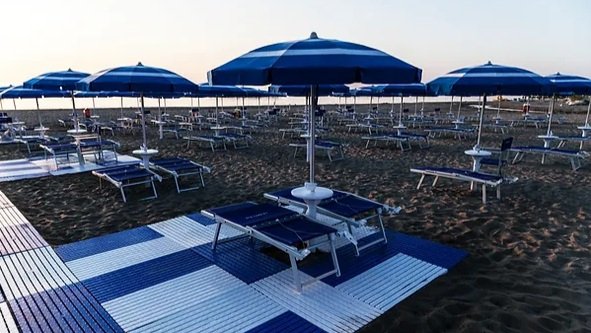
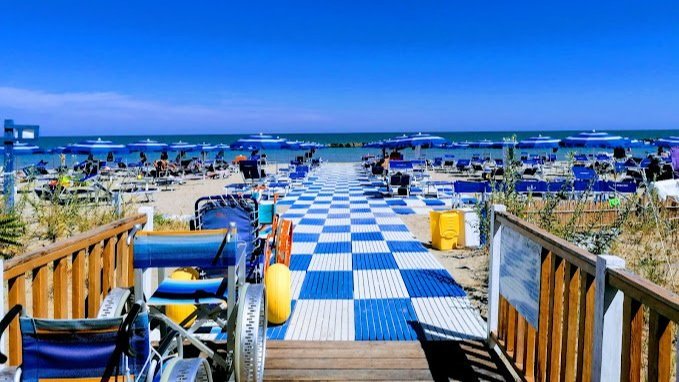
1. ‘The beach must be for everyone’
Martinsicuro Municipality (Italy)
© Martinsicuro Municipality (Italy)
2. ‘MIND barrier-free’
Suma beach, Kobe Municipality (Japan)
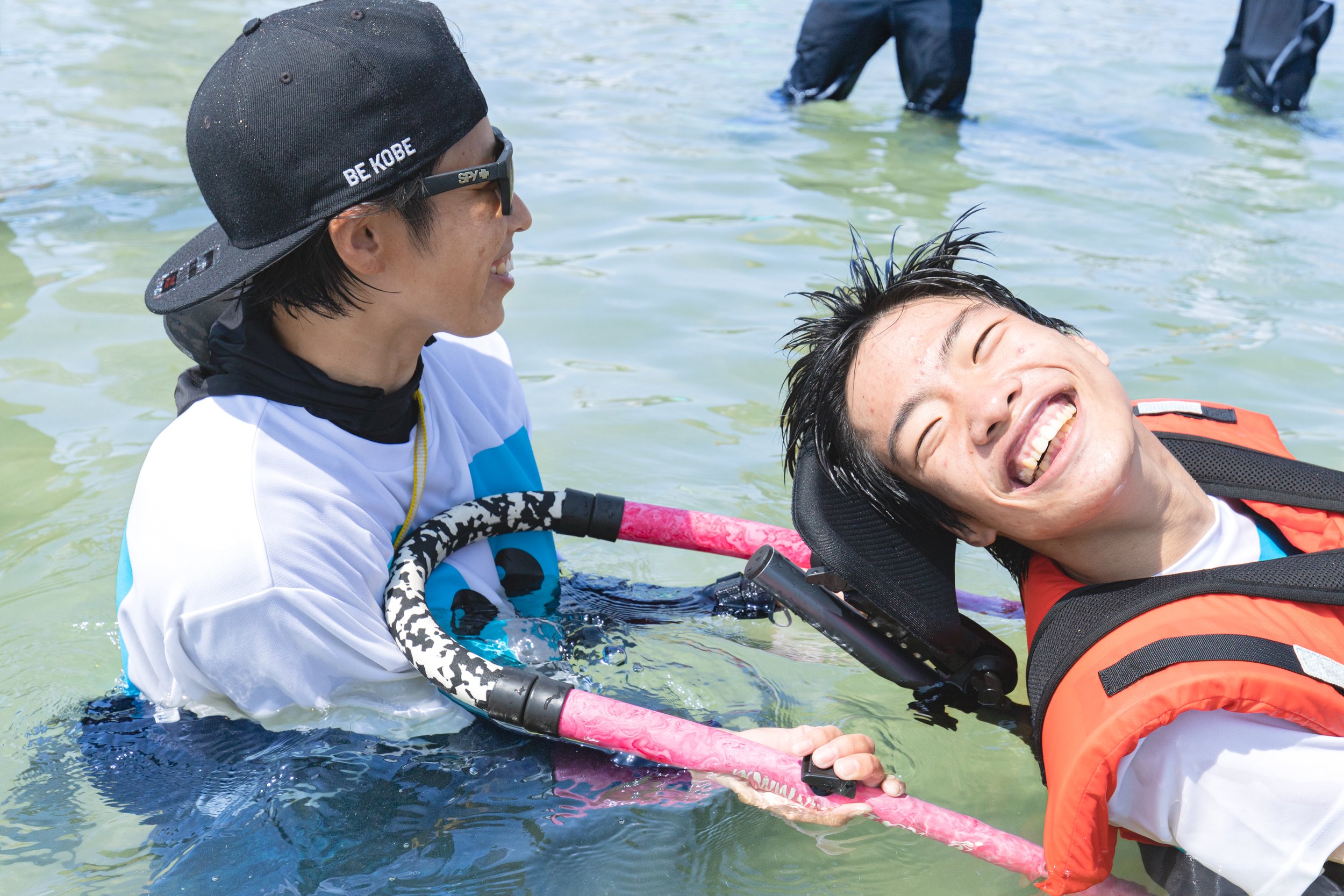
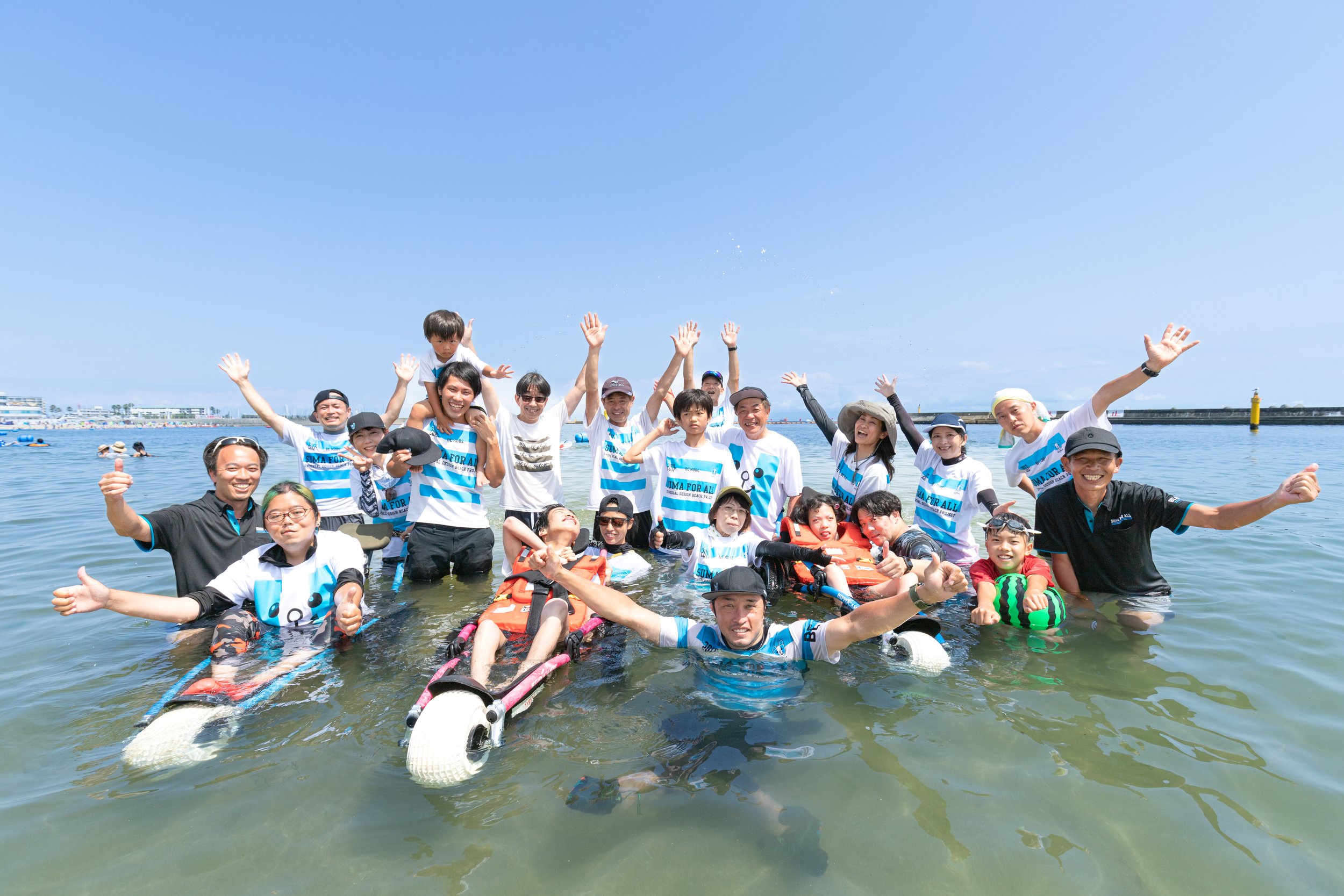
© Suma Beach (Japan)
3.’ BEACHES accessible for everyone’
Komotini Municipality (Greece)
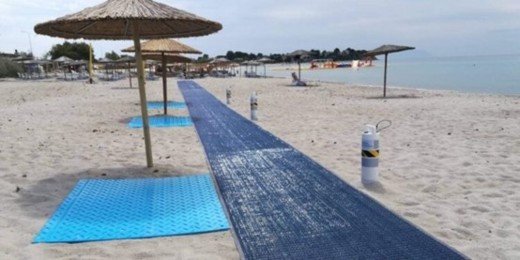
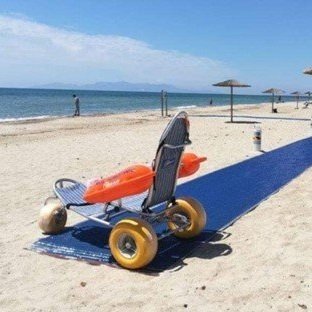
© Komotini Municipality (Greece)
In Italy, Handisport 2000 built Martinsicuro, stands out as a fully accessible bathing establishment where young people with disabilities are employed. Japan's mind barrier-free project aims to create inclusive beach experiences and challenge societal perceptions, while Greece's Municipality of Komotini has installed access systems and mechanisms for people with mobility limitations and visual impairments, making it one of the most accessible cities in the country.
These efforts collectively demonstrate a commitment to fostering accessibility and ensuring that everyone can enjoy beach destinations.
The second category “Energy savings and management” ended up with the following results:
1. ‘Turning green and becoming energy independent’
Mediterranean Village Hotel & Spa (Greece)
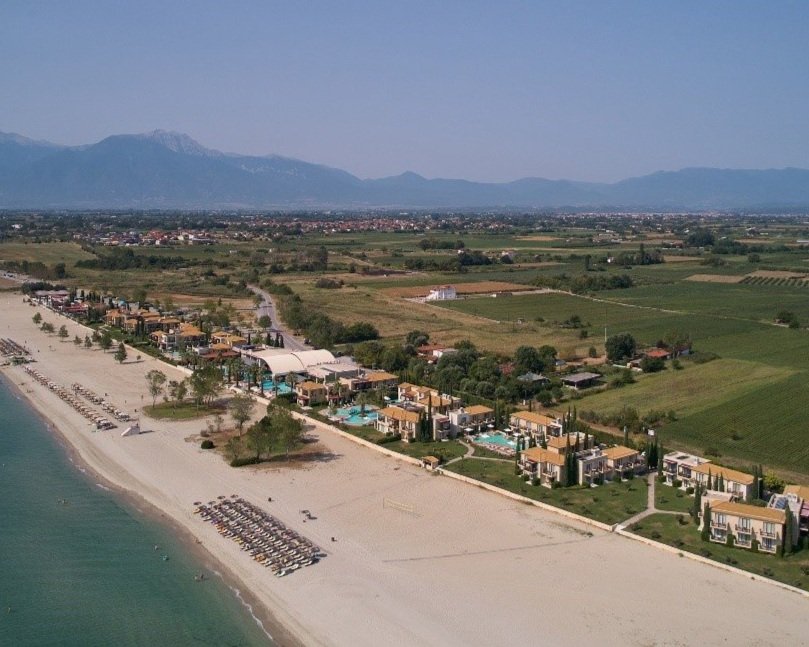
© Mediterranean Village Hotel & Spa (Greece)
2. ‘The green energy mission of Albena’
Albena AD (Bulgaria)
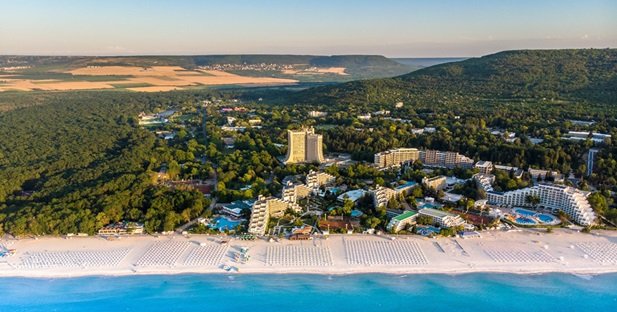
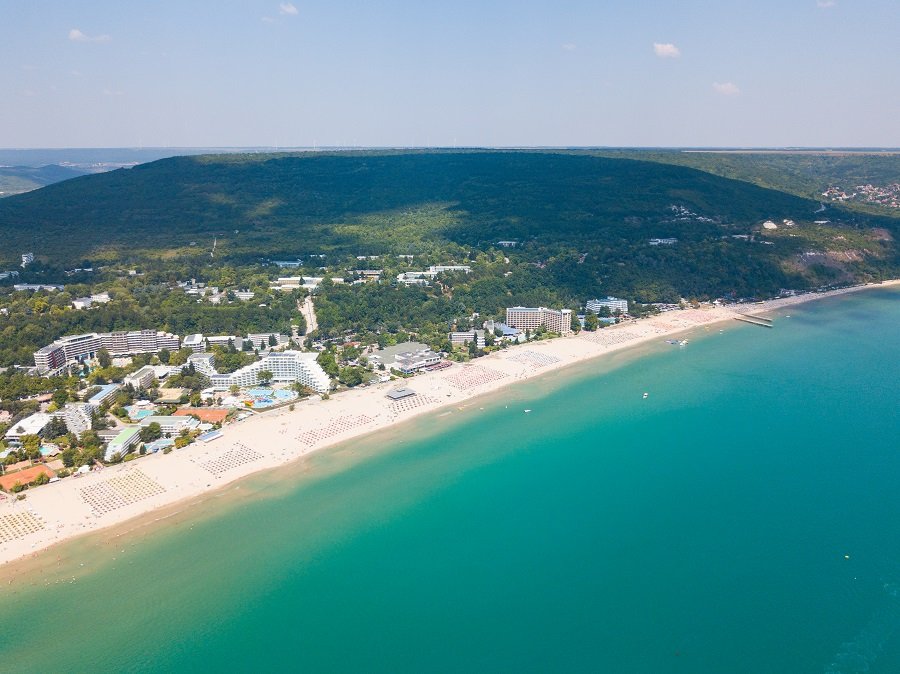
© Albena AD (Bulgaria)
3. ‘Environmental education and innovation center’
Antalya Municipality (Turkey)
© Antalya Municipality (Turkey)
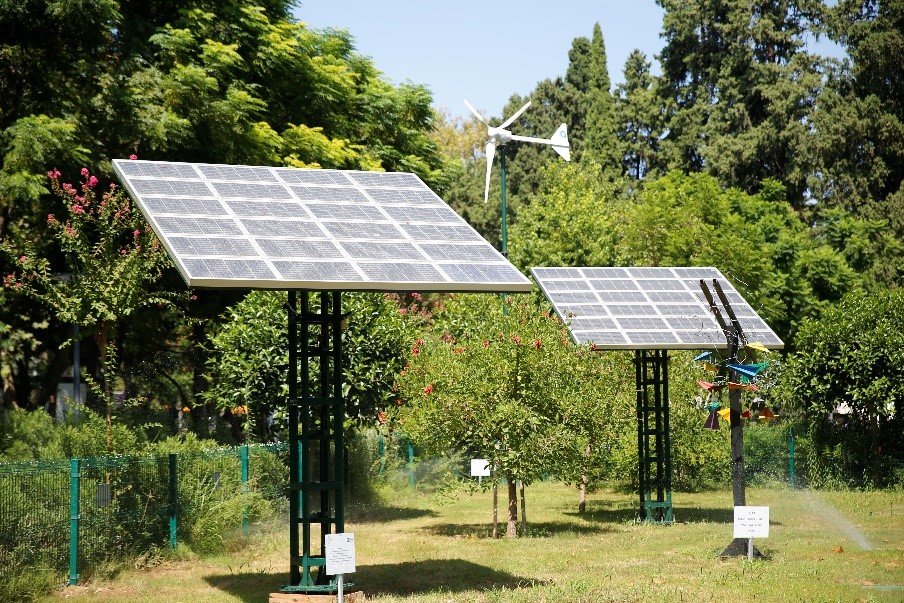
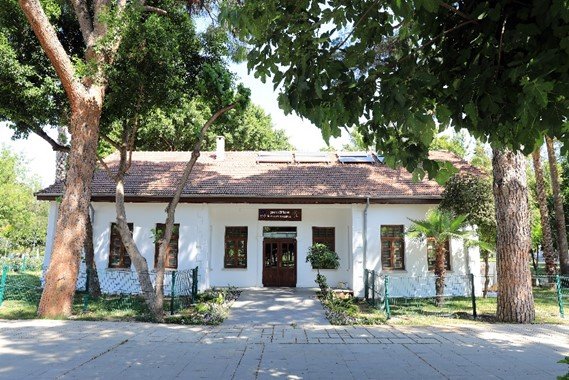
The Mediterranean Village & Spa in Greece is transitioning into an energy-independent destination through various actions such as recycling, energy-saving systems, and use of renewable energy sources. It proudly maintains the Green Key certification and the Blue Flag on its beach. Antalya Municipality in Turkey focuses on environmental education, organizing workshops for raising awareness. Albena in Bulgaria, a Blue Flag beach, emphasizes sustainability through solar energy, circular economy principles, and green transportation, producing 50% of its energy from renewables.
The best practices will be promoted on the Blue Flag social media channels, so stay tuned!
We would like to congratulate all the winners and thank all participants, as our Best Practices play a key role in the network, they provide relevant inspiration and contribute to sharing knowledge on sustainability across sites all over the world.
One of FEE’s GAIA fellows attended the 5th International Marine Protected Areas Congress (IMPAC5) in Vancouver, Canada
Achare Elvis Ayamba, the Founder & Executive Director of the Environment and Food Foundation (E2F) and one of the FEE’s GAIA fellows, attended the Fifth International Marine Protected Areas Congress (IMPAC5), a global forum that brings together ocean conservation professionals and high-level officials to inform, inspire and act on marine protected areas.

The GAIA fellowship challenges young people to create and develop their own solution to an environmental-related problem and become sustainable leaders. Ayamba is committed to building a sustainable future for Cameroon and Africa where people and nature thrive, striving on a clear path to sustainable, low carbon, and resilient development.
Various topics were covered during IMPAC5, such as the urgency to protect ocean biodiversity, the importance of indigenous partnerships in order to have successful conservation programs in indigenous territories, and innovation and transformation change.
Protecting global biodiversity and working to promote sustainable management of the coastal zone is near and dear to our hearts. In fact, it’s one of the three overarching goals of our 10-year strategy, GAIA20:30.
The congress was a unique opportunity to exchange knowledge, best practices, and innovative ideas to ensure the full and effective implementation of target 3 of the Kunming-Montreal Global Biodiversity Framework, developed at the UN Biodiversity Conference (COP 15), which reads:
“Ensure and enable that by 2030 at least 30 per cent of terrestrial, inland water, and of
coastal and marine areas, especially areas of particular importance for biodiversity and
ecosystem functions and services, are effectively conserved and managed through
ecologically representative, well-connected and equitably governed systems of protected
areas and other effective area-based conservation measures, recognizing indigenous and
traditional territories, where applicable, and integrated into wider landscapes, seascapes
and the ocean, while ensuring that any sustainable use, where appropriate in such
areas, is fully consistent with conservation outcomes, recognizing and respecting the
rights of indigenous peoples and local communities including over their traditional
territories.”
Achare Elvis Ayamba, the Founder & Executive Director of the Environment and Food Foundation (E2F) adds:
“IMPAC5 has provided yet another wake-up call regarding the reality faced by many local communities around the world currently suffering and adapting to climate change. Through this Congress, we have learned and witnessed the extraordinary resilience, and innovation grounded in local and traditional knowledge.”
The congress provided valuable information on how FEE and Blue Flag can make a contribution to protect 30% of our oceans by 2030 and support the ecosystems supporting life.
The first Blue Flags have been awarded to resorts in Argentina
On 18th January 2023, the ceremony for the awarding of the first Blue Flags obtained by Argentinian resorts was held in Mar del Plata. Two Argentinian beaches, namely Balneario San Sebastián (La Perla) and Balneario Mediterraneo (Punta Mogotes Complex), received the Blue Flag award.

“Beaches are normally seen as recreational environments, but they are also natural ecosystems susceptible to degradation, and therefore it is necessary to take measures for their conservation and sustainable use. Beaches are coastal-marine interface environments. They are fragile and dynamic and are home to an enormous biodiversity. From the National Ministry of Environment, we encourage actions for education, conservation and sustainable use of these ecosystems.”
- Gabriela Gonzalez Trilla, National Director of Environmental Management of Water and Aquatic Ecosystems at the Argentinian Ministry of Environment and Sustainable Development
This achievement comes as a result of efforts and dedication by the local authorities, which first implemented a submarine outfall in Mar del Plata in 2014 and later completed the construction of a wastewater treatment plant in 2018, ensuring that Mar del Plata's beaches comply with the same parameters required by the European Union for recreational waters in terms of sanitation and water quality.
Mar del Plata was chosen as the first Municipality to implement in its resorts the 33 Blue Flag criteria for beaches as a result of a feasibility study conducted in 2018. The criteria include requirements in the fields of environmental education and information, water quality, environmental management, as well as safety and services.


Present at the National Awarding ceremony of season 2022/2023 were Francesca Abeltino - Executive Director of FEE Argentina, Bernardo Martin - President of Emtur of Mar del Plata, Fernando Maurade - Administrator of Punta Mogotes Complex, Marcelo Scagliola - Quality Manager of OSSE.
During the ceremony, Hernán Roitman, - National Director of Quality in Tourism Innovation of the National Ministry of Tourism and Sports, addressed the relevance of the Blue Flag programme for the development of the tourism sector in Argentina:
“Tourism Sustainability is one of the pillars of the policies of the Ministry of Tourism, so we support all initiatives that improve the environmental and social standards of the sector. The collaboration between Blue Flag and the Guidelines for Sustainable Tourism is materialized with this distinction and initiates a joint work to have environmentally sustainable beaches and resorts.”