
Saving water resources by replacing beach showers
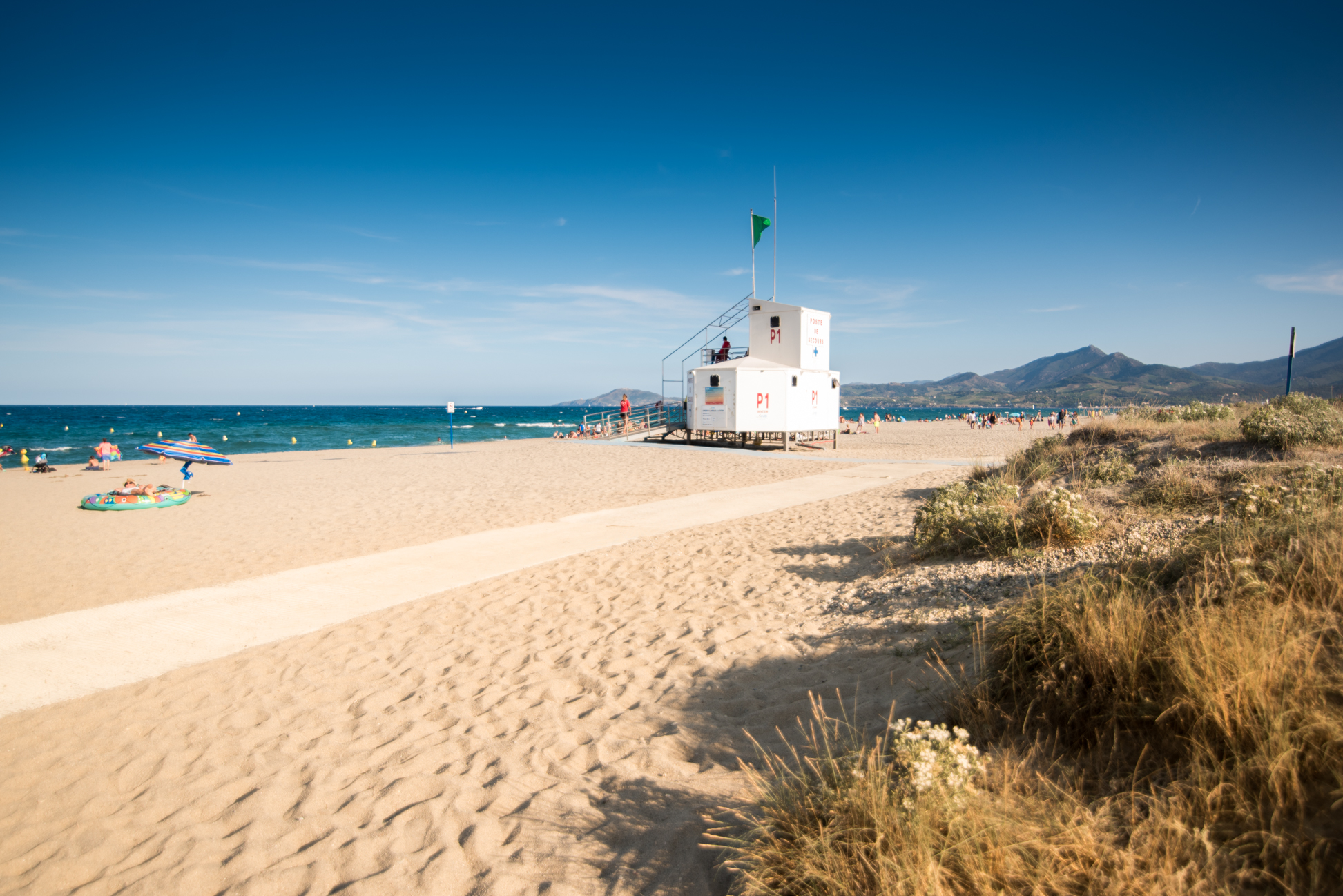
This summer, the city of Argelès-sur-Mer, France, took out its 10 beach showers to preserve water resources.
This summer, the city of Argelès-sur-Mer, France, took out its 10 beach showers to preserve water resources
©S.Ferrer
This French municipality never stopped working towards improving its footprint since it first received the Blue Flag award in 1986. A great example of a municipality dedicated to the building of a more sustainable tourism coastal industry.
The municipality’s eco-friendly initiative has permitted to replace 10 beach showers by taps. In this way, almost 8 million of drinking water have been saved*! Argelès-sur-Mer took this decision in order to save water, a natural resource which is rarefying and had to be controlled during the country’s summer heatwave. Nevertheless, beyond this idea of reducing the water consumption on the beaches, this decision has also been made to get the bad uses over with.

©S.Ferrer
This is not the only measure taken by the municipality to reduce water consumption and preserve natural resources. Since 2006, Argelès-sur-Mer and another French municipality have been working on the leak resorption of their drinking water distribution system. The city also opted for a sustainable management of its green spaces, creating spaces requiring a low water consumption. Moreover, rainwater is re-used for the one of the park’s fountains and the new stadium’s synthetic grass can be managed without water or pesticides.
Blue Flag criterion aims to reduce water consumption on its awarded sites. That is why we encourage municipalities to opt for an alternative system to store and use rainwater in order to limit the use of fresh water for watering. Argelès-sur-Mer is a good example of Blue Flag criterion’s implementation.
*Water consumption between June, 1rst, 2018 and September, 28th, 2018.
Baja California Sur states the restriction of use of plastics
The Mexican state takes great steps to abandon the culture of plastic to protect the world’s aquarium.
The Mexican state takes great steps to abandon the culture of plastic to protect the world’s aquarium

This August, Baja California Sur (BCS) took measures to preserve and protect its marine biodiversity. The latter is key to success of the state’s tourism industry since this Mexican state counts 20 beaches and a marina awarded with Blue Flag.
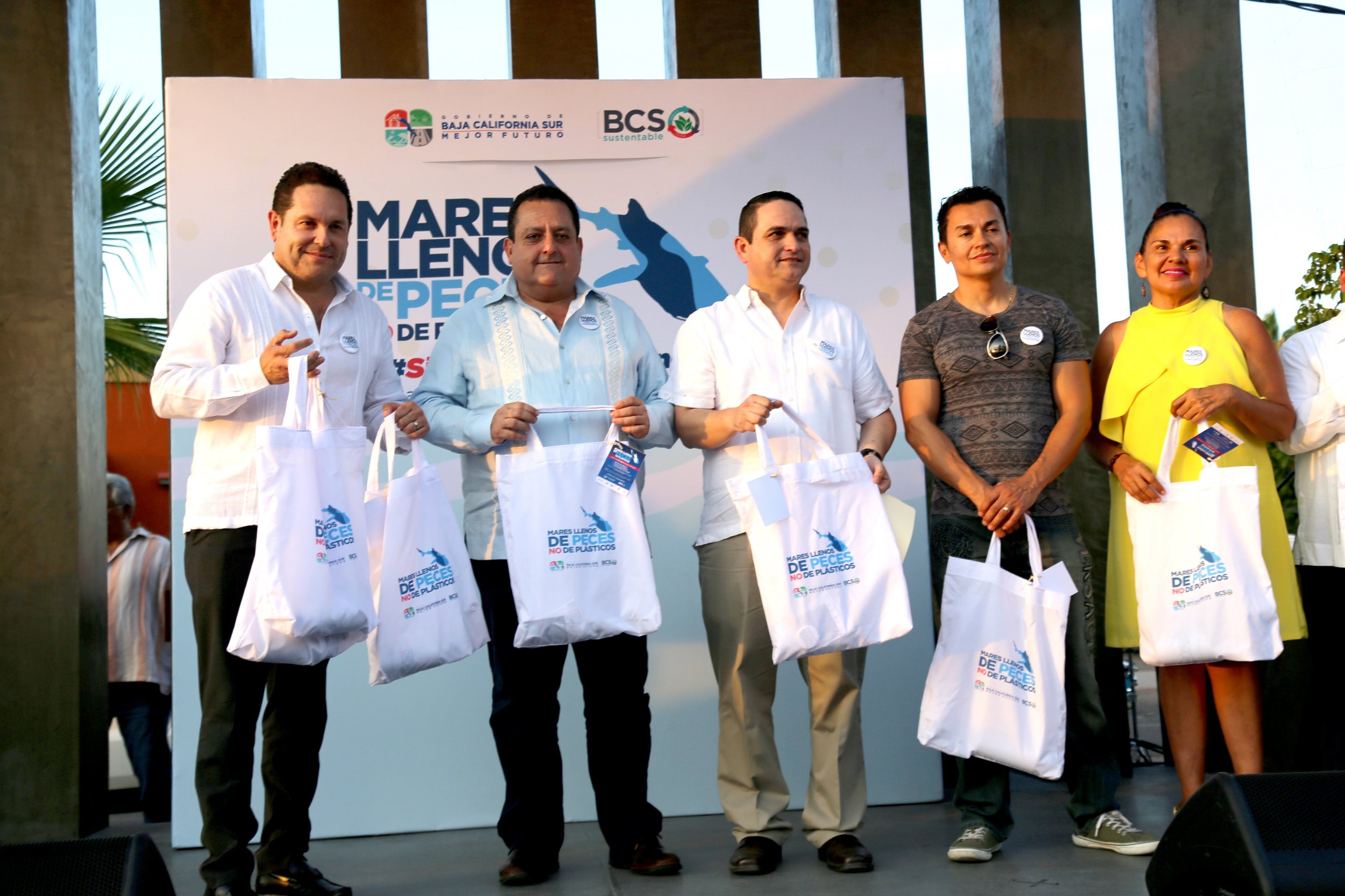
This initiative was supported by the Government of Baja California Sur along with the City Councils of La Paz, Los Cabos, Comondú, Loreto and Mulegé. The statement concerns the restriction of use of plastic bags, straws and Styrofoam containers in supermarkets, restaurants, self-service stores, pharmacies, as well as for purposes of wrapping or moving food and drinks. The state aims to end up the use of all these materials by 2021.
“Baja California Sur is taking great steps to abandon the culture of plastic, we treasure our natural heritage, so we will not hesitate to protect it,” said Luis Araiza, the head of the Secretary of Tourism, Economy and Sustainability (SETUES) of BCS.”

More than just prohibiting the use of plastics, the announcement aims for raising public awareness about this issue to preserve oceans from pollution. Baja California Sur is the first Mexican state to sign the UN Environment global campaign “Mares Limpios” (“Clean Seas”) along with 57 countries.
“Today BCS is a reference in Mexico according to environmental matters. We want our children and their future generations to breathe fresh air and have transparent seas full of fish, it is their right and it is our obligation”, said Araiza López.”
SETUES provide talks about environmental care and conservation to children from elementary schools. Recently, Governor Carlos Mendoza also launched the “Sin Plastico Challenge (“Without plastic challenge”) in order to impulse good practices that could help to reduce climate change. Moreover, 7 000 plants have been delivered to reforest the state thanks to the “Sembremos un Mejor Futuro” (“Sow a better future”) programme.
“Baja California Sur is a destination that strives, grows and lives up to the circumstances that prevail in the international tourism market and that includes the formal commitment to the environment,” said Luis Humberto Araiza.”
As tourism industry is the main economic driving force of the state, the latter wants to contributes to the spreading of environmentally-friendly practices preserving the area and its biodiversity. The Government definitely strives to keep our seas full of fishes, not plastics.
Mexican beach achieving a Blue Flag perfect rating reiterate its award
Tangolunda Dream Beach, Mexico, obtained a 100% compliance rating in the 33 imperative and guideline Blue Flag criterion for the season 2018-2019.
Tangolunda Dream Beach, Mexico, obtained a 100% compliance rating in the 33 imperative and guideline Blue Flag criterion for the season 2018-2019.

Managed by Dreams Huatulco Resort & Spa, the beach was one of the 54 beaches recognized by Blue Flag in Mexico for the 2018-2019 season. This beach achieved this perfect rating regarding Blue Flag imperative and guideline criterion thanks to the Resort’s commitment for the conservation of environment.
The Resort launched a “sustainable schools” programme in local schools to educate children to sustainable development revolving around water, energy, waste, biodiversity, culture and health education. For instance, the activity implemented during the past school year was linked to local sustainable agents. While one group of kids was monitoring the energy consumption of its house and school in order to implement savings solutions, another one was carrying out activities about environmental protection. It helped raising children’s awareness about wind power while involving the hotel staff, teachers, parents and kids.
Moreover, Dreams Huatulco Resort & Spa did a theoretical estimation of carbon dioxide equivalent per host. Based on the number of guests in each country, they calculated the CO2 produced by a plane regarding guests’ living country and Huatulco.

Tangolunda Dream Beach is surrounded by lush jungle, soaring mountains and dazzling coral reefs that need to be protected. It is also the home of sea turtles which hatch seasonally from July through December. Protecting this beach also go through the protection of this sea turtle population and the guarantee that the babies take their first steps towards their home in the ocean.
The Resort’s work illustrates how sustainability encompasses the economic, the social and the environmental. Tangolunda Dream Beach is an example of a great commitment to preserve our oceans.
Tidy up cigarette butts with #FillTheBottle challenge
The idea is simple: you collect the cigarette butts that you find in nature and fill a bottle with them. This challenge has spread to the Blue Flag beaches.
This challenge has spread to the Blue Flag French beaches.
The idea is simple: you collect the cigarette butts that you find in nature and fill a bottle with them. This challenge initiated at the beginning of August by a French student on Twitter immediately went viral on social media and became an international concern. The “Fill the bottle challenge” requests citizens’ involvement to preserve the environment and raises awareness about cigarette butts’ impact on our ecosystem.

Since August, 6th, The French city of Torreilles encourages residents and tourists to take up the challenge. The city is part of the second French region with the most Blue Flag awarded sites, a region where other Blue Flag beaches launched the challenge too.
Each second, 137 000 cigarette butts are thrown out on the ground worldwide. Even though we know that they take between 12 and 25 years to decompose, several thousands of cigarette butts end up in seas and oceans each year. Thus undersea species are endangered by people discarding their cigarettes without a second thought, given that one and only cigarette butt can pollute 5000 litres of water.
The results of the challenge are impressive, but it is bittersweet as cigarette butts are the most littered item around the world. You should be surprised by how many never get collected. Unfortunately, you can gather them for a few minutes and you will be sure your bottle will be full. This is why the most important message is to educate the smokers to dispose of their cigarette butts in an environmentally safe way. Blue Flag and the city of Torreilles are also working towards this education, for a longer sustainable impact on the future.
The #FillTheBottle challenge taking place in Torreilles is such a good action to preserve the environment. Nevertheless, people have to make sure that they don’t throw away the bottle the same way the cigarette butts have been tossed out! That is why they are all collected by the tourism office in exchange for a hat of the city.
By taking up the challenge, the city of Torreilles proves its engagement for the planet and gives an example of an action preserving beaches, seas and oceans from pollution. This is another guarantee to find Blue Flag beaches clean!
Holiday-makers involved in Croatian protected species defence
In Cres, Camp Kovačine raises its guests’ awareness about environmental protection thanks to interactive activities suitable for both kids and their parents.
In Cres, Camp Kovačine takes action to protect the island’s large number of protected animal and flora species.
Camp Kovačine raises its guests’ awareness about environmental protection thanks to interactive activities suitable for both kids and their parents. Two years ago, the Camp launched a new activity called “What if”. This project began with lectures on the protection of protected animal species, followed by an art workshop on protected animals and themed social games. Thanks to this initiative, guests receive information concerning Cres’ impressive fauna and flora and the best behaviour to adopt concerning protected species.

“And when we go with the boat to the sea trip- what if we see dolphins? Can we feed them? Can we follow them with a boat? Do they like swimming with humans or they actually get scared and become aggressive? / Tina Gams-Fučić, the quality manager of camping Kovačine and project manager for ecology.”
By teaching beach visitors, employees and children how to deal with the island protected species, Camp Kovačine does a great job for the protection of the environment. Involving the kids and their parents into this activity permits interactions between generations which is a key variable for the future of our planet. Through this, guests understand that each action (or inaction) matters and will apply this mind-set their entire life. For example, they now know that pulling out from the sea Pinna Nobilis (a marine mollusc) can be punished by a fine or prison term.

It is not first Camp Kovačine’s initiative to raise its guests’ environmental consciousness. Last year, the campsite’s eco-theatre made children aware of their possibilities to protect the species since animators dressed like dolphins, flowers or birds were threatened by a plastic bag. Indeed, plastic pollution and climate change were the two mains topics of the piece and also are at the top of the Camp’s environmental policy.
“Our objective is to teach beach visitors, employees and children how to deal with protected animal species. Our main message, of course, is conservation and protection of protected animal species. also said Tina Gams-Fučić”
Camp Kovačine contributes to the prevention of climate change by showing its guests that they have to be active for our environment. With 95 Blue Flag beaches and 27 marinas in the country, that kind of activities helps a lot keeping Croatia’s exceptional and diverse natural beauty.
New partnership to enhance wheelchair accessibility to the coast
People with disabilities can now easily find out if they can get access to the 4,500 Blue Flag beaches, marinas or boating tourism operators through a new partnership with Wheelmap.org.
People with disabilities can now easily find out if they can get access to the 4,500 Blue Flag beaches, marinas or boating tourism operators through a new partnership with Wheelmap.org.
Wheelmap is a free online map for finding and rating wheelchair accessible places worldwide. The project is run by the nonprofit organisation “Sozialhelden”, a disability rights organisation based in Berlin. The Blue Flag partnership with Wheelmap.org is a step forward to improving the coasts’ ease of access and providing information about wheelchair accessible facilities. The Blue Flag listings on Wheelmap contain a direct link to the blueflag.global website, so that users can also benefit from all the detailed information which is provided there.

Credits: DICOM
How does it work?
Wheelmap rates the wheelchair accessibility of public places such as public transport, restaurants, playgrounds and tourism sites worldwide, using a smart traffic light system. The colors green, yellow and red indicate if a place is fully, partially or not wheelchair accessible. As everyone can easily update a site´s rating by using its app or web application, Wheelmap helps to increase the availability of accessibility information for people with disabilities. The Blue Flag sites have now become part of a collection of nearly 1 million public places rated by the Wheelmap community and additional information on another 500,000 places which is provided by dozens of partner organisations. An example of an accessible Blue Flag boating operator as it is listed on Wheelmap can be found here.
“We are very pleased that our two projects, which promote sustainable and equitable tourism in very different ways, have joined forces. We are working together to make accessibility information easily available to millions of people with mobility impairments who want to enjoy the coast and all it has to offer.
Svenja Heinecke, Wheelmap Community Manager”

Credits: DICOM
With more than 4,500 awarded sites in 45 countries around the world, Blue Flag plays a key role in spreading inclusive initiatives in the coastal tourism industry.
“We want the public to be able to choose the best site depending on their needs, as all offer different levels of accessibility. It can be to the site, or in the water itself, which is a huge difference on how you experience the coast. We are extremely happy to be able to share our data to Wheelmap, a dedicated platform for international accessibility.
Sophie Bachet Granados, International Blue Flag Director”
'H2O on the Go' scheme to help fight plastic pollution
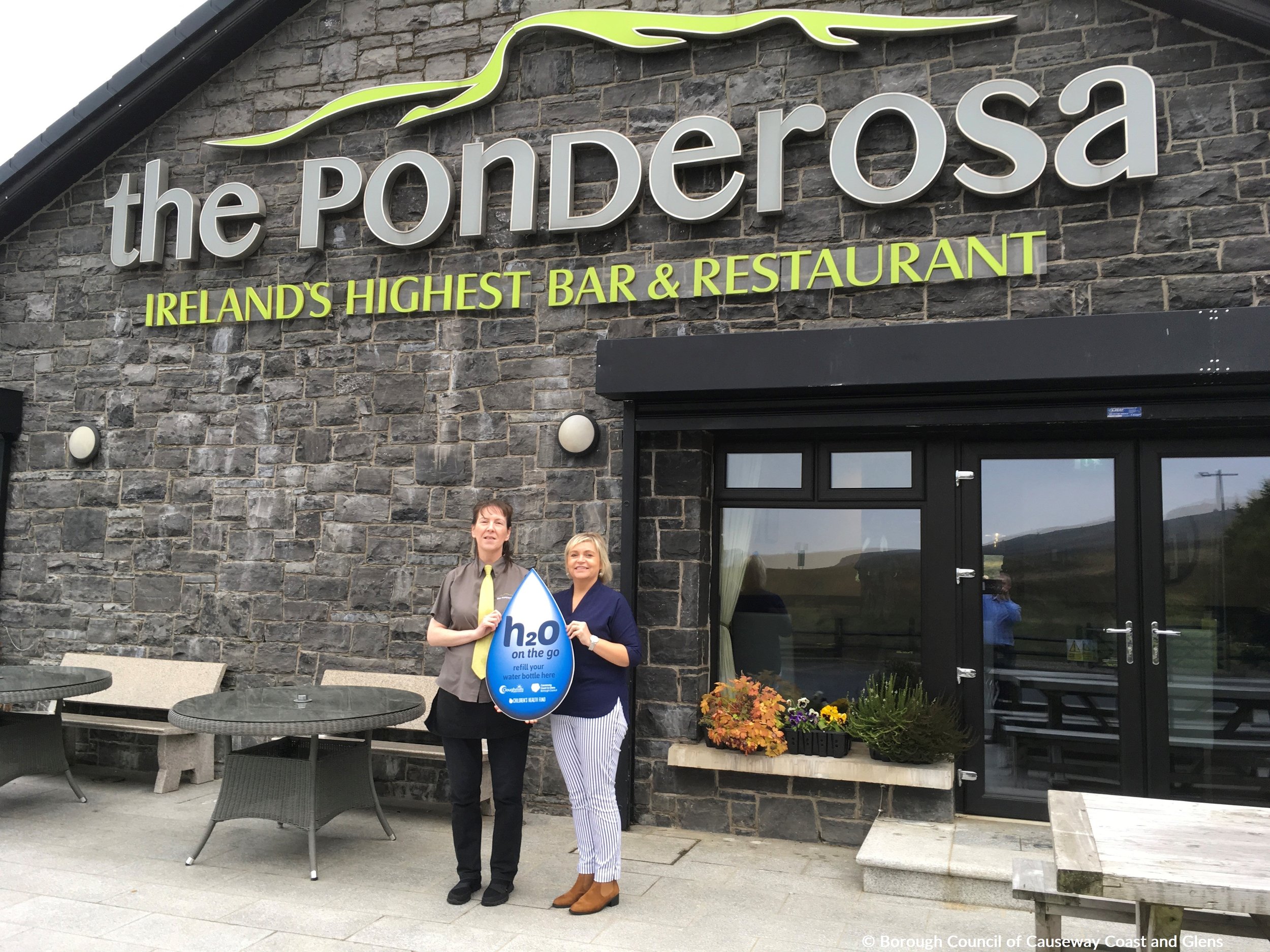
The Borough Council of Causeway Coast and Glens, awarded with a number of Blue Flags in the season 2019, has recently launched the ‘H2O on the Go’ project, that aims at fighting plastic pollution in the sea.
Every minute, about 1 million plastic bottles are bought around the world. In 2016 480 billion were sold and this is expected to increase to 583.3 billion by 2021. Many of these are not recycled and end up into the sea, endangering its biodiversity and us all.

The Borough Council of Causeway Coast and Glens, awarded with a number of Blue Flags in the season 2019, has recently launched the ‘H2O on the Go’ project, that aims at fighting plastic pollution in the sea.
The message that ‘H2O on the Go’ wants to deliver is to drink more tap water and use reusable bottles also outside home, raising beach visitors’ awareness on single-use plastic and its impact on the oceans.
Businesses and other outlets across Causeway Coast and Glens are encouraged to take part into the scheme. These will be promoting and offering free refilling of water bottles to reduce the amount of single use plastic bottles in circulation. The location and names of the participating businesses are accessible through the Council’s website www.causewaycoastandglens.gov.uk, so as to allow visitors to include a water refill point when planning their visits to the beaches of the area.
The Blue Flag programme in Northern Ireland is managed by our member organisation ‘Keep Northern Ireland Beautiful’. You can visit their website here: https://www.keepnorthernirelandbeautiful.org/cgi-bin/greeting?instanceID=1
Contributing to SDG 14 with the smurfs
On the 60th Anniversary of the creation of the Smurfs, Blue Flag Spain has been chosen to support a ‘smurfs project’ focusing on Sustainable Development Goal number 14 on the sustainable use the oceans, seas and marine resources.
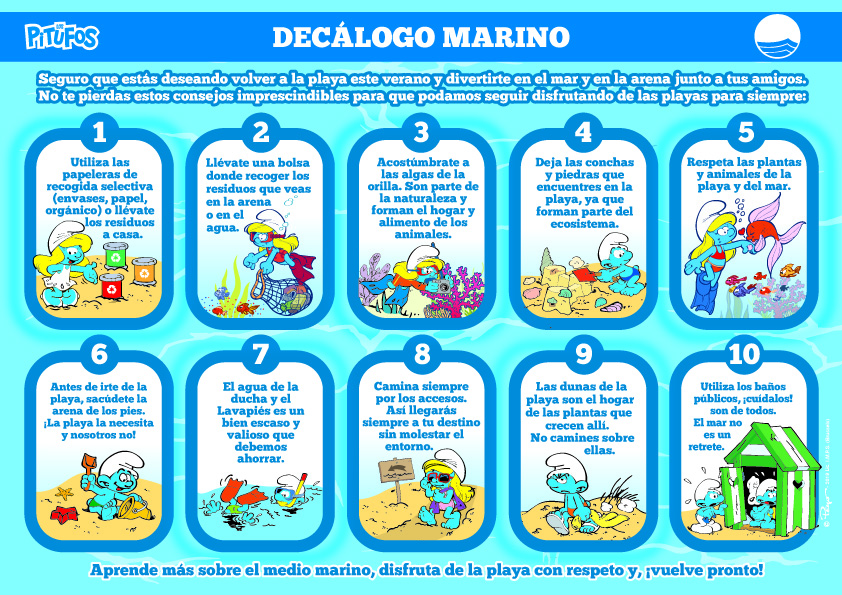
On the 60th Anniversary of the creation of the Smurfs, Blue Flag Spain has been chosen to support a ‘smurfs project’ focusing on Sustainable Development Goal number 14 on the sustainable use the oceans, seas and marine resources. Blue Flag Spain and Smurfs have drafted a Decalogue with dos and don’ts at the beach, such as using the accesses instead of walking through the dunes and not collecting stones or shells from the beach.
The Decalogue will be posted in the Spanish Blue Centers, Blue Flag beaches and marinas. Moreover, in a series of Blue Flag beaches, there will be a space with games for children to learn more about the sea and its protection.
Additionally, a photo contest for children has been launched to promote good environmental practices on environmental conservation both in natural areas and at home.
What does the Decalogue say?
Use the recycling bins or bring the waste back home.
Bring a bag to pick up the litter you find on the beach or in the water.
Get used to the algae you find on the shore. They are part of the nature and they can be food for the animals.
Do not pick up the shells and the stones you find on the beach, they are part of the ecosystem.
Respect animals and plants from the beach and the sea.
Before leaving the beach, shake the sand off your feet. The beach needs it, we do not!
The water from the showers and the ‘footbath’ is a scarce and valuable resource that we need to preserve.
Always walk on the walking paths. This way, you can reach your destination without damaging the environment.
The dunes are the home of the plants that grow on it. Do not walk on them.
Use the public toilet and take care of them, as they are for everyone. The sea is not a toilet.

Accessibility and the expansion of Blue Flag in Asia at the centre of attention in the 2019 Blue Flag Northern Hemisphere awards
This year, we are happy to announce that South Korea won its first Blue Flag award, thus increasing the presence of Blue Flag in Asia.
Copenhagen, 27 May 2019 – This year, we are happy to announce that South Korea won its first Blue Flag award, thus increasing the presence of Blue Flag in Asia. Accessibility was the hot topic of this year’s work, both for the international jury discussion and our programme development.
For the 2019 season, the Blue Flag International Jury has awarded the world’s leading tourism ecolabel to more than 4,400 beaches, boats and marinas in the Northern Hemisphere. This brings the total number of Blue Flag sites worldwide to 4,560, in 45 countries. All northern hemisphere countries have held their national award ceremonies and results for the network are now displayed on www.blueflag.global.

Today we release the results of the Blue Flag International Jury meeting for the Northern Hemisphere, sharing with you the highlights of this year’s evaluation. Here you will be able to read about our new Blue Flag awarded beach in Asia and the new developments regarding accessibility and Blue Flag boats.
After several years of implementation of the Blue Flag criteria on its beach, Wando County in South Korea has seen its application for Sinji Myeongsasimri Beach approved by the International Blue Flag jury. This first beach in South Korea joins the four Blue Flag beaches awarded in Japan and further increases Blue Flag’s reach in the Asian region.
Moreover, as part of the candidates’ 2019 evaluation, best practices regarding accessibility have been reviewed and highly appreciated by the International Jury. Some of these year’s best practices will be featuring in our best practice database, which is freely available on our website for all to use: https://www.blueflag.global/best-practices. To improve the countries’ accessibility practices, Blue Flag has also entered into a partnership with Total Beach Access.
“This is a unique project, which we have worked very hard on in the past months. It will enable our sites to have accessibility material at little or no cost through the use of sponsorship. Our partners, the European Network for Accessible Tourism and the United World Tourism Organisation, have both expressed their favour for this partnership, seen as a unique set-up which could be a game-changer for beaches worldwide”, says Sophie Bachet Granados, International Blue Flag Director.
Additionally, it is worth mentioning that our new development in 2016 lead us to award Sustainable Boating Tourism Operators (SBTOs). These boats conduct various touristic activities, such as nature or whale watching, city canal tours, scuba diving or recreational fishing, and must be part of the integrated coastal management plan of a region. Already 67 boats have joined us worldwide and are receiving their certification in 2019. “This is just the beginning as we are working hand in hand with Sail Training International towards finalizing a set of criteria for Sail Training Vessels which should be launched in 2020. By increasing our fleet of awarded boats, we aim to increase our positive impact on the oceans!” concludes Sophie.

About the International Blue Flag Jury:
The International Blue Flag Jury is composed of representatives from the United Nations Environment Programme (UNEP), the United Nations World Tourism Organization (UNWTO), International Lifesaving Federation (ILS), the European Environment Agency (EEA), the European Union for Coastal Conservation (EUCC), the International Union for Conservation of Nature (IUCN), United Nations Educational, Scientific and Cultural Organisation (UNESCO), the International Council of Marine Industry Associations (ICOMIA), the World Cetacean Alliance (WCA), the European Network for Accessible Tourism (ENAT) and FEE. You can find out more about them on Blue Flag’s website: https://www.blueflag.global/international-jury.
Note that the next meeting of the Blue Flag International Jury will take place in September to award beaches, marinas and boats from the Caribbean, South America, Africa and southwest Pacific. India and Colombia, who have been working hard on the implementation of the Blue Flag programme for the past few years, might be the next ones to join the Blue Flag network with some awarded sites after this International Jury meeting.
Countries working towards implementing the prestigious Blue Flag include Cabo Verde, Chile and Finland.
The Blue Flag greatly appreciates the support of its sponsor, the worldwide flag producer Semaphore and Total Beach Access, which provides sponsored beach access for the disabled.
The Blue Flag programme is run by the Foundation for Environmental Education (FEE): https://www.fee.global
Feel free to check and use our copyrighted pictures for communication: https://flic.kr/s/aHsk75W98q
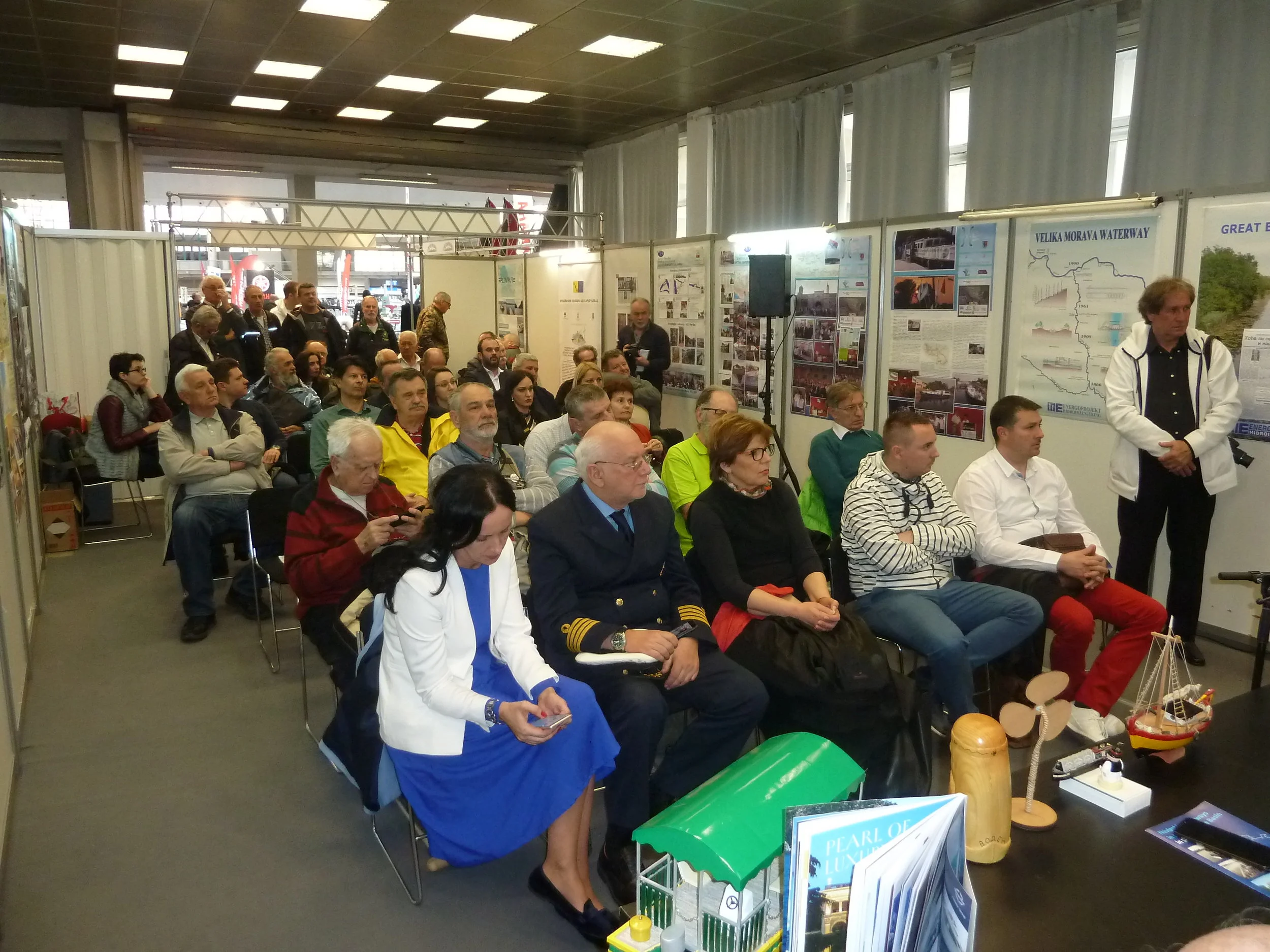
The Blue Flag programme at the 41st International Nautical Fair in Belgrade, Serbia.
Environmental Ambassadors for Sustainable Development as the National Operator of the Blue Flag programme in Serbia, has been invited by the organization Danube Propeller to present the programme during the 41st International Fair on nautical, hunting and fishing, held in Belgrade in March 2019.
Environmental Ambassadors for Sustainable Development as the National Operator of the Blue Flag programme in Serbia, has been invited by the organization Danube Propeller to present the Blue Flag programme during the 41st International Fair on nautical, hunting and fishing, held in Belgrade from March 1st to 5th, 2019.

Danube propeller in cooperation with the NATUS group (NATUS has been a cluster of nautical economy and nautical tourism, since 1992, within the Serbian Chamber of Commerce and Economy), traditionally organise thematic lectures from nautical areas.
Serbia has a remarkable network of inland waterways. It is the second riparian state on the Danube by length. The Danube flows through the country from km 1433 to km 845.65, a length of 587 km, the first 137.5 km being shared with Croatia (right bank) and the last 229 km with Romania (left bank). Serbia has about 1860 km of navigable waterways, including the network of 693 km of canals and navigable rivers, managed by the public water management company (PWMC) Vode Vojvodine. Vode Vojvodine manages the Danube-Tisa-Danube Canal (Канал Дунав-Тиса-Дунав). This extensive canal network in Serbia is a unique hydro-engineering system for flood control and water management, land improvement and agriculture, forestry, water supply, waste water disposal, navigation, tourism, fishing and hunting. In central Serbia, it is estimated that there are an additional 650 km of rivers suitable for nautical tourism (classes RA and RB). The total length available for recreational boats or nautical tourism throughout Serbia is estimated at more than 3000 km.

The association Danube Propeller was formally established in 2007, with the mission to establish and reinforce citizens’ common interest in development, maintenance and use of the waterways in Serbia and the Middle Danube region. Our main aim is to create, coordinate and maintain a sustainable future for the Serbian nautical industry on rivers, canals and lakes oxbows, former gravel or sand pits, where nautical tourism is underdeveloped. The association Danube Propeller is a partner of IWI (Inland Waterways International) and a member of FEE Council in Serbia and Blue Flag national jury.


Everyone welcome down by the sea
The iconic Blue Flag, the world’s most recognised voluntary eco-label for protecting our coasts, has today signed a new partnership with Total Beach Access which will change the face of beaches worldwide, by increasing accessibility and inclusivity for all, at no cost to the public.
The iconic Blue Flag, the world’s most recognised voluntary eco-label for protecting our coasts, has today signed a new partnership with Total Beach Access which will change the face of beaches worldwide, by increasing accessibility and inclusivity for all, at no cost to the public.
“This ground-breaking new partnership is a real game-changer that will ensure our Blue Flag beaches are accessible to everyone including the elderly, families with baby buggies and people with physical disabilities or visual impairments. It will impact the experience of millions,” says International Blue Flag Programme Director Sophie Bachet Granados.
“Blue Flag and Total Beach Access working together can change the world by welcoming those who previously struggled to navigate their way to the water. This is a necessary change so that all people have the same opportunity to enjoy the beach,” says Connie Skibicki from Total Beach Access.

How does it work?
Accessibility for all will be achieved through two integral components. A specially-made walkway system will be placed on a Blue Flag awarded beach allowing wheelchair users and families with prams easy access over soft sand or small pebbles. This will be equipped with special devices to guide the visually impaired using a phone app.

“Access to the beach is the first part, but we also wanted to make sure people with physical disabilities didn’t just have to just stay on the beach and watch others enjoy the water. So we have designed a state-of-the-art amphibious wheelchair which will allow them to go in as well,” says Connie Skibicki.

Partnership
“Wheelchair accessibility is becoming more important for public authorities around the world. So, in response, Blue Flag and Total Beach Access are now providing beach access walkways, amphibious wheelchairs and wireless technology to councils. This is possible due to our commercial sponsors that see the humanitarian importance of equal access to our beaches and oceans,” says Connie.
Cape Verde, Colombia, Finland, India and South Korea, are currently working on their pilot sites and the first Blue Flag beach to reap the benefits will be announced this summer. There are currently more than 3750 Blue Flag beaches in 44 countries around the world.
“It’s quite simple: we have linked with sponsors who wish to increase beach accessibility. Through sensitive advertising on both products, sponsors are contributing to this valuable change thus allowing councils with Blue Flag awarded beaches the use of walkways and amphibious wheelchairs for free,” explains Sophie Bachet Granados.
“Although there is no cost involved for the beach, we have not compromised on quality. The products all incorporate advanced design features and made to very strict quality controls as well as carbon neutral and can be re-used or recycled,” Sophie adds.
Blue Flag International Jury member, Jesus Hernández Galán, Vice President of ENAT, the European Network for Accessible Tourism, adds: “ENAT is proud to promote this global initiative, which will surely make a huge difference to family members and individuals who have mobility or vision limitations. No-one should be denied the possibility to enjoy a visit to the beach and experience sea bathing, if they wish. This ambitious collaboration can really open up new leisure possibilities for tourists and locals alike.”
“Improving the sustainable development of local communities through tourism is one of the unique potentials of the tourism sector and creates lasting values,” added Dr. Dirk Glaesser, Director of Sustainable Tourism Development at the World Tourism Organization (UNWTO) and member of the international jury of the Blue Flag.
“Blue Flag has always been a front-runner, and with this new global partnership, we intend to continue to strive for excellence and beyond,” concludes Sophie.
http://www.blueflag.global/all-bf-sites
Video about the partnership:
Short Info about Blue Flag
The iconic Blue Flag is the world’s most recognised voluntary eco-label awarded to beaches, marinas, and sustainable boating tourism operators. In order to qualify for the Blue Flag, a series of stringent environmental, educational, safety, and accessibility criteria must be met and maintained.
Short Info about Total Beach Access:
World-leading provider of universal walkway system, all terrain and amphibious wheelchairs.
Short Info about European Network for Accessible Tourism
The leading non-profit membership association supporting public authorities, destinations and businesses in their efforts to develop sustainable, accessible and inclusive tourism.
https://www.accessibletourism.org
Press Contact:
Blue Flag: Sophie Bachet Granados, +45 31 23 88 66, sophie@fee.global
Total Beach Access: +45 22 29 53 51, connie@totalbeachaccess.com
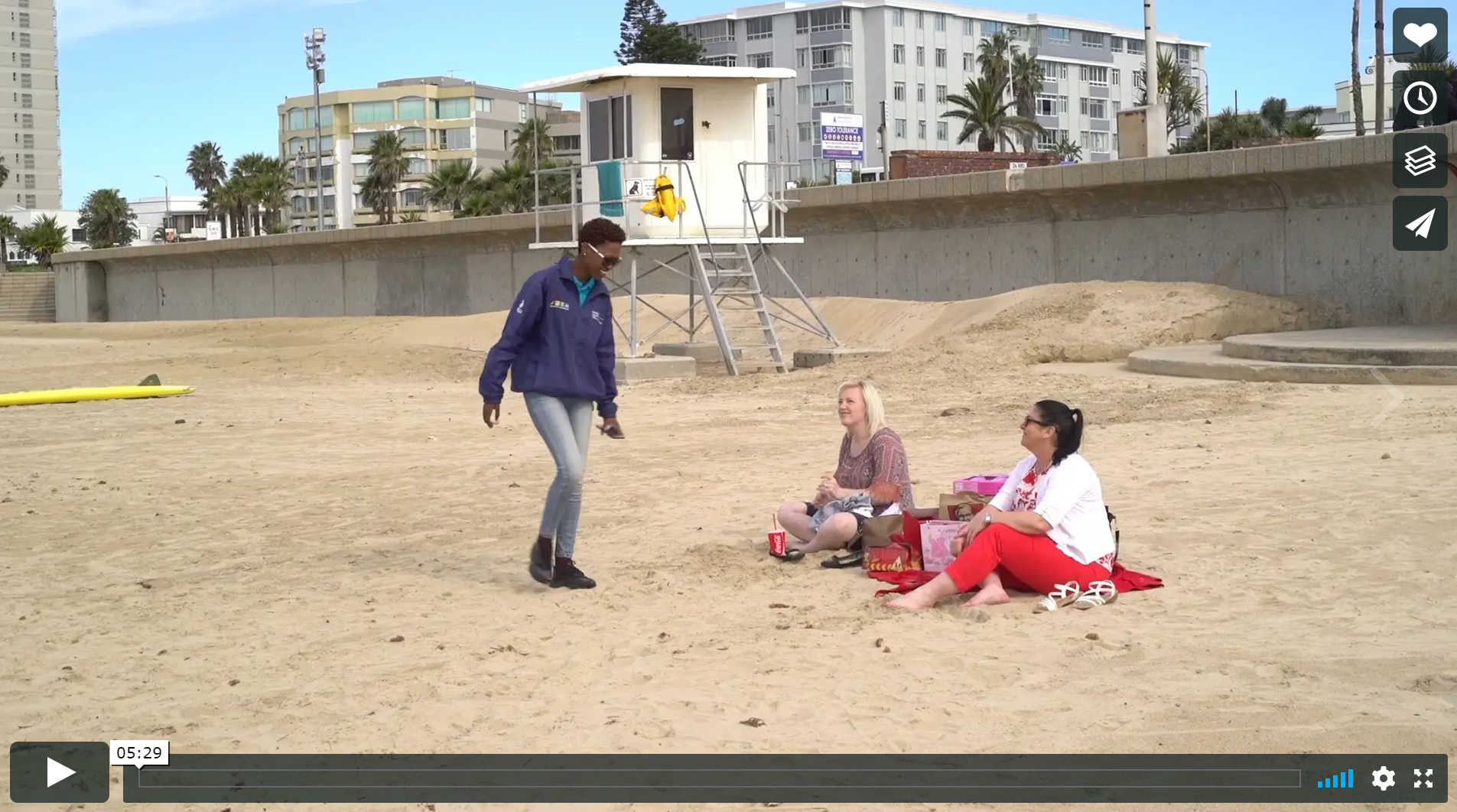
Tourism Blue Flag project inspires youth in South Africa
Find out how the Tourism Blue Flag (TBF) project has impacted the lives of the 200 youth who are enrolled in it. Empowerment and education are some of the tools that helped the youth grow substantially within this project, and inspire them in their future careers.
Find out how the Tourism Blue Flag (TBF) project has impacted the lives of the 200 youth who are enrolled in it. Empowerment and education are some of the tools that helped the youth grow substantially within this project, and inspire them in their future careers. The TBF project was initiated and funded by the National Department of Tourism and implemented by WESSA, our Blue Flag National Operator in South Africa.

Blue Flag National Operator Meeting 2018
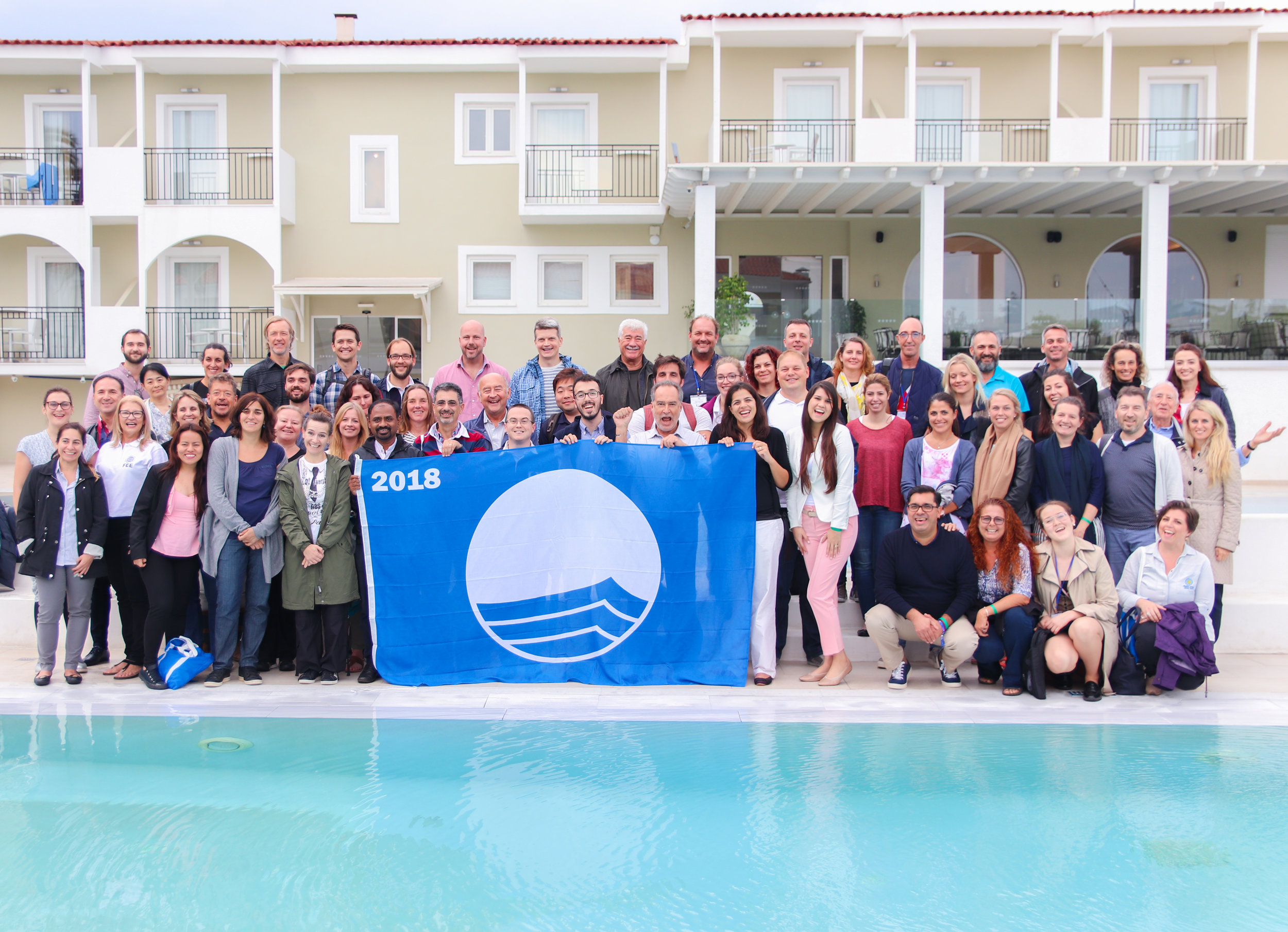
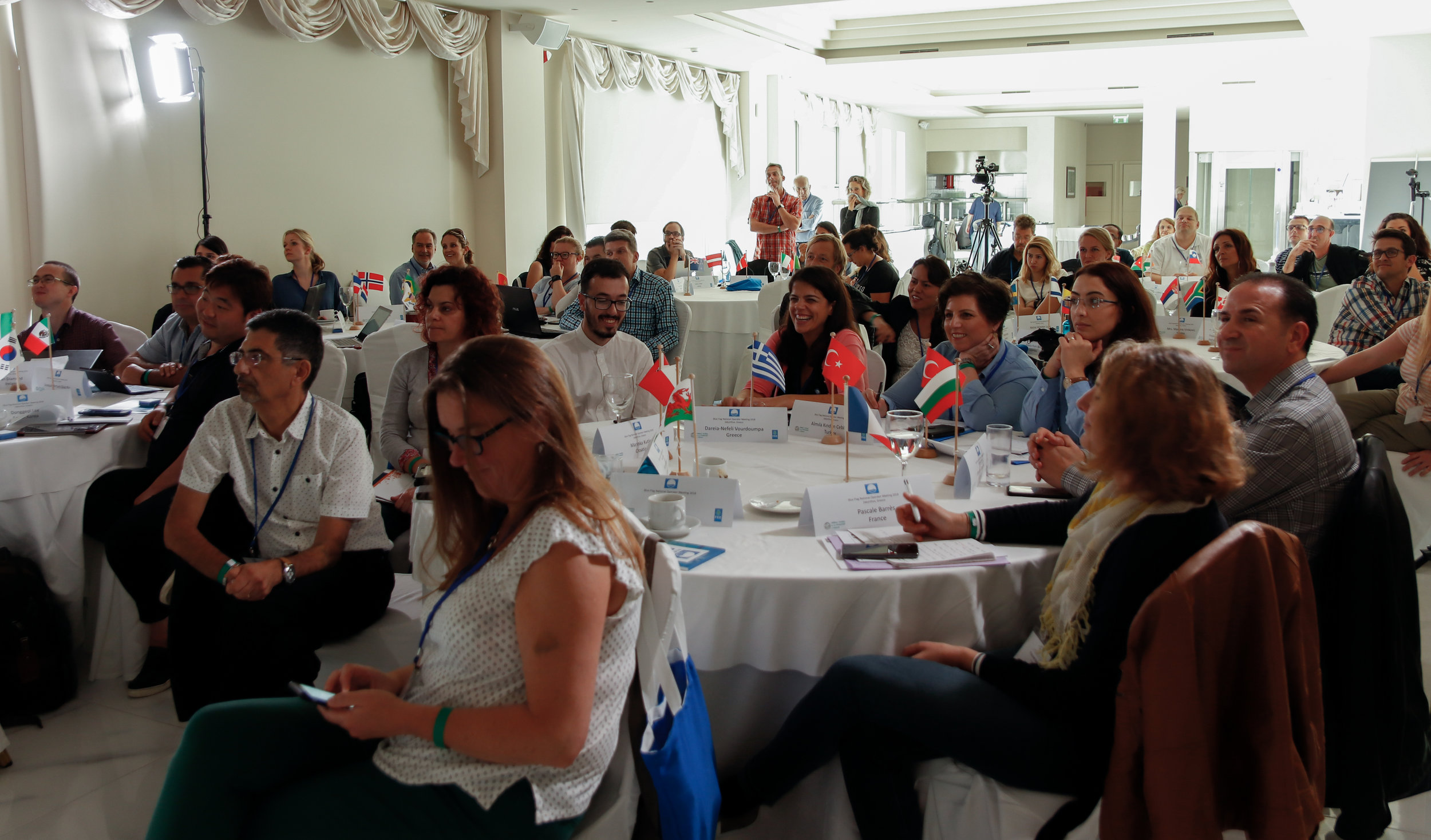
Over 60 participants from 43 countries attended the Blue Flag National Operator Meeting 2018 in Zakynthos, Greece.
Each year, all Blue Flag National Operators from the network meet to discuss and exchange ideas about the technicalities of the programme, the strategy, best practices and other issues. This year the meeting took place in Zakynthos, Greece.
Over 60 participants from 43 countries attended the two-day meeting. The focus this year was on developing again strong links between the Sustainable Development Goals from the UN and other new challenges that the Blue Flag programme will be taking on in the near future.
We would like to thank our Blue Flag National Operator in Greece, The Hellenic Society for the Protection of Nature, for hosting the meeting this year, to the Greek Minister of Tourism, Elena Kountoura, for opening our meeting and all the participants who brought new ideas and excitement to the Blue Flag programme.
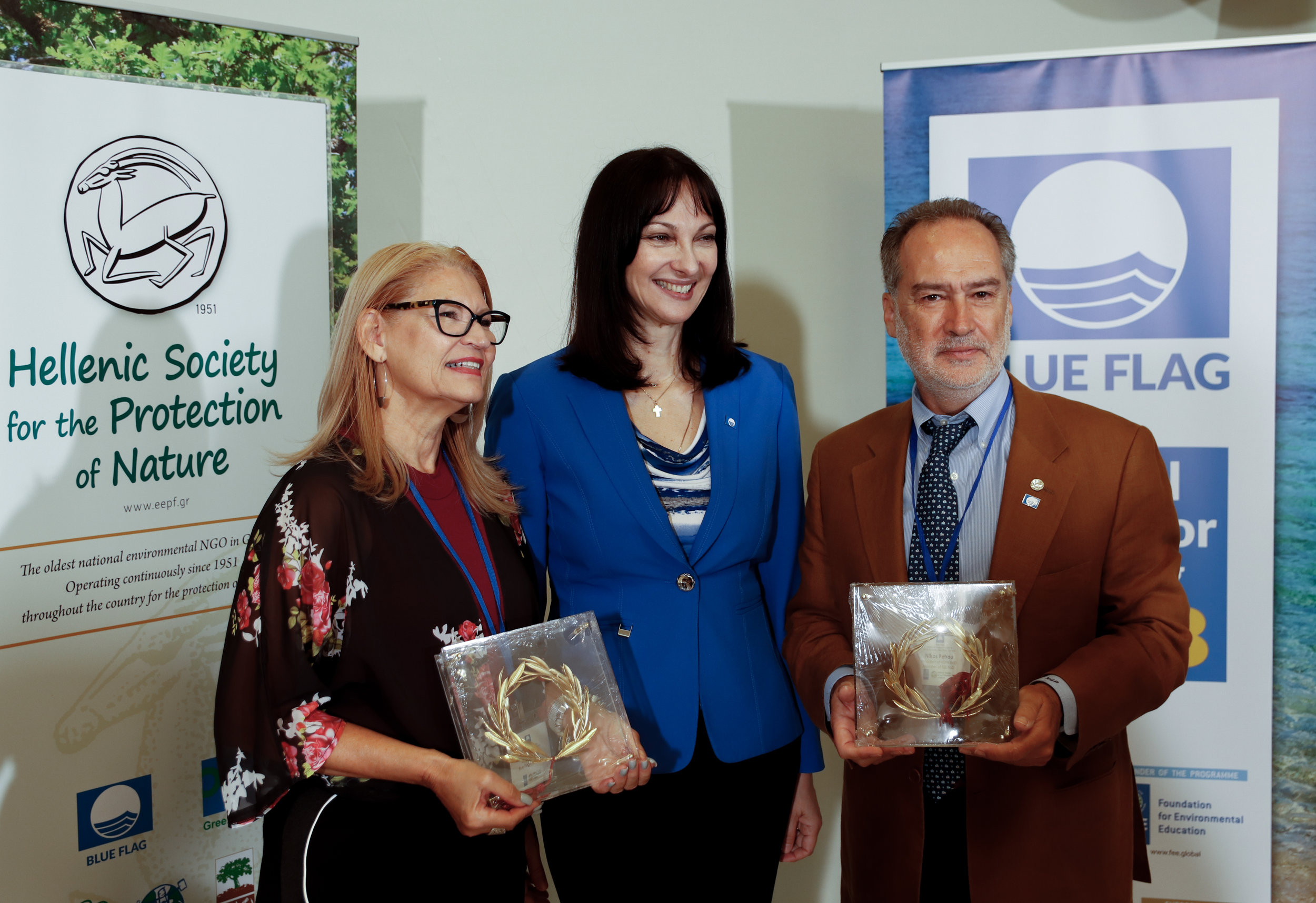

Pictures: Hellenic Society for the Protection of Nature
Blue Flag official ceremony and meetings.
Read more about the 15th anniversary of the programme in Puerto Rico and the Blue Flag local operators meeting in Italy !
Blue Flag presented the award for its fifteenth season in Puerto Rico
Before a large group of attendees Blue Flag celebrated its fifteen consecutively seasons in the island. The official ceremony, sponsored by the Tourism Company, distinguished three beaches, three sustainable tourism boat companies and one marina that received the flag for the new season. It has been a difficult year not only to Puerto Rico but also to the eastern Caribbean after two major hurricanes affected the zone. The opportunity to highlight and celebrate this achievement is very significant not only to Blue Flag but also for the local community.
With the presence of the municipalities, members of the press, awardees’ staff and friends the flag was presented during the night of the 8th of November with a cocktail in emblematic Old San Juan. The beaches that received the flag were Balneario El Escambrón in San Juan, Balneario de Carolina, for its fifteenth consecutive occasion, and for the first time the Balneario Puerto Nuevo in Vega Baja. Marina Puerto del Rey ratified under the marina’s category, while in the sustainable boating tourism operators both Bellaventuras and East Island Excursions revalidate while a new operator, Island Venture Excursions, emerged. The award application is voluntarily for any beach, marina or tourist boat operator that meets the internationally established criteria.

Blue Flag is the eco certification of quality with greater extension and implantation worldwide. The presence of this award at a local level positions the island as a destination with better offerings for travelers, with beaches and facilities that meet strict criteria that involves ensuring water quality, safe and adequate facilities for its users including the ones with special needs and also environmental education activities to its visitors. Not only does Blue Flag manage to engage beach, marine and boat managers towards sustainable operations and demonstrate their corporate social responsibility, it also directly involves the community that benefits from the educational activities offered during the season.
Preparing the coming season in the Northern Hemisphere: Blue Flag technical meeting in Italy
As every year at the end of October the Blue Flag technical meeting make the new campaign starting. The meeting, hosted by the Ministry of Infrastructures and Transport saw the participation of local referent of Blue Flag awarded sites and also municipalities members that are starting to follow the way of the sustainability set to continuous improvement, as required by the programme.

With more than 260 representatives of the Municipalities present, all the topics related to the Blue Flag Program and the news for 2019 were dealt. Every year during the technical meeting a training session is held, dedicated to the issue of the accessibility of the beach and the services for disabled people for this year. Regulatory and structural aspects were deepened sharing the best practices.”
Destinations for All Summit: The Accessible Tourism world met in Brussels this week, Blue Flag International was there.
On 01-02 October 2018, blue Flag International at the 2nd World Summit on Accessible Tourism.
On 01-02 October 2018, Brussels-based non-profit organisation, CAWAB, hosted the 2nd World Summit on Accessible Tourism. Non-profit organisations, public entities and companies met and shared best practices from all around the world in the theme of accessible tourism.

Accessibility affects people with disabilities and their families, but also elderly people (a constantly growing portion of our societies), families with young children, pregnant women, parents with pushchairs, people with a plaster cast, and any other person with specific needs.
If we compare tourism to a chain, it is made of several links including arrival, accommodation, restaurants, shopping, transport, and tourist attractions.
Blue Flag International was present and gave a presentation at the panel “Territory labelling program”. A short overview of the Blue Flag programme on a global scale, the Foundation for Environmental Education behind the programme and the next steps towards working on a broader view and requirements on accessibility within the certifications for the future.
With more than 400 participants, from 40 countries, Destinations for All summit provided knowledge, best practices and potential partners for the future.

Blue Flag represented at the Georgian International Maritime Forum
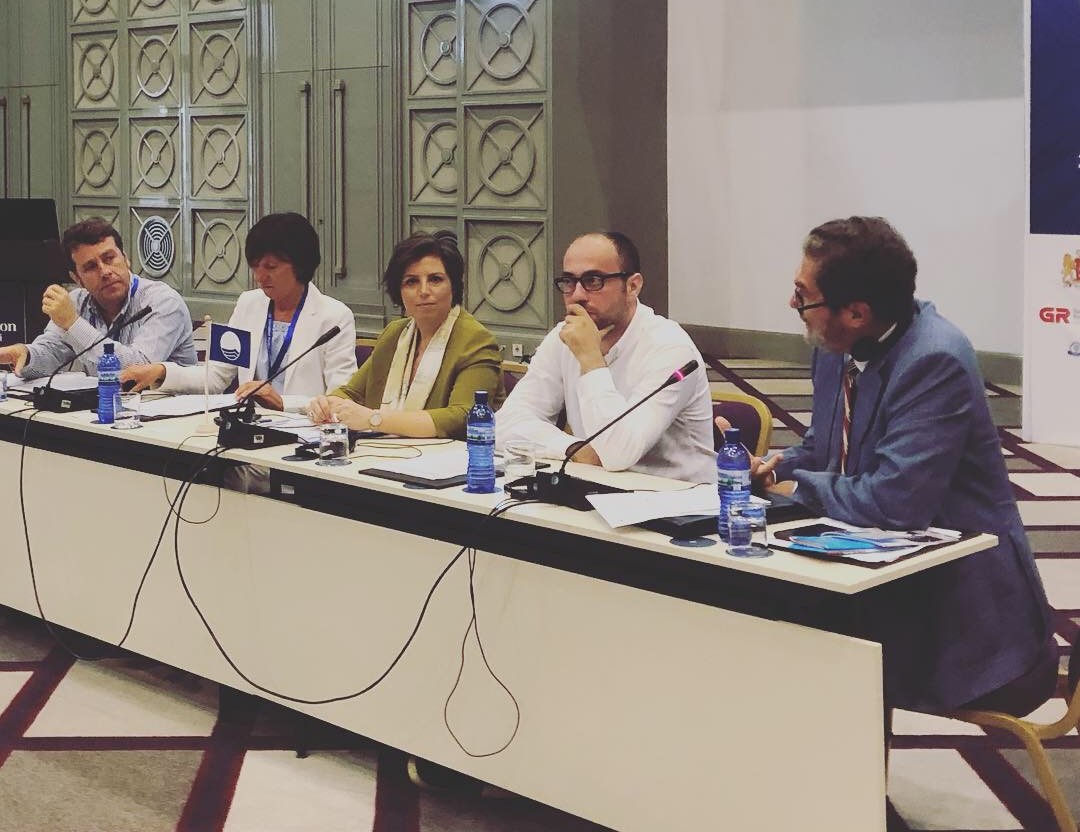
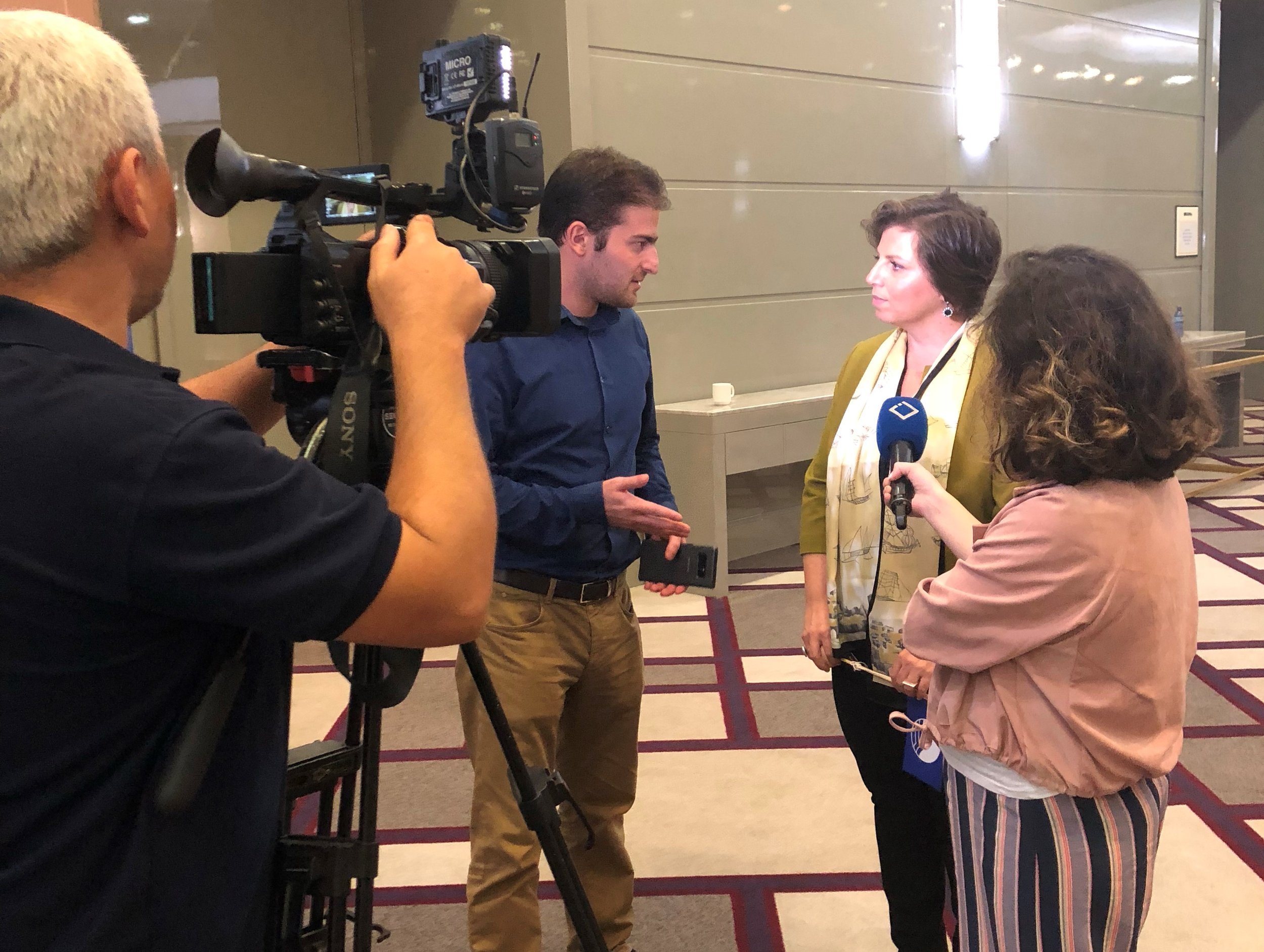
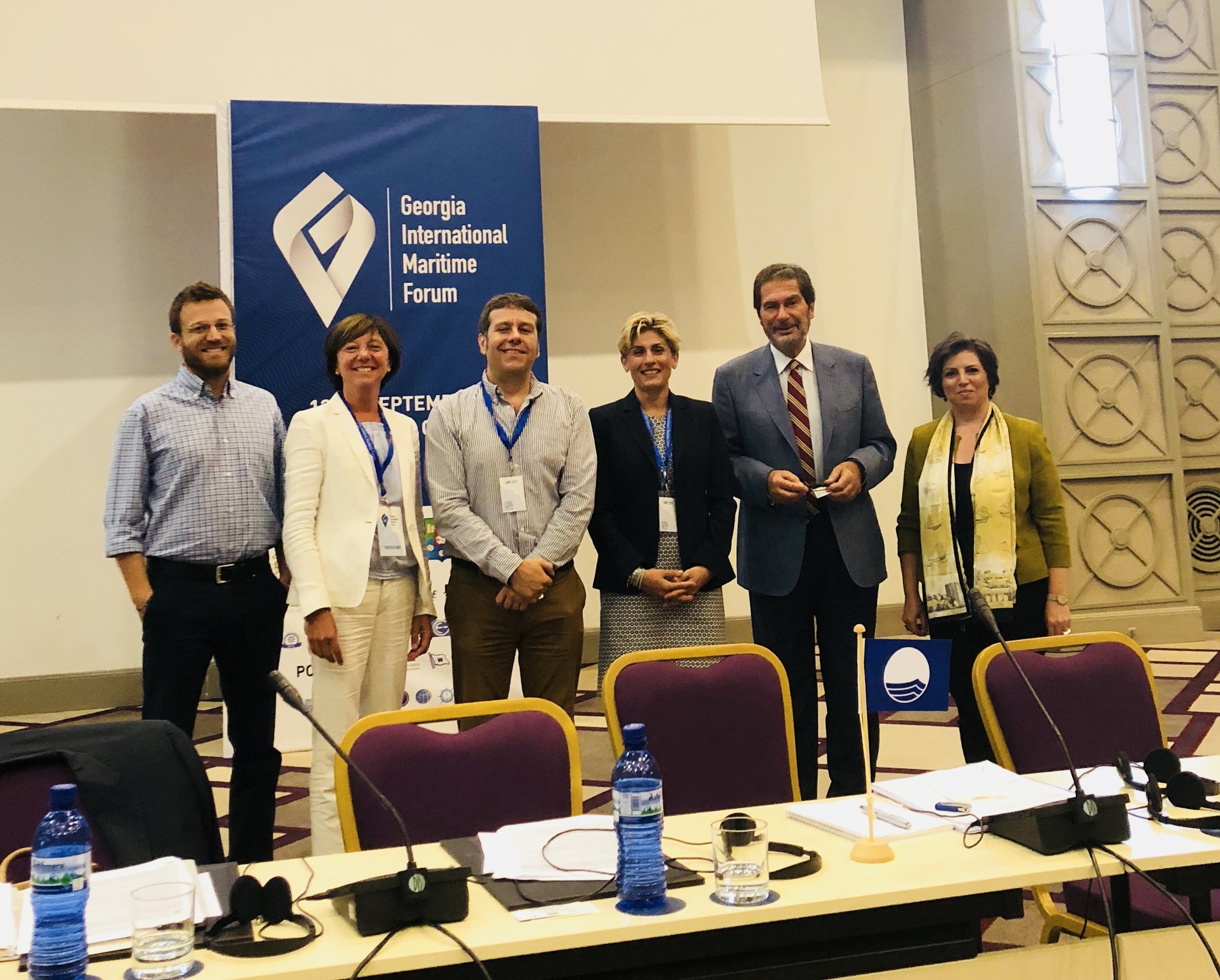
Blue Flag was represented at the Georgian International Maritime Forum (GIMF) last month by Almila Kindan Cebbari, the Blue Flag National Operator from Turkey. The purpose of the September 10-14 forum was to discuss how to balance essential shipping activities with ocean health and sustainability.
Blue Flag was represented at the Georgian International Maritime Forum (GIMF) last month by Almila Kindan Cebbari, the Blue Flag National Operator from Turkey. The purpose of the September 10-14 forum was to discuss how to balance essential shipping activities with ocean health and sustainability.
The forum was conducted under the patronage of the Prime Minister of Georgia and the Maritime Transport Agency of Georgia, and was attended by high-level representatives from many international organisations.
Experts from around the world convened to discuss the topic at hand. Although maritime transport issues were the primary focus of the forum, sustainability was at the center of many of the presentations and workshops.
Amila was present to represent Blue Flag in a side session titled “Investing in Sustainable Small-Scale Cruising for the Black Sea.” She shared a presentation about the Blue Flag programme, with a particular emphasis on Sustainable Boating Tourism Operators. Amila was also interviewed by a local television station about the potential for Georgia to grow its coastal and marine tourism through participation in Blue Flag.
Georgia is currently the only country on the Black Sea that does not participate in the Blue Flag programme. Amila’s presentation was well-received, and prominent Georgian stakeholders have since expressed interest in bringing Blue Flag to the country.

Press Release: Blue Flag awarded to 137 sites in the Southern Hemisphere
The International Blue Flag Jury meeting took place on 5 September 2018, roughly a year after Hurricane Maria violently hit Puerto Rico and Hurricanes Irma and Jose devastated the Caribbean Islands and parts of the USA in September 2017. Among the countries proudly flying the Blue Flag in the region, Sint Maarten and the US Virgin Islands are still working to reestablish the Blue Flag criteria in the wake of the storms.
The International Blue Flag Jury meeting took place on 5 September 2018, roughly a year after Hurricane Maria violently hit Puerto Rico and Hurricanes Irma and Jose devastated the Caribbean Islands and parts of the USA in September 2017. Among the countries proudly flying the Blue Flag in the region, Sint Maarten and the US Virgin Islands are still working to reestablish the Blue Flag criteria in the wake of the storms.
The International Jury awarded the Blue Flag to 137 sites in the Southern Hemisphere for the 2018-2019 Blue Flag season, including 96 beaches, 19 marinas and 22 boats. As of 2018, the Blue Flag flies over 3,783 beaches, 698 marinas and 77 boats around the world.
The International Blue Flag Jury would like to warmly welcome the return of the United Arab Emirates, who can once again boast Blue Flag awarded sites after two years of absence from the programme.
The full list of awarded sites will be published on 1 November on the International Blue Flag website. Users can employ the website’s new maps and search features to find the Blue Flag awarded sites that perfectly meet their needs.
The next meeting of the International Blue Flag Jury will take place on 9 April 2019 to award beaches, marinas and boats from the Northern Hemisphere.
The International Blue Flag Jury is composed of representatives from the United Nations Environment Programme (UN Environment), the United Nations World Tourism Organization (UNWTO), International Lifesaving Federation (ILS), the European Environment Agency (EEA), the European Union for Coastal Conservation (EUCC), the International Union for Conservation of Nature (IUCN), the International Council of Marine Industry Associations (ICOMIA), the World Cetacean Alliance (WCA), the European Network for Accessible Tourism (ENAT) and the Foundation for Environmental Education (FEE). You can find out more about the International Jury members on Blue Flag’s website.
Blue Flag greatly appreciates the support of its sponsor and worldwide flag producer Semaphore, as well as the support of its partner AccessRec, a company that produces a range of products designed to make beaches more accessible to people with disabilities.

Blue Flag International and ENAT sign Memorandum of Understanding
The Foundation for Environmental Education, through its Blue Flag certification, long recognised as the global benchmark for sustainable beaches, marinas and boat-based activities around the world, has signed an agreement with ENAT – The European Network for Accessible Tourism non-profit association to work together to promote access for all visitors to beaches, marinas and boat-based activities.
Blue Flag International teams up with European Network for Accessible Tourism to promote Beaches, Marinas and Boat-based activities for All.
The Foundation for Environmental Education, through its Blue Flag certification, long recognised as the global benchmark for sustainable beaches, marinas and boat-based activities around the world, has signed an agreement with ENAT – The European Network for Accessible Tourism non-profit association to work together to promote access for all visitors to beaches, marinas and boat-based activities.
While the Blue Flag standard already includes a number of requirements related to access provisions for persons with disabilities, the partners recognise that destinations can do more to improve beach, marina and boat-based experiences for these and, indeed, all visitors by providing suitable technical measures and assistance, where needed.
ENAT will share its wide-ranging experience in accessible tourism with Blue Flag International/Foundation for Environmental Education (FEE), having worked over the last ten years to raise awareness, conduct research and develop solutions for better access in the tourism sector. ENAT’s partners, clients and members include the UN World Tourism Organisation, the European Commission, European Parliament, ISO, national and regional tourism authorities, tourism enterprises and organisations of people with disabilities.
Speaking after signing their new Memorandum of Understanding, Blue Flag International acting Director, Johann Durand said: Destinations that hold the Blue Flag have accepted the challenge and have a positive attitude to do better, both for the environment and for their visitors.
Accessibility is a key area where good advice is needed – both for planning infrastructure in a sensitive but effective way and for providing services to ensure the health, comfort and safety of visitors with access requirements.
We see our new cooperation with ENAT as a positive step towards achieving full inclusion – not just in word but also in practice at every Blue Flag destination.
ENAT President, Anna Grazia Laura, remarked: We are especially proud and pleased to launch the cooperation with Blue Flag. It is our common view that access is a global issue, which must be a priority for all tourism destinations and communities.
We are looking forward to spreading this message and showing, with many good examples, how families, seniors, people with disabilities or with long-term health conditions - indeed, all visitors and citizens – can benefit from leisure experiences in sea and lakeside environments.
We recognise Blue Flag’s reputation for authoritative and technical leadership in this area and we look forward to supporting the foundation and its global network in relation to policy, standards and education.
To find out more about ENAT check out their website.


Best Practice: Palafrugell municipality in Spain enabling marine life at Posidonia meadows
With more than 570 awarded beaches, Spain is the county with the highest amount of Blue Flag awarded sites worldwide. Three of these beaches belong to the municipality of Palafrugell in Girona. Since 2011 they actively participate in the monitoring of nearby Posidonia meadows, leading to many positive developments for local marine species.
With more than 570 awarded beaches, Spain is the county with the highest amount of Blue Flag awarded sites worldwide. Three of these beaches belong to the municipality of Palafrugell in Girona. Since 2011 they actively participate in the monitoring of nearby Posidonia meadows, leading to many positive developments for local marine species.
Posidonia is a seagrass that grows in meadows in the Mediterranean Sea. It shelters various species of marine plants and animals, making these meadows an ecosystem with high biodiversity. This seagrass also serves as a nursery for many fish species. Posidonias have strong roots that retain sand and therefore act as a natural barrier protecting the coast from storms.
Parafrugell municipality elaborates maps of the seabed, enabling them to place buoys where they do not harm the Posidonia. In order to additionally protect the meadows, environmentally friendly buoys are promoted. Thanks to these actions, they have observed that some areas of Posidonia meadows have been restored.
The municipality also collaborates with other underwater projects, such as the examination of fan shells (Pina nobilis) populations affected by a parasite. Fan shells are protected molluscs that inhabit Posidonia meadows and their growth depends on a good state of the meadows. Pina nobilis is the biggest mollusc of the Mediterranean and can grow up to a meter.

Blue Flag awarding ceremonies for 2018 season: Part 2
Blue Flag International is happy to announce the sites awarded for this coming season 2018. We would like to share stories and pictures from Spain, The Netherlands and Turkey with you.
Blue Flag International is happy to announce the sites awarded for this coming season 2018. We would like to congratulate all countries and municipalities that have successfully awarded the Blue Flag to local beaches, marinas and sustainable boating tourism operators. A number of countries have sent us information and pictures of the awarding ceremonies. We would like to share stories and pictures from Spain, The Netherlands and Turkey with you.
Press Conference to announce Spanish Blue Flag sites 2018

From left to right: Jose Palacios (VicePresident of ADEAC), Cayetano Ramos (Major of Orellana la Vieja, the first Blue Flag in continental waters in Spain) and Virginia Yuste (National Operator for Blue Flag in Spain).
On the 8th of May, the press conference for the announcement of the Blue Flag sites 2018 in Spain was held More than 30 TV channels, newspapers and radios attended the conference which had great media coverage. The conference, which was covered by national and regional channels, was held in the auditorium of the headquarters of the Ministry of Tourism in Madrid.
The conference was hosted by the Secretary of State for the Ministry of Tourism, Matilde Asian, the Director of the Sustainability Program from WTO, Dirk Glaesser, together with the President of ADEAC, Jose Palacios. ADEAC is the organization representing the Blue Flag programme in Spain.
With 590 beaches, 101 marinas and five sustainable tourism boating operators awarded, Spain is the country with the highest total number of Blue Flag awarded sites.
31st National Blue Flag season launch in the Netherlands
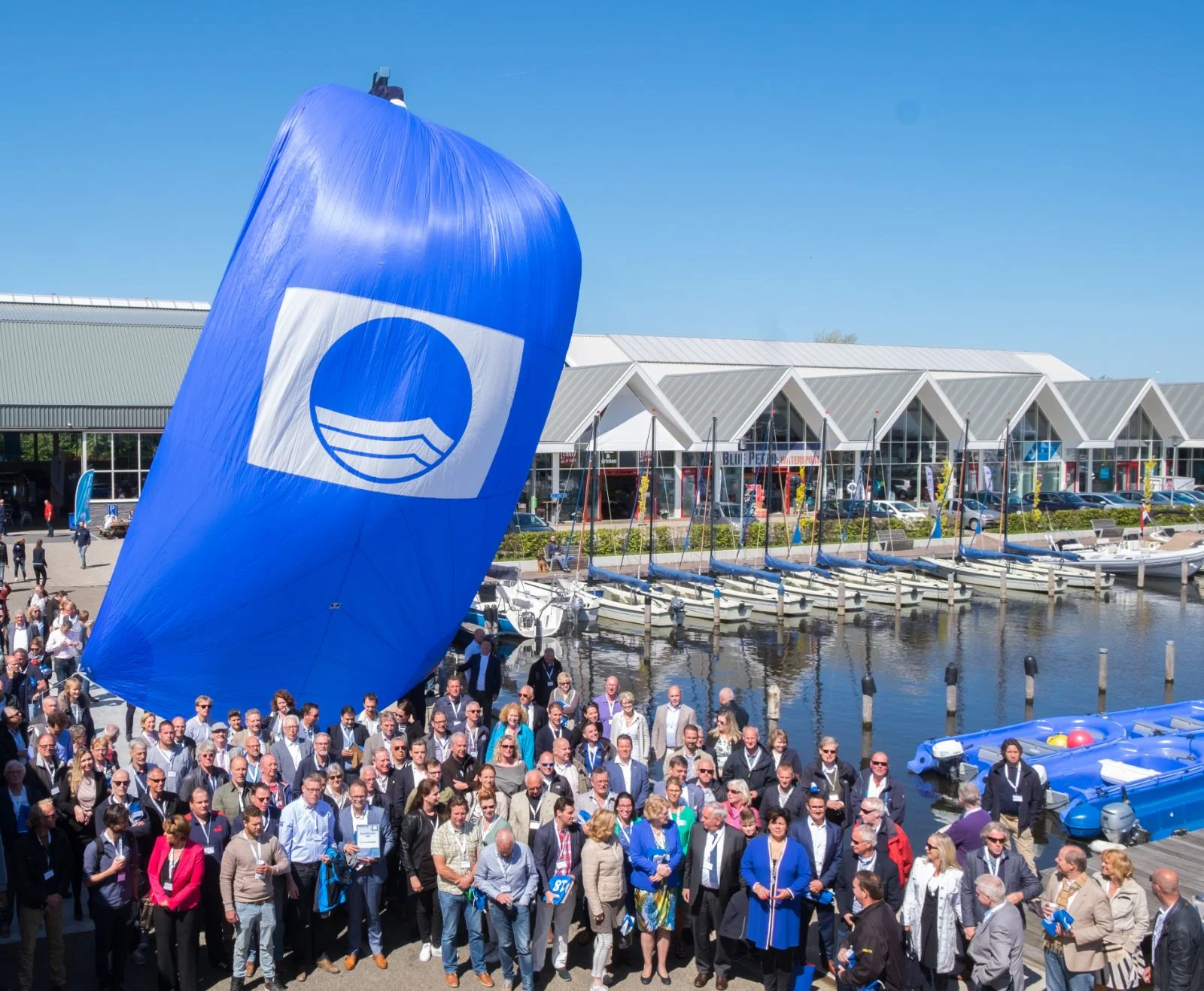
Blue Flag sail hoisted on spinnaker in celebration of 2018 Blue Flag site awarding ceremony
On the 3rd of May the Netherlands organised their 31st National Blue Flag season launch celebration at Uitgeest marina. The Dutch jury president was able to announce that a total of 185 sites that received the award. Of these sites in the Netherlands, 123 were marinas and 62 beaches, of which eight were inland beaches.
Since half of the Netherlands’ surface is below sea level, there are a lot of marinas. No wonder that this country has the most Blue Flag awarded marinas in the world. In addition, the municipality Sudwestfryslan celebrated having eight Blue Flag marinas. These are actually the most awarded marinas within a municipality’s borders.
Six successful candidates have been awarded the Blue Flag since it’s representation in the Netherlands and received the Blue Flag for the 31st time in a row. The Blue Flag season 2018 was opened by Uitgeest’s mayor and the national jury president by hoisting a Blue Flag sail on a big spinnaker, as seen in the photo above.
FEE Turkey organised two national training seminars in addition to award ceremonies

6th National Training Seminar for Beach Managers
FEE Turkey organized the 8th National Training Seminar for Marina Managers and Blue Flag responsible individuals. In total around 60 people attended the seminar in Bodrum (Turkey), including 22 awarded marinas. The Ministry of Tourism, the Ministry of Environment, the Marine Tourism Association, the Chamber of Shipping, the Ministry of Maritime Affairs and Sustainability Experts, attended and held presentations and workshops.
In addition, FEE Turkey, prepared the 6th National Training Seminar for Beach Managers, which was concluded with an examination. During 29-30 March 2018, 170 beach managers from 59 coastal cities in Turkey successfully passed the exam.
After the national training seminar, 10 beaches and 3 marinas were awarded for collecting the most waste batteries within in a year. This was organised in collaboration with TAP-Waste Batteries Collection Association, who are licenced to collect all waste batteries in Turkey.
Click here to read about the Blue Flag awarding ceremonies for 2018 season: Part 1.